POPLAR to the ROYAL DOCKS: SILVERTOWN, THAMES BARRIER and
NORTH WOOLWICH

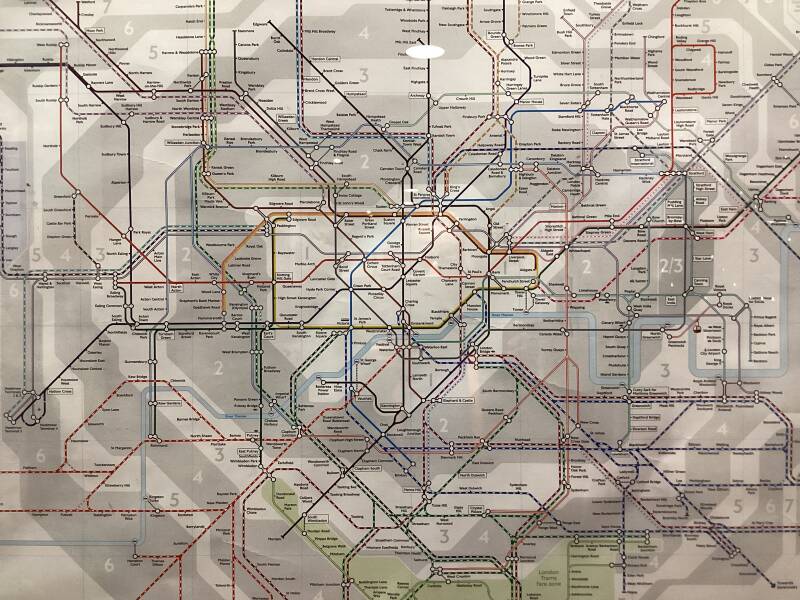


This route takes you along the THAMES riverside the S side of the Royal Docks, in parallel with the Thames, and on some stretches, along the very shore or rather the former quays of the river
See DUE EAST 1 for a complete information from POPLAR to
POPLAR
Poplar High Street
Former TOWN HALL. GEORGE LANSBURY
Site of ROBIN HOOD GARDENS. Now, (a small sample) in the V&A MUSEUM
BLACKWALL

BLACKWALL TUNNEL entrance
Site of the EAST INDIA DOCKS
Subway under Aspen Wat
Poplar Dock
You can divert or make a detour to WEST INDIA DOCKS (WOOD WHARF, ANARY WHARF)
New student accommodation?
NEW BILLINGSGATE MARKET
BLACKWALL QUAY
THE VIRGINIA QUAY SETTLERS MONUMENT
A free-standing stone and bronze monument of 1951, incorporating a bronze plaque of 1928 and with later sculptural additions of 1999, commemorating the departure of settlers for Jamestown, Virginia (USA).
Pocahontas!
West India

EAST INDIA DOCK BASIN Natural Park
SALOME GATES (exiting the park’
A typical example of ANTHONY CARO's abstract welded/folded metal works. The gates lead out the nature reserve and riverside path, into ORCHARD PLACE. The work is a reference to the area's industrial heritage.

Two places to visit…
TRINITY BUOY WHARF


LONDON CITY ISLAND
Diversion to Canning Town and BOW CREEK ECOLOGY PARK
Red Bridge
Canning Town bus and LU/DLR Sta.
BOW CREEK ECOLOGY PARK

Along the Lower Lea Crossing to the Royal Docks
The newly denominated A1026 (With the opening of the Silvertown Tunnel in 2025, the road was renumbered from the A1020 to A1026 to provide a continuous number from the A102 to A13). is the first crossing of this river upstream from the Thames.
The 235m four span box girder bridge and approach viaducts opened in December 1991. Cost £5.3 million.
Views from the viaduct
A Lower River Lea Valley?. More to the North, the LEA VALLEY REGIONAL PARK

You follow Dock Road (walkway and cycle lane until you reach the bridge under the viaduct, taking you to the Dockside, past City Hall)
SILVERTOWN TUNNEL PORTAL BUILDING
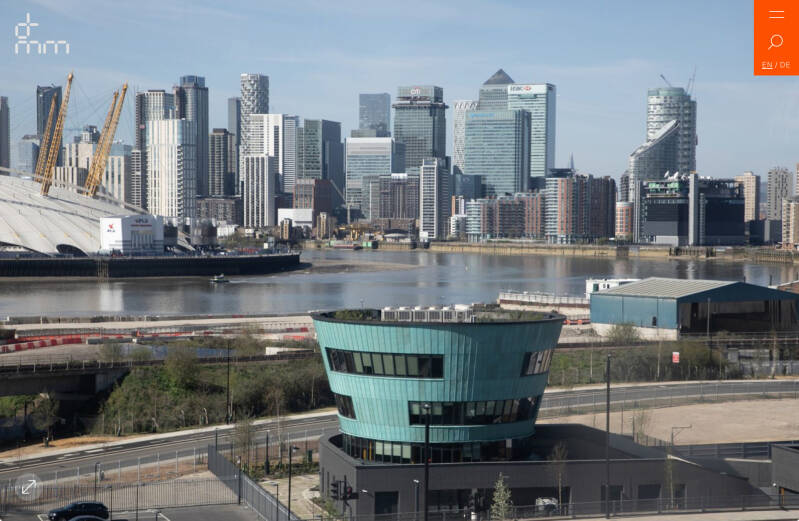
The Silvertown Tunnel has main and secondary control hubs at its northern (Silvertown) and southern (Greenwich) portals, respectively, with the northern portal building acting as the primary control centre for tunnel operations, services, and monitoring of traffic, air quality, and emergencies, managing the complex systems like lighting and ventilation to ensure safe crossing for all users, as seen in its modern control room with various screens.
Future redevelopment
Welcome to SILVERTOWN
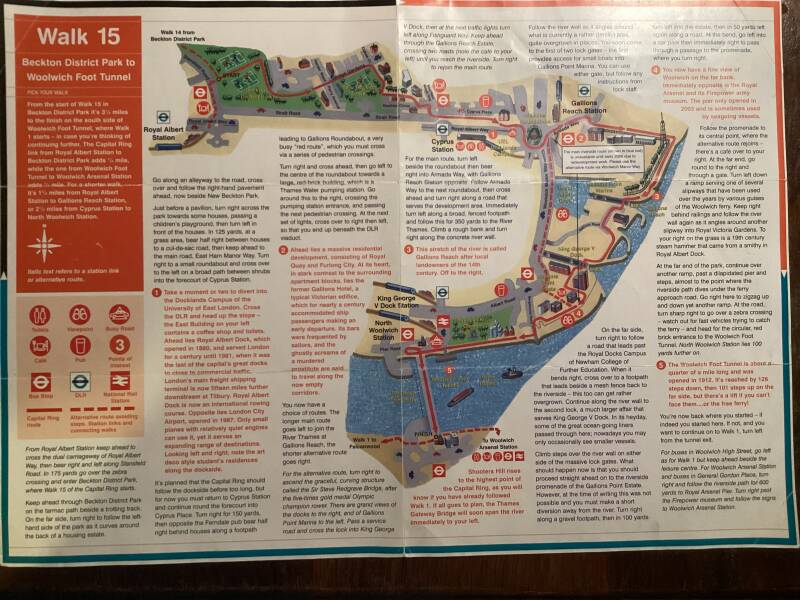
Ways of exploring the Royal Docks and wider area
Published by LB NEWHAM
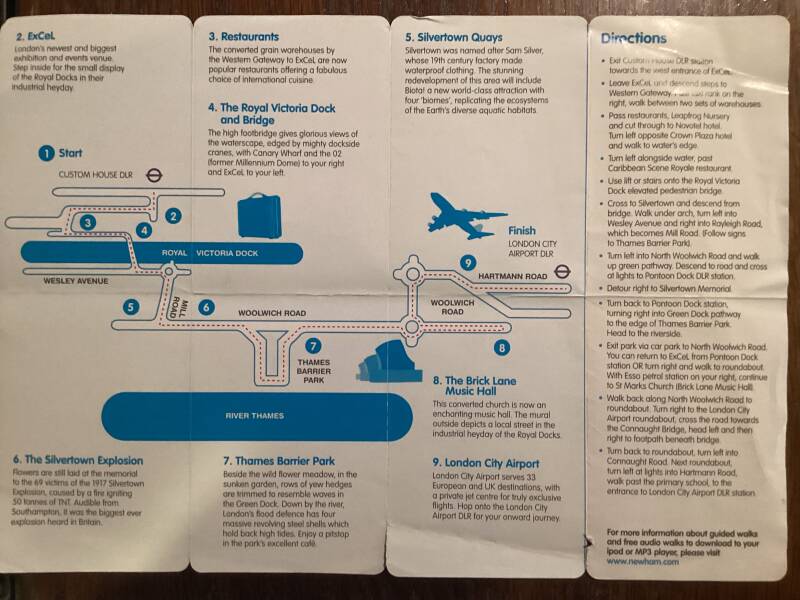
Capital Ring walk
Lost pubs
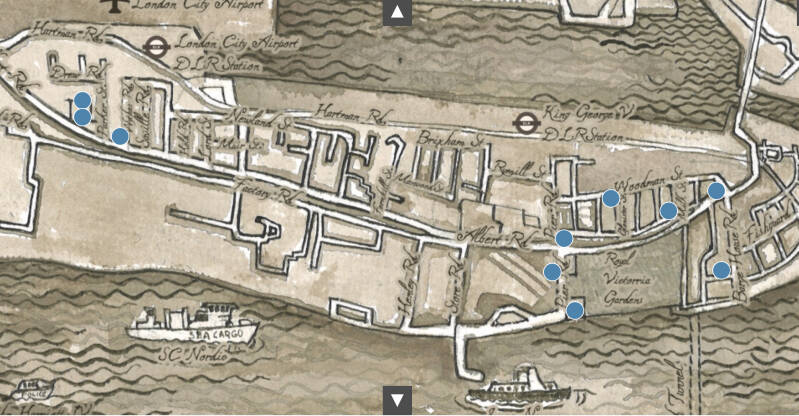
When the docks and factories were the main source of employment in this area, pubs were the community's social hubs.

A site celebrating the history of Silvertown and North Woolwich E16 Royal Docks.
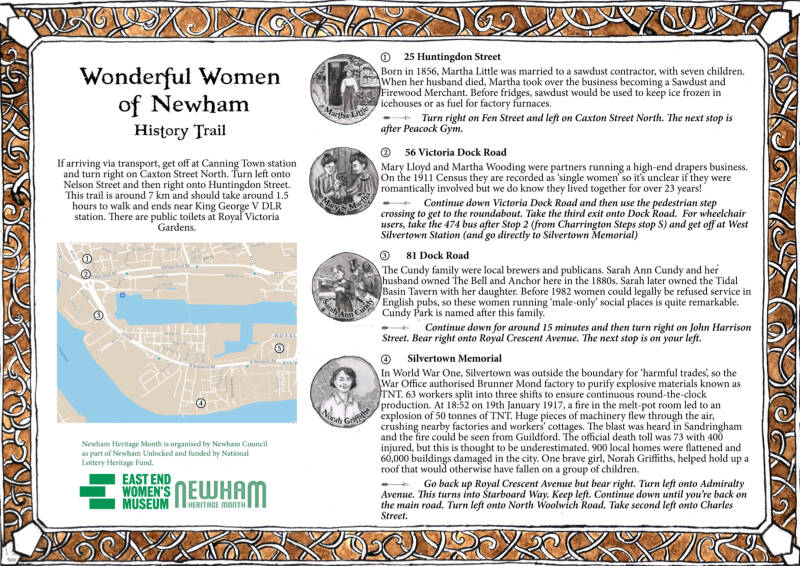
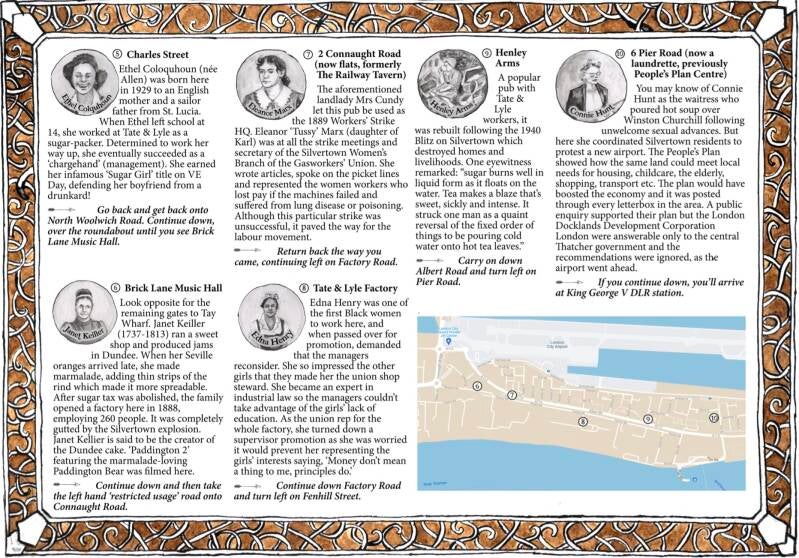
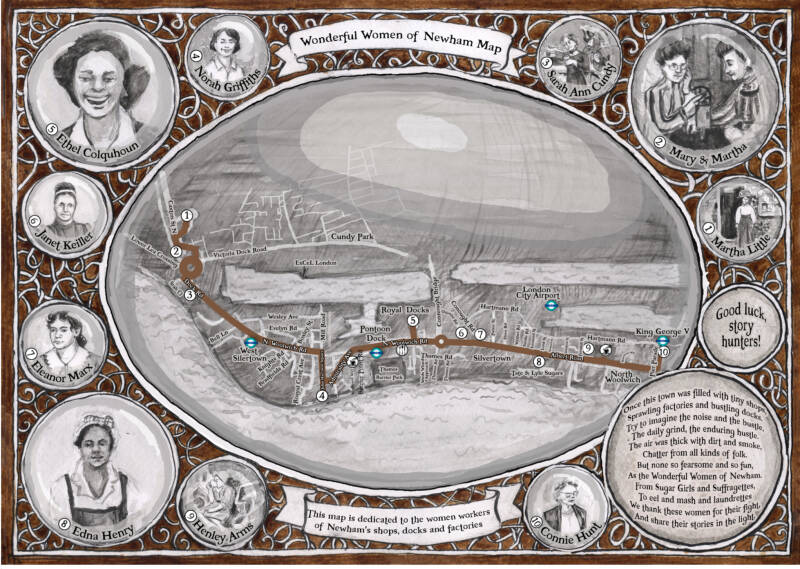
Wonderful Women of Newham
Stephen William SILVER established his RUBBER WORKS factory between the river and the future site of dock basins, in 1852. He made waterproof clothing, which subsequently developed into the works of the INDIA RUBBER GUTTA PERCHA and TELEGRAPH WIRKS COMPANY, 1864.
SILVER & CO. supplied clothing for colonial/army needs from the 18th c. and operated as well as shipping agents. They had set up their factory in Greenwich, after MACINTOSH’s invention of waterproof fabric (raincoat). And, after that, began manufacturing and laying out insulated wire and cable moving here.
In 1889 a 12 week strike by the majority of SILVER’s 3.000 workers took placeL, inspired by the NEW UNIONISM succeeding in the EAST END. Leading figures were THOMAS MANN and ELEANOR MARX-AVELING.
As SILVER hold the line, the strikers were eventually starved back to work. However, the event shook London and helped launch the modern labour movement.
SILVER was taken over by BRITISH TYRE AND RUBBER COMPANY, later BTR INDUSTRY, then INVENSYS, then SCHNEIDER.
Chemicals, manure, manufacturing (jam…), sugar/treacle refinery (the sugar mile) petroleum storage…were the activities around here.
Another major local employer was the Loders and Nucoline plant at Cairn Mills, a traditional port oleo industry and formerly part of Unilever. This originally milled seeds but later concentrated on production of fats from palm kernel oil.
A BASS BREWERY, until mid 1990s.
APB JOLMKNIGHTS, animal rendering, next to GOLDEN SYRUP.

You can divert now to see the Dockside area
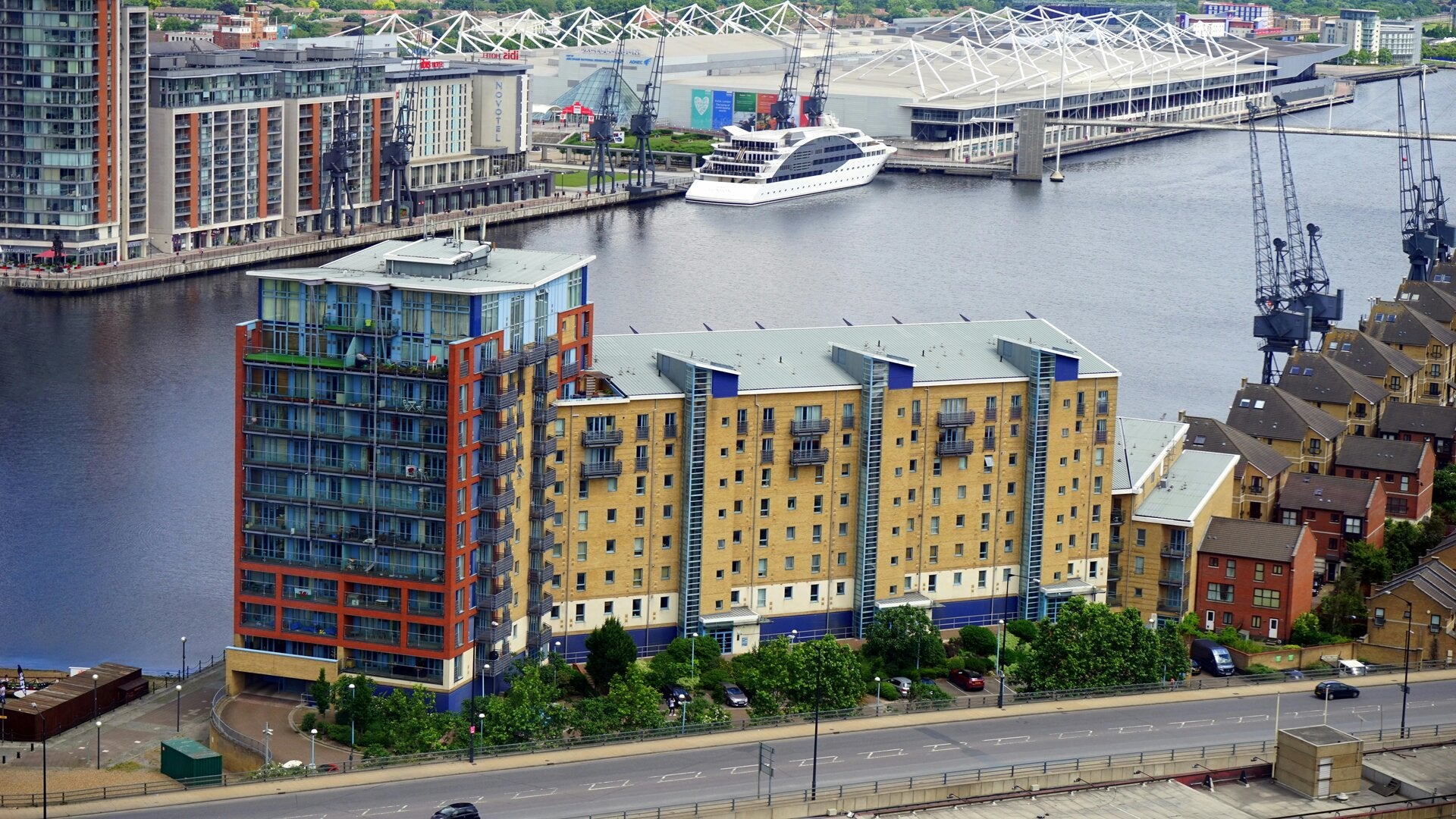
Hotels, Eateries and convenience stores along Western Gateway (road)

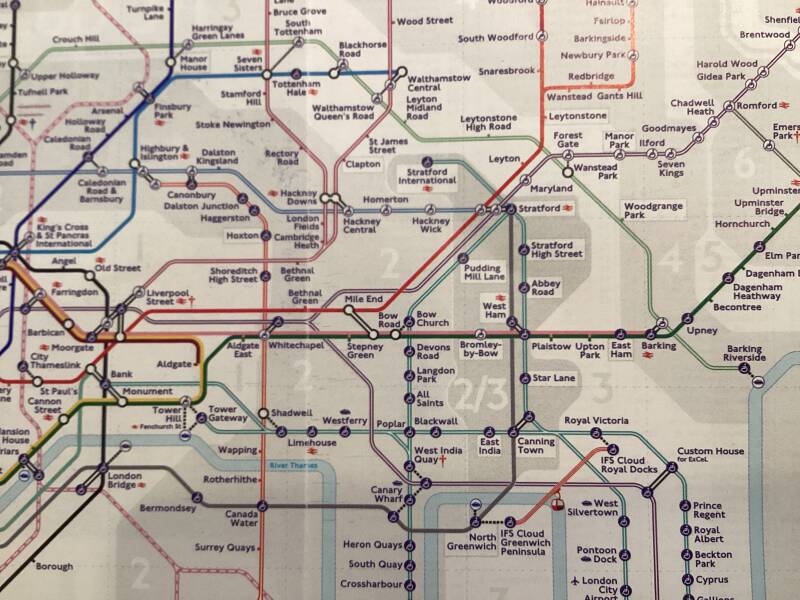
ROYAL VICTORIA DLR Station
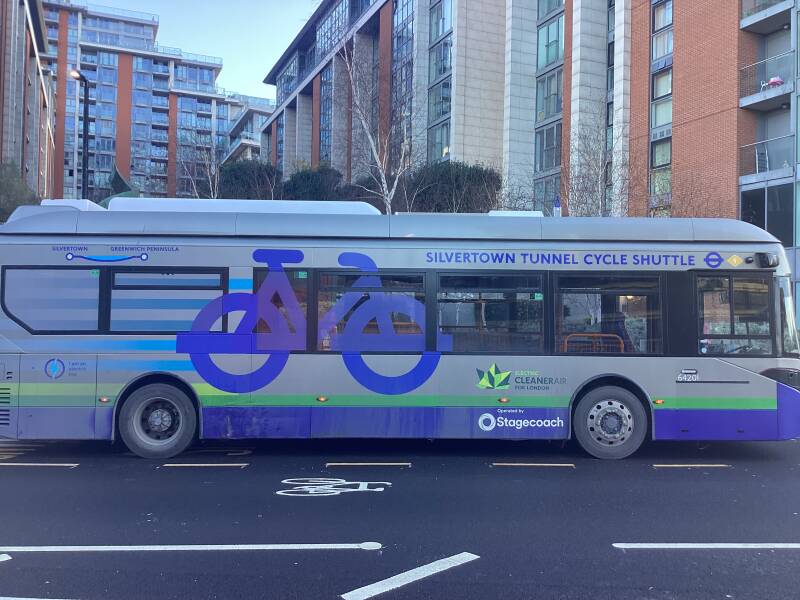
Buses
Nearest stop: to the other side of the DLR track https://content.tfl.gov.uk/bus-route-maps/excel-docklands-a4.pdf
CABLE CAR
The London cable car,[4]also known as the Dangleway[5]and officially as the IFS Cloud Cable Car for sponsorship reasons,[6][7] is a cable car link across the River Thamesin London, England. The line was built by Doppelmayrand the total cost was around £60 million. The service opened on 28 June 2012. It is owned by Transport for London (TfL) and currently operated by FirstGroup.
LONDON CITY HALL
the headquarters of the Greater London Authority (GLA), the regional government for Greater London. It replaced the previous City Hall, in Southwark in 2022.
The building opened in 2012 and was previously an exhibition centre for sustainable architecture, known as The Crystal. Built and opened by Siemens, it was the first building in the world to reach the highest sustainability award levels in LEED and BREEAM. It was bought by the GLA in 2019 for the London Docklandsredevelopment project
DOCKLANDS
ROYAL DOCKS
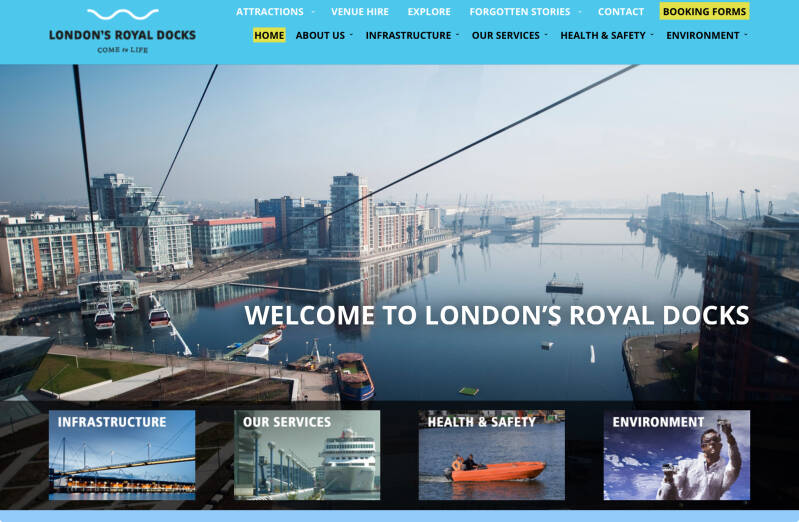
The area is named after three docks – the Royal Albert Dock, the Royal Victoria Dock and the King George V Dock. They are more correctly called the Royal Group of Docks to distinguish them from the Royal Navy Dockyard, Royal being due to their naming after members of the royal family rather than Crownownership. The three docks collectively formed the largest enclosed docks in the world, with a water area of nearly 250 acres (1.0 km2) and an overall estate of 1,100 acres (4.5 km2).
built in the mid-19th century – a marvel of Victorian engineering. An average of thirteen metres deep and 4 kilometres long, they cover an area the size of Central London.
The Royal Docks Management Authority Limited (RoDMA) has a 225 year lease to maintain and manage the water and some of the land across the 13kms of dock edge. This includes the lifting and swing bridges, the lock gates, the Impound Station and other items of dock infrastructure. RoDMA is also playing a supporting role in using the unique waterfront setting to create a new destination for London – a place of culture, fun, cuisine and sport – with space for business, creativity and waterside living.
ROYAL VICTORIA DOCK

The Royal Victoria Dock is the largest of three docks in the Royal Docks of east London, now part of the redeveloped Docklands. Although, the structure was in place in the year 1850, it was opened in 1855, on a previously uninhabited area of the PlaistowMarshes. It was the first of the Royal Docks and the first London dock to be designed specifically to accommodate large steam ships. It was also the first to use hydraulic power to operate its machinery and the first to be connected to the national railway network, via the Eastern Counties and Thames Junction Railway section of what is now the North London line.[1] It was initially known as "Victoria Dock"; the prefix "Royal" was granted in 1880.
The dock was deeply indented with four solid piers, each 152 m long by 43 m wide, on which were constructed two-storey warehouses. Other warehouses, granaries, shed and storage buildings surrounded the dock, which had a total of 3.6 km of quays.
By 1860, it was already taking over 850,000 tons of shipping a year – double that of the London Docks, four times that of St Katharine Docks and 70% more than the West India Docks and East India Docks combined. It was badly damaged by German bombing in the Second World War, but experienced a resurgence in trade following the war. From the 1960s onwards, the Royal Victoria experienced a steady decline – as did all of London's other docks – as the shipping industry adopted containerisation,
major redevelopment initiated by the London Docklands Development Corporation in the 1990s. Developments included Britannia Village, which was carried out by Wimpey Homes, the Peabody Trust and the East Thames Housing Group in the mid-1990s.[8]
Most of the original buildings were demolished but a few historic warehouses survived.[9] More recent development has included the Royal Victoria Dock Bridge completed in 1998,[10] and the ExCeL Exhibition Centre, constructed on the north quayside, which opened in November 2000
Site of the Lock, and entrance to the Royal Victoria. That is, precisely why the flyover was built!
WAKEUP LONDON. Watersports
Eateries

Along the quayside (or along Wesley Avenue or Evelyn Rd., if you prefer)
BRITANNIA VILLAGE
built between 1994 and 2000 during the first phase of the Silvertown Quays redevelopment. It was a collaborative project commissioned by the London Docklands Development Corporation (LDDC) and carried out by Wimpey Homes, the Peabody Trust, and the East Thames Housing Group.
Stothert and Pitt cranes
The fourteen cranes at Royal Victoria Dock, two from the 1920s and twelve from 1962, has been listed at Grade II for the following principal reasons: * this is the most concentrated ensemble of cranes surviving in London's Docklands and the group represents the swan-song of the docklands as an industrial area in the 1960s, poignantly redolent of the vanished industry
The westernmost pair on the south side are the earliest, possibly 1920s, and the rest date from 1962. Those twelve cranes are innovative DD2s of 1962, a strikingly modern design in welded tubular steel introduced in 1959 to critical acclaim and commercial success . They won the Council of Industrial Design Award in 1968, by which date hundreds were being used worldwide.
All fourteen are by Stothert & Pitt, the most famous makers of cranes in the world; both types are impressive in scale and form and the group has an almost sublime quality, particularly in silhouette.
Café and Convenience store
Site of BRITANNIA MILLS or RANK’S EMPIRE FLOUR MILLS. Chimney
Former Victoria Graving docks, Pontoon Dock
The Pontoon Dock in Silvertown was a historic industrial site in the Royal Docks that served as a ship repair yard and later became a center for grain and flour milling, noted for the iconic Millennium Mills. The area is currently undergoing a large-scale regeneration project, Silvertown Quays, which will transform it into a mixed-use neighborhood with homes, offices, and public spaces, while preserving its historic industrial architecture,
Former MILLENIUM MILLS
The Royal Victoria Dock was long a centre for grain storage and flour milling, and the company William Vernon & Sons built the first Millennium Mills in 1905 to mill flour.
Vernon’s produced flour using the brand name “Millennium Flour”, and they won awards and gained a considerable market, based on advertising which featured the quality of their flour, and the expertise that went into their milling process.
The original Millennium Mills buildings were damaged in the Silvertown explosion, with the mill back in full operation in 1920 as William Vernon & Sons were advertising an auction of all the surplus material left over from the rebuilding process, which included 30,000 stock bricks, 3 Tons of bolts, ladders, barrows, tools etc.
In the same year, William Vernon & Sons amalgamated with Spillers Ltd, another business who started as flour millers in Bridgewater, Somerset in 1829, (although it looks more like a take over by Spillers).
Throughout the 1920s, the business was expanding rapidly, and in the following decades, the buildings alongside the Royal Victoria Dock were rebuilt. Luckily, the buildings have their year of construction at the very top, so going back to the photo above, the smaller building on the right dates from 1933:
Former GRAIN SILO D
Grain Silo D was built in the early 1920s alongside one of the finger channels in Pontoon Dock, off the south side of the Royal Victoria Dock.
The silo was used to extract and store grain from ships moored in the channel alongside, using either a bucket conveyor or by a suction elevator. Grain in the silo would be transported onwards, either by barge, or by the rail network that crossed the area between the mills to the south of the Royal Victoria Dock, and the wider rail network.
Silo D was built on the site of an original silo which was damaged in the Silvertown explosion of January 1917 (the subject of a future post). The following 1921 photo from Britain from Above shows Silo D under final construction to lower left, with the original silos A, B, and C surrounding the new silo (Image Source: EPW006144 ENGLAND (1921). Industrial buildings and wharfage, Silvertown, 1921):
With thanks to A LONDON INHERITANCE: https://alondoninheritance.com/london-infrastructure/royal-victoria-dock-in-2024-part-2/
SILVERTOWN QUAYS. Future development: Estimated completion 2039
After Mill Road you will join the roadside alternative route at ROYAL WHARF

Site of the famous 1917 Silvertown Explosion ??

After the LOWER LEA CROSSING viaduct and the SILVERTOWN TUNNEL entrance, if you follow the ROAD ROUTE

Dock Road
Site of 81 DOCK ROAD: THE BELL & ANCHOR P.H.: SARAH ANN CUNDY
The Cundy family were local brewers and publicans. Sarah Ann Cundy and her husband owned The Bell and Anchor here in the 1880s. Sarah later owned the Tidal Basin Tavern with her daughter. Before 1982 women could legally be refused service in English pubs, so these women running 'male-only' social places is quite remarkable.
Cundy Park is named after this family.
SILVERTOWN WAY (viaduct). The UK’s first purpose-built flyover.
opened to road traffic by the Minister of Transport, Mr Hore-Belisha on Thursday 13th September 1934.
EXPRESSWAY
A 162 unit co-working, office studio, maker space and community hub in the heart of Royal Docks - the birthplace of our Business Incubator Programme.
THE SILVER BUILDING
SILVERSPACE STUDIOS
THE CAUSE
- The venue's mission is rooted in the original DIY spirit of independence and community, aiming to support grassroots ventures and emerging talent without corporate investment. It is run with a 100% independent, "make it up as we go along" approach, often using temporary, "meanwhile" spaces.
- Ethos: They aim to provide an affordable, inclusive space that champions diversity and supports the local scene. A core part of their original operation was also fundraising for various charities such as Mind in Haringey, CALM, and Help Musicians UK.
- Activities: The venue hosts a variety of events, from 16-hour multi-room parties to daytime activities like plant sales and workspaces. They are known for supporting small, independent promoters and making parties financially accessible with low-priced or free entry options.
- DiY Sound System): Their cause was a rebellion against the growing commercialization of parties and restrictive anti-rave legislation like the UK's Criminal Justice and Public Order Act of 1994.
- Ethos: They were driven by anarchist principles, hedonism, and protest, aiming to create non-commercial, inclusive spaces for people of all ages united by a passion for dancing. They sought to bridge the gap between counter-culture (specifically the traveller/free festival community) and the mainstream club scene, championing collectivism and the idea that music could change lives.
- Activities: They hosted numerous illegal outdoor free parties in disused airfields and quarries, as well as legitimate club nights, and ran a record label. 0
New development: PROJECT OLYMPUS, data centre
Industrial Estate
Plaistow Wharf
Site of ORIGINAL LYLE?. Now, TATE & LYLE: GOLDEN SYRUP FACTORY
Henry Tate and Leonard Lyle set up their factories in the area independently of each other. The Newham Recorder reports that the Tate site has been in continuous use since Henry Tatearrived in 1878, so that's the huge site shown as 'Tate and Lyle Sugars' on current Google Maps, on the north bank of the Thames, south of City Airport.
About 5 years later Abraham Lyle set up his own factory, very close to Tate. We think this is the site marked on the same 1914 map as "Plaistow Wharf (sugar refinery)", a little to the west of this park.
In 1921 the companies merged but kept their separate factories. To the north west of Knights Road, just inland from the 1914 "sugar refinery" Google maps shows "Tate and Lyle". This is the massive Lyle’s golden syrup factory, still known as Plaistow Wharf.
LYLE PARK
HARLAND AND WOLFF GATES
the H&W gates come from a factory site a few miles to the east (SEE NEXT CHAPTER) which has no connections with Lyle or the sugar factories. The gates are presumably only in this park because they are big and this was the nearest public site that could take them.

The DOCKSIDE route joints the ROAD rout after Mill Road
ROYAL WHARF
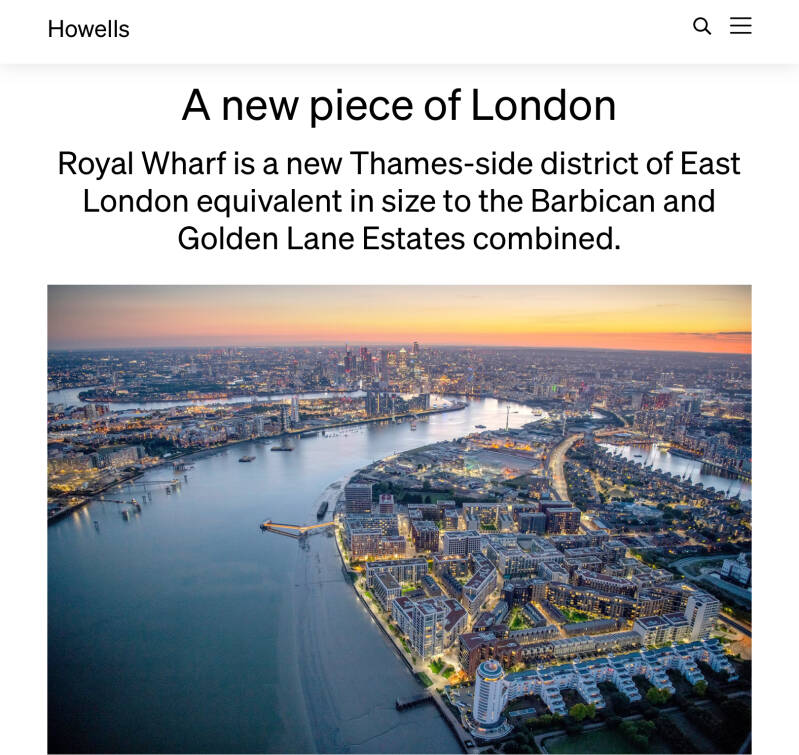
The 15.2-hectare (38-acre) site was originally developed as an industrial works at the end of the nineteenth century and was also used for the manufacture of TNT during the First World War. Following this, the site was used by Shell UK for a period as an oil storage and refining site. This came to an end in the 1990s, when the site was left vacant.
In 2012, following a comprehensive consultation process with Newham Councilofficers, the Thames Gateway Development Corporation and local community stakeholders (including local groups and individual residents), planning permission was granted to redevelop the site with a mixed-use scheme, delivering 3,385 new homes, a new primary school, leisure facilities and retail and commercial office space.
As of 2021, the development is nearly completed, with two blocks remaining. The Uber Boat by Thames Clippers riverboat pier and Royal Wharf Primary School opened in 2020.[2] The estimated number of occupants once the development is fully complete is around 10,000.
Ballymore is also developing the adjacent riverfront site to the west, Riverscape, to provide 769 homes

Riverside route
Memorial. Norah Griffith, Wonderful Women of Newham
Silvertown Memorial
In World War One, Silvertown was outside the boundary for harmful trades, so the War Office authorised Brunner Mond factory to purify explosive materials known as TNT. 63 workers split into three shifts to ensure continuous round-the-clock production. At 18:52 on 19th January 1917, a fire in the melt-pot room led to an explosion of 50 tonnes of TNT. Huge pieces of machinery flew through the air, crushing nearby factories and workers' cottages. The blast was heard in Sandringham and the fire could be seen from Guildford. The official death toll was 73 with 400 injured, but this is thought to be underestimated. 900 local homes were flattened and 60,000 buildings damaged in the city. One brave girl, Norah Griffiths, helped hold up a roof that would otherwise have fallen on a group of children.
Along NORTH WOOLWICH ROAD: BUS STOPS
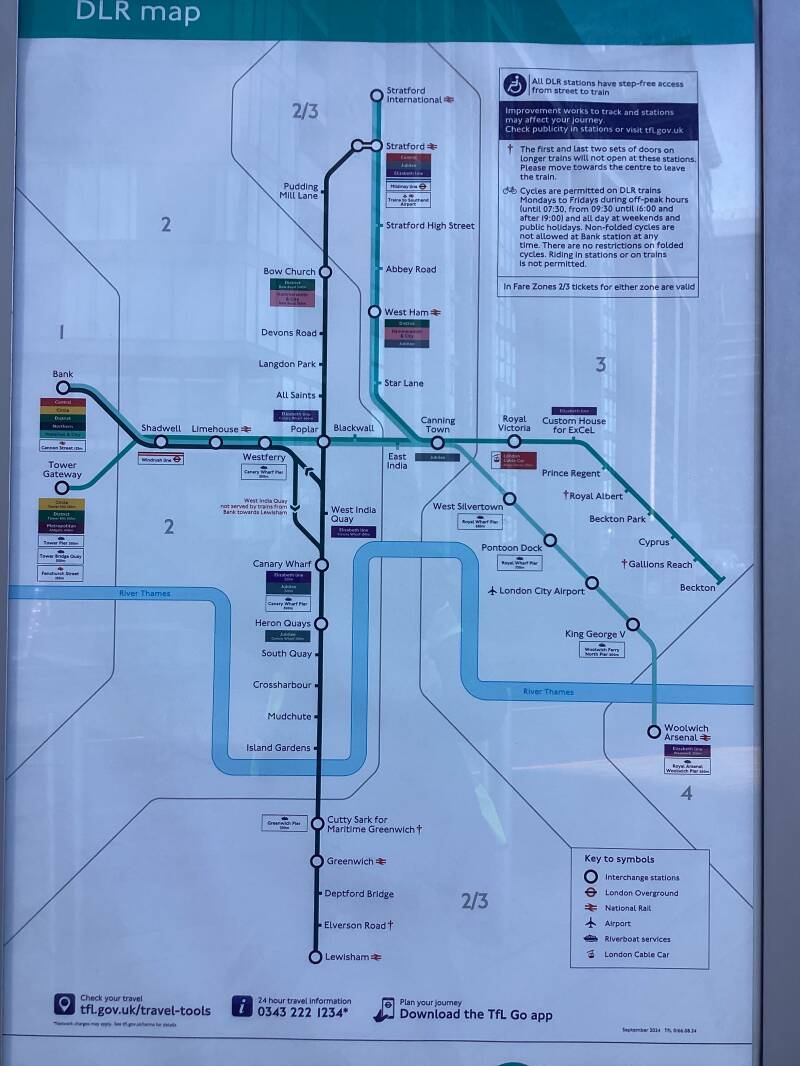
Along NORTH WOOLWICH ROAD: WEST SILVERTOWN & PONTOON DOCK DLR Stations
BARRIER POINT, apartments
THAMES BARRIER PARK
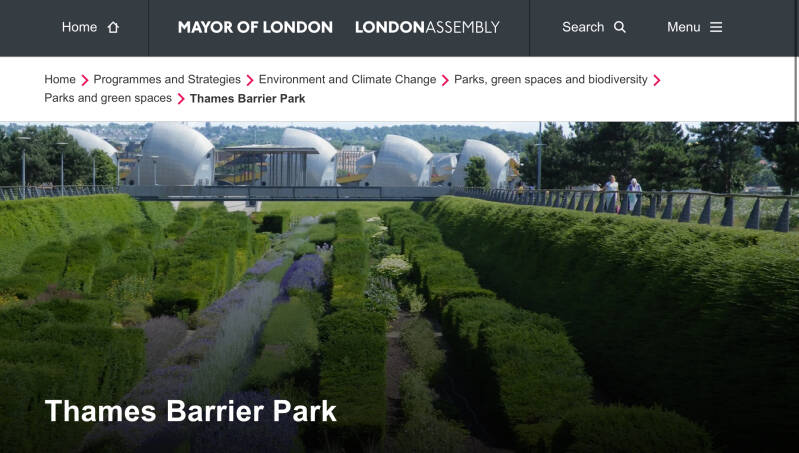
Created to aid the regeneration of the area by creating an attractive public space alongside residential and commercial developments.
Allain Provost and Alain Cousseran of Groupe Signes with Patel Taylor won the international competition to design the park in 1995. As the first largely post-modern park design in London, it has a fresh modern look with adventurous planting and dancing water fountains. The site was built on what was one of the country's most polluted sites, the former PRChemicals factory. Decontaminating the site took many years.
One of the most eye-catching features of the park is the 'Green Dock', a 130 foot long sunken garden running diagonally through the park that is intended as a reminder of the site's dockland heritage. The 'Green Dock' provides a wind protected microclimate for a variety of plants and wildlife. The hedging plants are trimmed to imitate the waves of the river and the herbaceous plants are in long parallel straight lines
The PAVILION MEMORUAL is a shelter put up in memory of Newham’s victims of war. The ondulating stone work which provides seating continues the wave planting in the Green Dock.
THAMES BARRIER
Movable barrier system designed to prevent the FLOODPLAIN of most of GREATER LONDON from being flooded by exceptionally HIGH TIDES and STORM SURGES (up to 3,5 metres, combined with strong winds) moving up from the NORTH SEA.
At low tide the river’s flow towards the sea is allowed. When needed, during height tide, it is raised.
It has been operative since 1982. Up to June 2020, 193 flood closures.
The 2007 storm surge was compared with the 1953 . Evacuations were made.
The 1953 NORTH SEA FLOOD gave way to the WAVERLEY COMMISSION, which recommended raising river BANKS, but, as well, as an alternative, the investigation about an alternative.
Two proposals: acROAD VIADUCT with two sluice gates and FLAP GATESl ying on the river.
In 1966 SIR HERMANN BONDI, Brutish-Austrian Mathematician and Cosmologist, strongly recommended the building of the BARRIER, taking into account costs and damages (45 sq. miles/117 sq.km would be flooded, £50 billion damages at 2020 prices)
1969. IDEA: REGINALD CH.DRAPER designed the rising sector gates. He constructed a model in his parents’ home (WOOD GREEN). He based the novel ROTATING CYLINDERS on the design of the taps of the gas cooker.
RENDEL, PALMER and TRITTON designed and tested the idea in the HYDRAULIC RESEARCH STATION, in Wallingford.
The site =CHARLTON to SILVERTOWN was chosen for the straight banks of this stretch of the THAMES and for its strong underlying river chalk.
The THAMES BARRIER AND FLOOD PREVENTION ACT 1972 authorised the construction. Work began in 1974. The S piers (9 to 6) were b. first. Then the N ones(1-5), in order to allow traffic.
To firm the gate RECESSES precast concrete sills were built HERE, SILVERTOWN, in a cofferdam, then floated out and sunk.
The GATES were fabricated in Darlington, assembled in Port Clarence. Gates, gates armes and rocking beams were transported from the Tees nobs by barge. Then, lifted into position.
Officially opened by QEII in 1984. £461 million (1.2 bill. now). The additional flood defences (raising and strengthening of river banks along 18 Kms) cost £100.
LENGTH:520/1.710
CHANNELS: 4x61/200 spans, 2x30/100 spans, 4 smaller non navigable channels
9 concrete piers 2 abutements
FLOOD GATES: circular segments that operate by rotating. Steel, hollow. Filled with water when submerged. The 4 large 20/66 weight 3.700 t
When? Who? What about the future?
The closing of the barrier is triggered by the combination of HIGH TIDE/STORM SURGE, when at the normal TIDE LINIT at TEDDINGTON WEIR there is indication that water levels would exceed 4,87/16 ft in CENTRAL LONDON.
The TB is owned and operated by the ENVIRONMENTAL AGENCY.
Designed to protect up to 2030. From then, protection against very big flood levels will decrease but within acceptable levels.
At the moment of construction it was expected to be used up to 3 times a year. Now, it is used up to 7 times. 50 times in 2013-14. Notwithstanding global warming and the rise of sea levels, recent analysis hav3 3G ended its work8ng life until around 2070.
In 2005 an academic report contained a proposal to supersede the TB with a 16/10m long BARRIER across the ESTUARY from SHEERNESS to SOUTHEND.
Another proposal has been a new TB between EAST TILBURY and CLIFFE, incorporating GENERATING TURBINES, including Road and rail roads on tunnels, connecting a new airport at the ISLE OF GRAIN.
HERE, a foot/cycle bridge has been suggested by LIFSCHUTZ DAVIDSON SANDILANDS Arch.
Fiction and entertainment
+++
INCIDENTS: 15 boat collisions. In 1997 a dredge sank and dumped 3.300 tonnes of gravel. When the MARCHIONESS disaster happened (close CANNON BRIDGE Station and SOUTHWARK BRIDGE) it was closed in order to assist salvage operations.
Site of Brunner Mond & Co. Ammunition works
This was a redundant chemical plant that Brunner Mond repurposed for munitions production in 1914. It was used to purify TNT, a dangerous process that led to a massive explosion in January 1917, destroying the factory and causing widespread damage. It killed 73 people in and around the factory (69 immediately, and four later from their injuries), and injuring hundreds more; it also destroyed the factory and hundreds of local houses, and damaged thousands more
The site of the destroyed factory remained empty for nearly a century, but a neighbouring factory continued in operation until 1961. Both sites were cleared for a residential redevelopment in 2014, and construction of the Royal Wharf development began in 2015.
Brunner Mond's Silvertown Works in London became part of the I.C.I Alkali division, the plant was rebuilt after the war and eventually closed in 1961.
UPSTAIRS DOWNSTAIRS TV SHOW: and other references in popular culture: https://en.wikipedia.org/wiki/Silvertown_explosion
Silvertown War Memorial, also known as Silvertown Explosion Memorial, is a war memorial in Silvertown, in East London. It serves as a memorial for the workers at the Brunner Mondchemical plant who were killed on active service during the First and Second World Wars, while also commemorating the people killed in the Silvertown explosion on 17 January 1917.
Connaught Bridge (to ROYAL VICTORIA and ROYAL ALBERT DOCKS)
”ATHENA” artwork by Nasser Azam. Tallest bronze sculpture

At just over twelve metres high, AZAM's Athena is the tallest bronze sculpture in the United Kingdom. Athena was made at the Zahra Modern Art Foundries, formerly Morris Singer, which has produced some of the world’s most famous monumental sculptures including the bronze lions in Trafalgar Square. The sculpture was unveiled on 5 July 2012
Road access to LONDON CITY AIRPORT (see next chapter)
LONDON CITY AIRPORT DLR station
Site of the Silvertown Bypass
Connaught Rd.
Site of THE RAILWAY TAVERN, now flats. Mrs.Cundy and Mrs.Marx
Landlady Mrs Candy let this pub be used as the 1889 Workers' StrikeHQ. Eleanor 'Tussy' Marx (daughter of Karl) was at all the strike meetings and secretary of the Silvertown Women's Branch of the Gasworkers' Union. She wrote articles, spoke on the picket lines and represented the women workers who lost pay if the machines failed and suffered from lung disease or poisoning.
Although this particular strike was unsuccessful, it paved the way for the labour movement.
Site of SILVER and Co. works. Now, Thameside Industrial Estate
Scrap iron, steel importers
North Woolwich Road
TAY WHARF Gate Entrance. Site of KEILLER & SONS, jam factory

1880-1997.Fruit arrives by SHIP, sugar came from NEXT DOOR.
JAMES KEILLER arrived in London, from Scotland in 1880. He made the famous DUNDEE MARMALADE, now produced by MACKAYS. In fact he started business after buying a Spanish ship (with a cargo of Seville oranges, too bitter to eat…) which had sought refuge from a raging storm!.
CROSSE & BLACKWELL, ROBERTSON, HAIN CELESTIAL Now a subsidiary of NESTLE.
Preserves, chocolates, confectionery, cakes (Dundee cake). Even spices and herbs
A fire ravaged the site in 1889. Rebuilt 1890. See cornerstone above East Gate.
1900.The entrance had a strange, tunnel-like appearance, designed, maybe, so that dockers could be inspected as they left.
The 7th September 1940, during the first daylight raid of the BLITZ, the area was completely destroyed. Chocolate and confectionery production was transferred to Dundee, while preserve manufacturing was restarted here after a few months. Here it stayed until 1956.
CROSSE & BLACKWELL moved here its sauce and pickle factory, from Bermondsey. Salad cream and ketchup followed in 57/58.
Former ST.MARK’s Church, now BRICK LANE MUSIC HALL
ST.MARK’s VICTORIA DOCKS, or ST.MARK’s SILVERTOWN, as it was called, as well, originated in an iron church b. 1858.
The current building (and the school) were designed by SAMUEL SANDERS TEULON. It opened in 1862, an 2 years afterwards became a parish on its right, taking parts of WOOLWICH (ST MARY MAGDALENE) and EAST HAM.
The dockers’ manager CH.CAPPER was allowed the right to appoint the first vicar. After that one. the Bishop of London, and then the Corporation of the City.
Mission churches were founded: ST.MATTHIAS, CUSTOMHOUSE, ST LUKE, which later became parish, ST.JOHN, NIRTHBWOOLWICH, ST.BARNABAS, WEST SILVERTOWN.
After surviving the war, the decline in population forced its redundancy. The LB of Newham purchases it with the idea in mind of turning it into a museum. In 1981 the roof was destroyed by a fire.
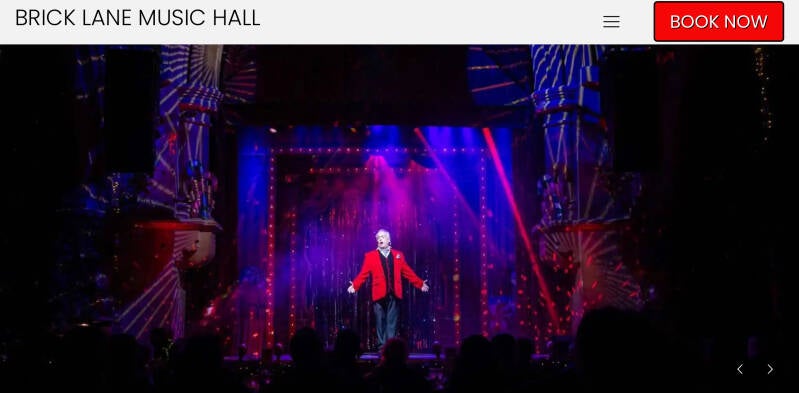
BRICK LANE MUSIC HALL acquired it in 2003 and moved in in 2006
Stage, light and sound systems, bar and kitchen occupy now the church interior. The Vestry houses offices.
Food and drinks are served at tables, before the show, cabaret stylea, begins, and at intervals.
BLMH had been established in 1982, on the site of the OLD GRUMAN BREWERY, by VINCENT HAYE. He had been the landlord of the LORD HOOD P.H., and he himself performed there.
JANET KEILLER
Look opposite for the remaining gates to Tay Wharf.
Janet Keiller (1737-1813) ran a sweet shop and produced jams in Dundee. When her Seville oranges arrived late, she made marmalade, adding thin strips of the rind which made it more spreadable.
After sugar tax was abolished, the family opened a factory here in 1888, employing 260 people. It was completely gutted by the Silvertown explosion.
Janet Kellier is said to be the creator of the Dundee cake.
'Paddington 2', featuring the marmalade-loving, Paddington Bear was filmed here.
Factory Road
You are entering now “the sugar mile”… Now, luxury flats, surround a factory
TATE & LYLE

TATE was from Lancashire. After an apprenticeship, he owned his own shop at 20. By 35 he had 6 stores. He became a partner with WRIGHT’s refinery, acquired full control in 1869. He originally produced his sugar in his Liverpool refinery. Here, from 1878.
LYLEwas known for his GOLDEN SYRUP in Greennock, Sacotland, and established his sugar refinery in PLAISTOW WHATF, Silvertown In 1883. Now, behind the massive walls you if the UK hub of all things sweet. TREBOR’s mints and KEILLER’s marmalade, were made in the area.
The working jetty is visible from the THAMES PATH, along the S side of the Thames shore, the Charlton side. This is a SAFEGUARDED WHARF, saveguarded from developers, dedicated to industry, by the PLA and the MAYOR OF LONDON.
Now, the largest refinery in Europe… producing 1,2 tonnes of sugar a year.
HENRY TATE and ABRAM LYLE were the sugar kings of the area, in the 19th c. They were rivals, in their lifetime, who would take the same train, from FENCHURCH ST. STA. ignoring each other.
TATE became a very strong sugar brand, He they started producing the famous TATE’S CUBED SUGAR. In 1872 Tate bought the right to produce them from EUGEN LANGEN (petrol engine, Wuppertal suspension railway)
They died in 1899 and 1891, respectively . In 1921 the families took a tactical decision: merging. At that time they refined 50% of UK’s sugar.
Unrefined, inedible Brazilian, Caribbean, Moçambican cane sugar (50.000 tonnes) arrive in huge ships, being delivered to the jetty.
Some unrefined sugar ( “jet”) is transferred daily by lorry to PLAISTOW WHARF, to be turned into GOLDEN SYRUP, a byproduct of sugar refining ( “jet”). Originally the syrup was sold cheaply as a pigs food, but LYLE though that it could be adapted for human consumption. The ingredients have not changed from Victorian times, it only 9 GOLDIES know the exact recipe, formulated by chemists brothers EASTWICK, CHARLES and JOHN JOSEPH.
100.000 tins and squeeze bottles a day are produced here. Ice cream toppings and coffee syrups are made here, as well.
The giant version of the TIN, once very familiar item in Br. kitchens, is seen on the front of the PLAISTOW WHARF factory. Is it the oldest brand still in use, unchanged? (as GUINNESS WORLD RECORDS says). Yes, a dead lion swarmed by bees from the biblical story of Samson, remained virtually identical on the classic tin since 1883, though a rebrand has recently changed it for some products.
2008. First UK FAIR-TRADE company.
Underway 25% reduction in CARBON FOOTPRINT.
2010. Acquired by AMERICAN SUGAR REFINERY Inc., the world’s largest, with operation in the US, Canada, Mexico and Portugal.
Henry Tate
A modest, retiring man, concerned with workers conditions. He founded a TATE INSTITUTE, opposite his Silvertown refinery, for their recreation.
Obviously famous for his donation to the government of his collection of 65 paintings, plus £60.000 towards the construction of a suitable gallery, which would become the NATIONAL GALLERY OF BRITISH ART, which became known as TATE GALLERY, now TATE BRITAIN (opened 1897).
In Manchester, he donated £10.000 for the LIBRARY of MANCHESTER COLLEGE, a dissenting academy (f.1786, now in Oxford), plus £5.000 to promote “theory and art of preaching”.
1885. £20.000 to homeopathic HANNEMAN HOSPITAL, LIV.
£3.500 to BEDFIRD COLLEGE forWOMEN.
Donations to LIVERPOOL ROYCE INFIRMARY and QUEEN VICTORIA INSTITUTE, later QUEEN’s INST.for DUSTRICT NURSES.
LIBRARIES: Streatham, Brixton, South Lambeth,Balham
EDNA HENRY, Wonderful Woman

Edna Henry was one of the first Black women to work here, andwhen passed over for promotion, demanded that the managers reconsider. She so impressed the other girls that they made her the union shop steward. She became an expert in industrial law so the managers couldn't take advantage of the girls' lack of ducation. As the union rep for the hole factory, she turned down a supervisor promotion as she was worried it would prevent her representing the girls' interests saying, 'Money don't mean a thing to me, principles do.'
Bus garage
STORE ROAD sewage PUMPING STATION
curved, concrete sewage pumping station on Store Road in North Woolwich. Its is one of a number of pumping stations commissioned by the London Docklands Development Corporation, by architectes like John Outram and Richard Rogers. Grimshaw’s station is the most utilitarian of these.
Pier Road
Anchor
By the side of the Thames just upstream from the Ferry terminal. Note this large anchor was made with just one fluke
Crane
This small mobile crane travelling on railway lines was used in the docks for handling some of the smaller loads.
Site of BT International Teleport
The North Woolwich International Teleport was a British Telecom (BT) satellite ground station located in North Woolwich, East London, that was used for international satellite communications, including uplinking TV broadcasts. The site was decommissioned and the land is now used for other purposes, such as the Crossrail construction (now the Elizabeth line) and vehicle logistics bases, but old satellite dishes and masts are still visible in some photos from around 2017

Want to cross the Thames?
FOOT TUNNEL
Extracts from https://en.wikipedia.org/wiki/Woolwich_foot_tunnel :
The tunnel was designed by Sir Maurice Fitzmaurice and built by Walter Scott & Middleton[3] for London County Council and opened by Lord Cheylesmore, Chairman of the LCC, on Saturday, 26 October 1912.[4] Its creation owed much to the efforts of working-class politician Will Crooks, who had worked in the docks and, after chairing the LCC's Bridges Committee responsible for the tunnel, would later serve as Labour MP for Woolwich.
Greenwich Council started work to upgrade both this tunnel and the Greenwich foot tunnel on 19 April 2010. The works were to reduce leakage, improve drainage structural weaknesses discovered in the stairways and tunnel itself and to install new lifts, CCTV, communication facilities and signage, with an original completion date of March 2011
The tunnel has been fitted with a leaky feeder system to permit operation of mobile phones. The tunnel is 504 metres (1,654 ft) long and at its deepest, the tunnel roof is about 3 metres (9.8 ft) below the river bed
In 2016 the Ethos Active Mobility system was installed in the tunnel to monitor and actively manage tunnel usage. The system uses computer vision to count and measure the speed of bicycles and pedestrians, and displays messages on electronic signs to encourage considerate behaviour. The system has also been installed in the Greenwich foot tunnel
WOOLWICH FREE FERRY
With thanks to GOOGLE AI:
- 1308: The earliest reference to a ferry at Woolwich appears in state papers, documenting the sale of the business and house by a waterman named William de Wicton for £10.
- 1811-1844: A commercial ferry company was established by an Act of Parliament but eventually dissolved due to poor management. The British Army also established its own ferry in 1810 to move troops and supplies for the Royal Arsenal.
- 1880s: Local residents of Woolwich argued that their taxes had helped pay for the toll-free bridges in West London and demanded a free crossing in East London.
- 1889: The campaign succeeded, and the free public ferry service was officially opened on March 23 by the newly formed London County Council (LCC). The initial fleet consisted of side-loading paddle steamers named the Gordon, Duncan, and Hutton.
- 1920s-1930s: The original fleet was replaced by newer, larger paddle steamers to accommodate the rise in motor vehicle traffic.
- 1963: The paddle steamers were retired and replaced by modern, diesel-powered motor ships designed for roll-on/roll-off vehicle handling, significantly reducing waiting times. The new vessels were named James Newman, John Burns, and Ernest Bevinafter prominent local political figures.
- 2009: The extension of the Docklands Light Railway (DLR) to Woolwich Arsenal station provided an alternative river crossing, which led to a reduction in foot passengers using the ferry.
- 2019: Two new, hybrid-powered vessels, the Ben Woollacott and the Dame Vera Lynn, were introduced to replace the 1963 fleet.
“Ferry”
The word "ferry" originates from
Old English "ferian" (to carry or convey) and Old Norse "ferja" (to ferry or pass over). It comes from the Proto-Germanic "farjan" and the Proto-Indo-European root "per-" meaning "to bring or carry over". The noun "ferry" emerged from the verb in Middle English, and its meaning of "a boat used for carrying passengers" is a shortening of "ferry boat".
The word "ferry" originates from
Old English "ferian" (to carry or convey) and Old Norse "ferja" (to ferry or pass over). It comes from the Proto-Germanic "farjan" and the Proto-Indo-European root "per-" meaning "to bring or carry over". The noun "ferry" emerged from the verb in Middle English, and its meaning of "a boat used for carrying passengers" is a shortening of "ferry boat".
Why are so many “Ferry Roads” in London?
London Bridge was the only dry crossing over the River Thames in the immediate London area until the early 18th century but it was narrow and congested. The roads into and out of the capital were in a poor state. It was easier to take a ferry, or a wherry rowed by a waterman. The Thames was London’s highway.
There were regular ferry services at various points, which could transport horses and wagons as well as pedestrians across the river. An example was the Lambeth Horseferry between the Palace of Westminster and the Archbishop of Canterbury’s Lambeth Palace. The Woolwich Ferry was mentioned in a document of 1308. It became increasingly important with the establishment of Henry VIII’s dockyards at Woolwich and the Royal Arsenal ordnance depot
Watermen
Ferry staff, including captains, undergo rigorous training and an apprenticeship process. To qualify for certain roles, staff must obtain a qualification from the Company of Watermen and Lightermen, which involves extensive knowledge of navigating the River Thames, often referred to as the "riverine version of the Knowledge".
The Company of Watermen and Lightermen is an ancient guild that has regulated water traffic and the watermen who worked on the Thames for centuries, and it continues to play a role in the training and certification of those working on the river today.
While the traditional titles are "watermen" and "lightermen", the industry is increasingly inclusive, and women successfully hold these positions.
"Water Women" on the Thames
- Official Titles: The historic guild that governs many river workers is the Company of Watermen and Lightermen. Women who complete the rigorous apprenticeship and training are referred to as Journeymen Freemen (the term "Journeyman" is used regardless of gender). The term "water woman" is sometimes used informally or in historical contexts, but "watermen" or "lightermen" often refers to the profession for both genders.
- Professional Roles: Women serve as captains, helms, and crew on passenger ferries like the Uber Boat by Thames Clippers and commercial vessels.
- Trailblazers: The first woman to go afloat in an official capacity was Jane Jeffery in 1994, who faced significant hostility but persevered to become a union representative.
- Apprenticeship & Competitions: Women undertake the full, multi-year apprenticeship required to gain the necessary qualifications to operate commercial craft on the tidal river. Female apprentices, such as Emily Hickman, have also competed in the historic annual Doggett's Coat and Badge Race, a sculling challenge for newly qualified watermen and lightermen.
- Industry Initiatives: Organizations like British Water have launched "Women on Water" campaigns and networks to support women in the industry and promote diversity.
A family owned ferry in West London

If you have decided to make your way to Woolwich…

I hope you are enjoying this guide
With thanks to WIKIPEDIA
With thanks to A LONDON INHERITANCE. Here you have their GUIDED TOURS

Why not donating…