
DUE NORTH: ROYAL ALBERT DOCK BECKTON DISTRICT PARK MID-BECKTON EAST HAM - PLASHET HIGH STREET (SOUTH & NORTH) WOODGRANGE PARK FOREST GATE
* PARK LAND and railway turned cycleway * EAST HAM MEDIEVAL CHURCH and CHURCHYARD, now turned NATURAL PARK * SEWER EMBANKMENT turned cycle/walking path * EAST HAM and PLAHET, JEWISH CEMETERIES * SRI MURUGAN HINDU TEMPLE * SOUTH INDIAN SHOPS and EATERIES * SOUTH INDIAN COMMUNITY
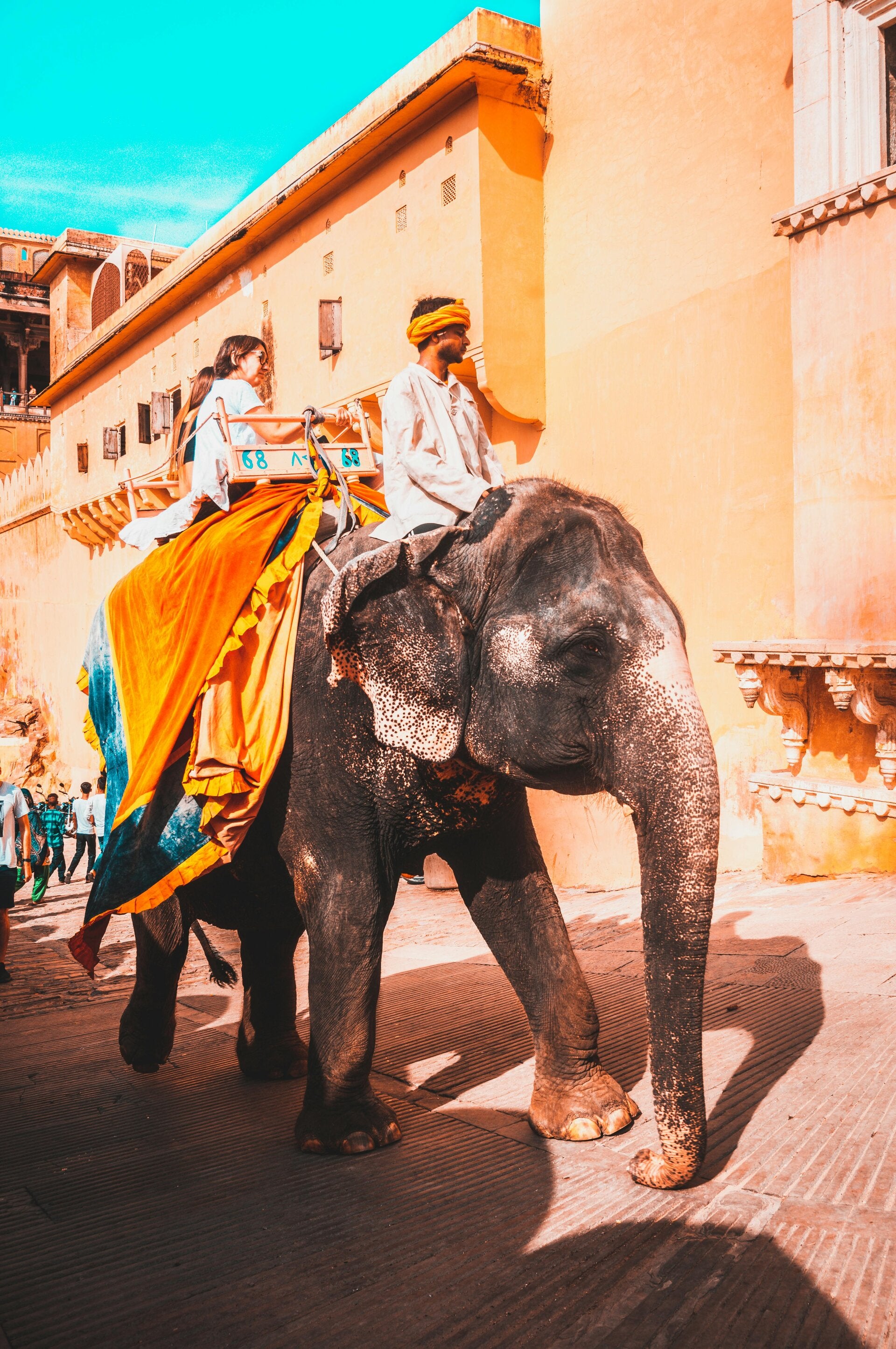


Bus routes 129 and 376
ROYAL ALBERT DLR Station
CUSTOM HOUSE ELIZABETH LINE Station
EXPLORING EAST LONDON
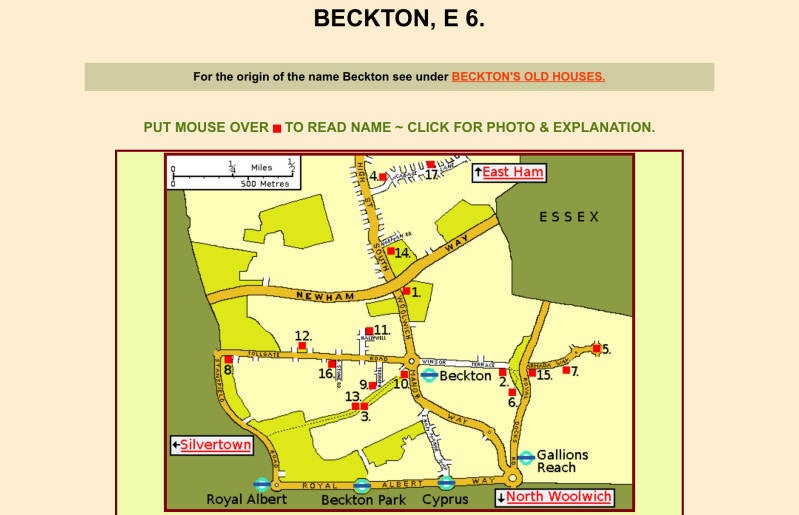
Beckton Corridor, a former railway line to Beckton Gasworks
BECKTON
Throughout most of its history, much of Beckton was flat, low lying marshland. In the 19th Century, when the east of London was used to serve the needs of the west, the Gas Light and Coke Company bought 540 acres in the area and in 1870 opened Europe's largest gas works, serving the whole of London. In honour of the event, the whole district was named after Simon Adams Beck, the Governor of the Company. What became today's GMB Trade Union was founded at these works, which stopped making gas in 1969 after the introduction of natural gas.
Beckton's other historic service to London was in drainage. n 1875, Joseph Bazalgette's monumental drainage system for the metropolitan area was completed. It ended cholera in London. and led to the development of the modern flush toilet. It also gave Beckton the distinction of being the destination for all of the sewage of London north of the Thames, and of having the largest sewage treatment works n Europe.
The areas in the south and west of Beckton were not involved in either of these activities. Instead, in the first half of the 20th Century they were earmarked for a fourth great dock, should the three massive Royal Docks prove inadequate. However, in the mid 1960s the Port of London Authority faced facts and abandoned its plans to build the dock - a precursor of the decline of business which was to lead to the closure of the Royals in 1981.
Meanwhile, the fact that the PLA owned much of the land stood in the way of would be developers. The main exception was Cyprus, an estate built in 1881 after the opening of the Royal Albert Dock, and so named because of the raising of the Union Jack over the Mediterranean island three years earlier in 1878.
Tollgate Road

Residencial development
- Much of the modern residential development in Beckton, including around Tollgate Road, consists of houses built in the 1980s following the decline of the heavy industry. Some older housing stock included prefabs on what was Old Beckton Road, which is now part of the modern Tollgate Road/Eisenhower estate area.
- Community Life: The area today is a mixed residential and business space with numerous community facilities. St Mark's Community Centre, located at 218 Tollgate Road, is a central local hub that has recently undergone significant refurbishment.
Eisenhower Drive: site of prefabs
Mysterious obelisks (they seem not to commemorate anything and are just for show)
Tollgate Road, between Swallow Street and Kingfisher Street: set back behind the green
Between Ambassador Gardens and Concorde Drive: in an enclosed green square
Foot/cycle Bridge over Newham Way
Roman Road
Former Beckton Alps

The Beckton Alps are ironically named, towering heaps of toxic waste (Formed from slag and waste from the massive Beckton Gas Works (1870-1970))from the former Beckton Gas Works in East London, repurposed into an artificial hill that once housed a dry ski slope (with plastic bristles) popular in the late 80s/early 90s
Became a distinctive feature in East London, used as a filming location for Full Metal Jacket and music videos. (attended by Princess Diana) but closed in 2001;
it's now an overgrown, sealed-off site though access to the summit is restricted. , a unique urban landscape with remnants of its past use and a local spot for nature
THE GREENWAY cycling/walking path (from BECKTON to STRATFORD on top of a sewer)
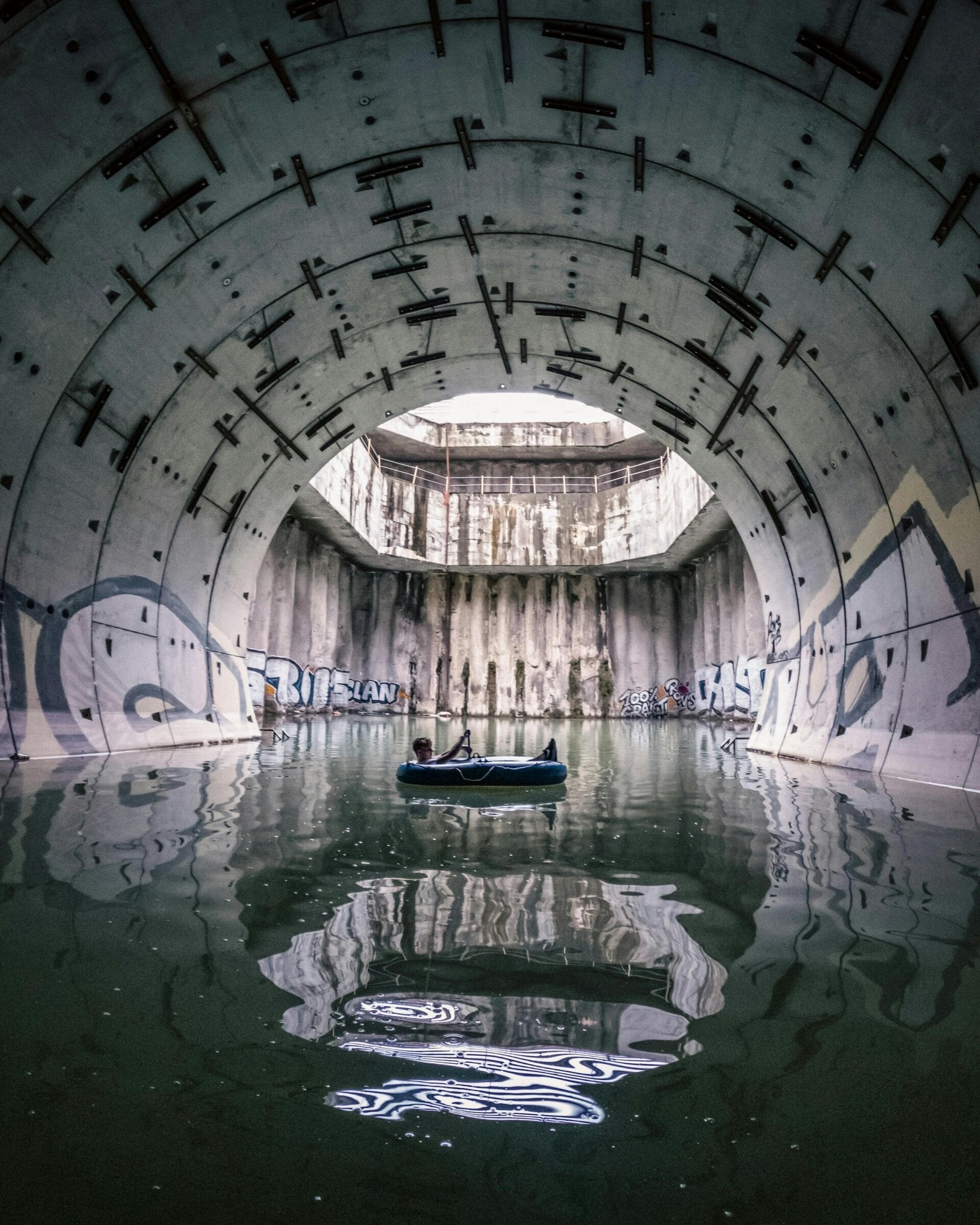
A 7-kilometre (4.3 mi) long footpath and cycleway in London, mostly in the London Borough of Newham, on the embankment containing the Joseph Bazalgette Northern Outfall Sewer.That is why the older alternative name for the route is Sewerbank, with the name Greenway introduced after a renovation in the mid-1990s.
In 1931 Mahatma Gandhi visited London for a period of 3 months for talks on the future of India, he based himself at Kingsley Hall in Bromley-by-Bow. His host there, the Christian Socialist Muriel Lester described his long early morning walks, beginning before sunrise, and which often took in the Sewerbank through Stratford to Plaistow. Gandhi enjoyed the elevated view the bank offered, and on these walks he would always gather a collection of well-wishers eager to speak to him
High Street
EAST HAM NATURE RESERVE (former churchyard!)
GREEN GYM: https://www.newhamgreengym.org
St.MARY MAGDALENE Parish Church of East Ham
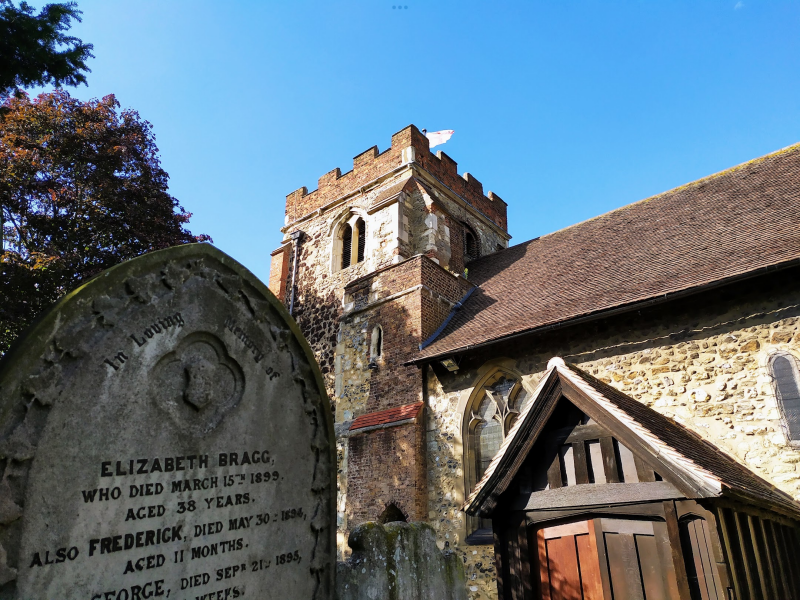
The oldest Norman parish church in London still in weekly use. Its nave, chancel and apse date to the first half of the 12th century and the tower probably to the early 13th century but partly rebuilt in the 16th century
A 13th c. recess containing a piscina for a nave altar
Faint traces of wall paintings from that century also survive on the apse
The roofs were altered in the early 17th
1639. Sir Richard Heigham gave the present white marble font.
William Stukeley is said to have selected the church's churchyard in his lifetime
Though box pews and a triple decker pulpit were added in the 18th century, they were replaced in the 1890s.
A west gallery for children was added in 1820
1830: south porch converted into a vestry
The London Blitz destroyed the chancel roof and the whole church's stained glass in 1941
Prize fights!
East Ham has a historical connection to illegal bare-knuckle prize fights, which were organized in lonely spots near the marshes in the 19th century until being suppressed by the police after the Metropolitan Police force was formed in the 1840s. Bare-knuckle prize fighting was officially made illegal in 1866 in the UK, with police actively shutting down events
- Daniel Mendoza: An early Jewish champion from Aldgate, known for bringing skill to bare-knuckle boxing.
- Tom Cribb: A famous bare-knuckle boxer who became British champion and defeated Tom Molineaux. Later he became a publican in the West End.
- Tom Sayers: A bricklayer by trade, he became a celebrated bare-knuckle champion, known for his tough East End roots.
- Bill Richmond: A Black American boxer and key figure in Georgian London's prize-fighting scene.
In the modern era, East Ham and the wider East London area have a strong boxing culture, with many local boxers training at clubs such as the legendary Peacock Gym in Canning Town or the Repton Boxing Club in Bethnal Green. These clubs have produced numerous amateur and professional champions, including those who have participated in professional "Prizefighter" tournaments sanctioned by the British Boxing Board of Control.
20th Century & Beyond:
- Lenny McLean: "The Guv'nor," an unlicensed boxing legend, enforcer, and actor (Lock, Stock and Two Smoking Barrels), famous for thousands of fights in the East End.
- The Lazar Family: A large Jewish boxing family from Aldgate in the 1950s, known for producing tough fighters.
- Prizefighters MMA: A modern team established at the Peacock Gym (Canning Town) in 1998, carrying on the tradition with MMA fighters like Jess Liaudin.
- Notable Figures: Historical figures linked to East End prize fighting include "Sugar" Goodson and Denny Harrington, who were involved in a notorious fight in a disused chapel in 1882 that was raided by police.
High St. West side:
??
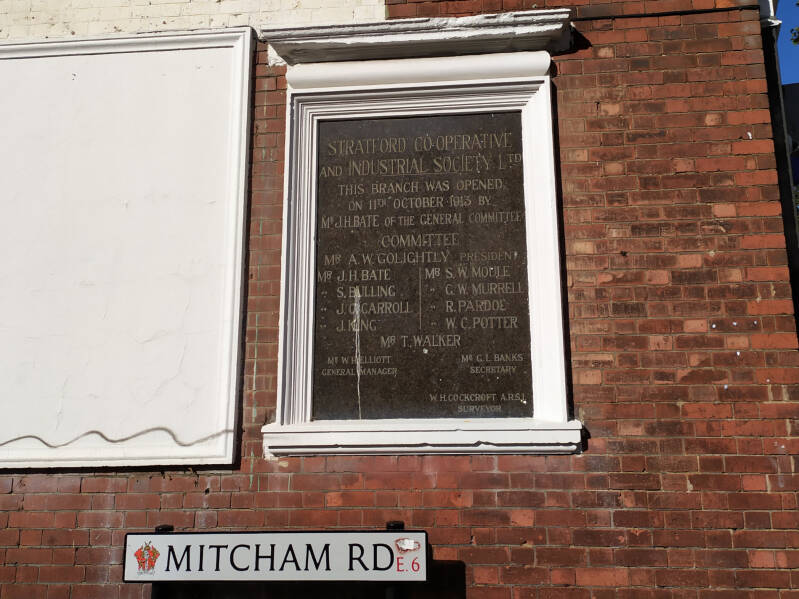
STRATFORD COOPERATIVE SOCIETY BRANCH
EAST HAM JEWISH CEMETERY


Founded in 1919 by the UNITED SINAGOGUE. An area of 25 acres, laid out symmetrically, with tarmac paths and graves stones set in gravel. Pollarded limes alongside the 2 main axes. Only a small area of flowering shrubs.
Some traditional classical funerary monuments.
In the centre, the white painted PRAYER HALL, and a colonnaded cloister. Designed in 1924 by HW FORD. A construction tha5 seems more suited to a Mediterranean seaside resort!.
A hedged WAR MEMORIAL of gravestones set in grass. WW1 and WW2 110 servicemen/women are buried here
Buried here are: MARK ROTHSTEIN (victim of HUGHES MANSIONS), ISIDORE BERLINER (founder of the LONDON JEWISH HOSPITAL), TED “KID” LESIS (or SOLOMON MANDELOF, 1915 world’s welter-weight boxing champion,
East Enders buried in Essex
Jewish East Enders were buried in Essex cemeteries because their original burial grounds, like those in Mile End, became overcrowded or were needed for development (e.g., Queen Mary University); remains were often moved to larger facilities further out in Essex (like Brentwood) to comply with Jewish law requiring undisturbed burial.
This reflects a pattern where growing Jewish populations established early cemeteries near settlement areas, then sought larger sites in surrounding counties as populations expanded.
Why Cemeteries Moved East:
The first Jewish settlers in London, arriving after 1656, settled in the East End (Mile End) and established burial grounds nearby, like the Sephardi Velho cemetery in 1657 and the Ashkenazi Alderney Road cemetery in 1696.
As the Jewish population grew, these sites filled up, necessitating new, larger cemeteries, such as the Sephardi Novo Beth Chaim in 1726, also in the East End.
In the 1970s, university expansion (Queen Mary, University of London) threatened the old Mile End sites, requiring the exhumation and reburial of thousands of remains.
Due to religious requirements and logistical constraints, these remains were relocated to cemeteries in Brentwood, Essex, which offered space and a solution for preserving Jewish burial grounds away from urban development.
UNITED SYNAGOGUE: https://en.wikipedia.org/wiki/United_Synagogue
ST.PAUL THE APOSTLE and THE ROMAN SAINTS, Orthodox Romanian Chu4ch
The Romanian Orthodox community in East Ham primarily uses St. George and St. Ethelbert's Church, a 1930s Anglican building on Burford Road that now hosts Orthodox services, while the historic St. Michael's Church on Rutland Road, also an ex-Anglican church (closed 1971), is another known Romanian Orthodox Site
Romanian Community
Thackeray Road
DAME VERA LYNN, born here
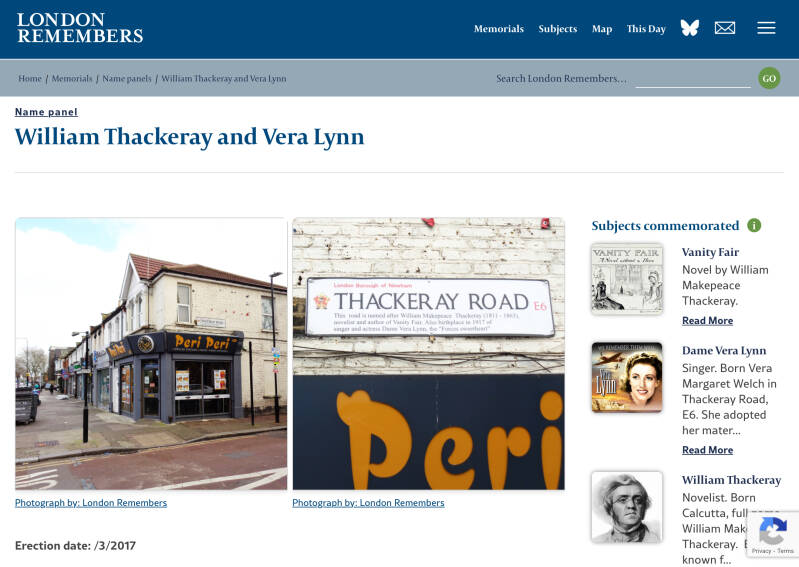
From the age of 4, LADYSMITH AVE.
Montpelier GARDENS
MAJOR ALLAN H. BECKETT: OF MULBERRY HARBOURS FAME
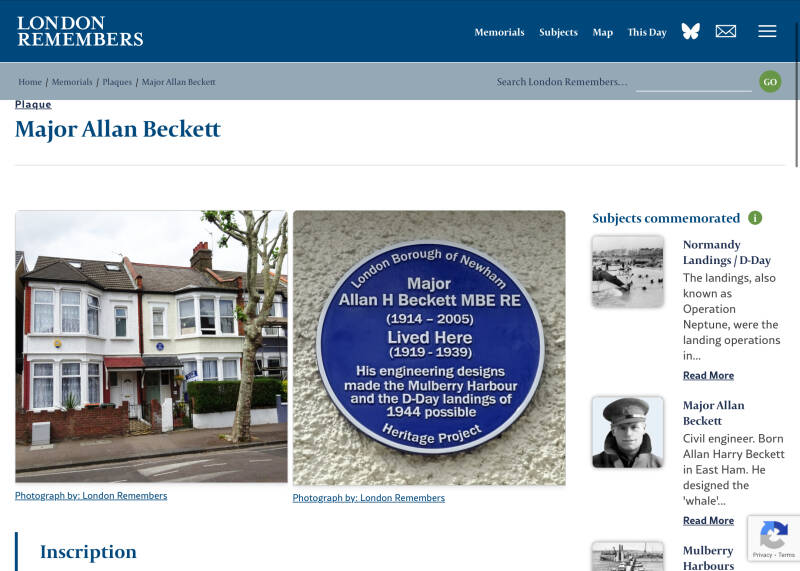
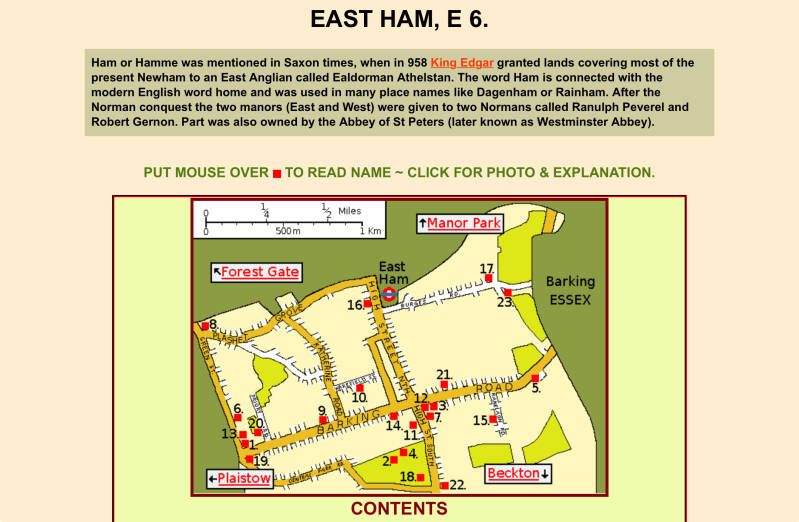
More info about the area
CENTRAL PARK
Central Park in East Ham was officially opened on 5th July 1898, a result of the growing need for public recreational spaces in rapidly urbanising East London. The park was developed on land that was previously part of the Manor Farm estate, which had been purchased by the East Ham Urban District Council. The founding of Central Park was spearheaded by John Harvey Bethell – first mayor of East Ham District Council united with William H. Savage, the district surveyor for East Ham, and local landowner Colonel Henry Burges, Lord of the Manor and owner of Rancliffe House on what had formerly been grazing land. These individuals and their families were instrumental in advocating for the creation of the park, understanding the necessity of such spaces for improving the community’s quality of life.
The opening ceremony of Central Park was a grand event, attended by local dignitaries and residents and reported in the Stratford Express on Wednesday 6th July 1898 (see pic of microfilm, see also re-creation of article). Mayor Bethell passionately advocated for more public parks to enhance the well-being of East Ham’s working-class population. He believed that parks were essential for physical exercise, relaxation, and social interaction, which were crucial for a thriving community. Over 5,000 residents attended the event, enjoying refreshments and speeches stressing the importance of creating resources for children.
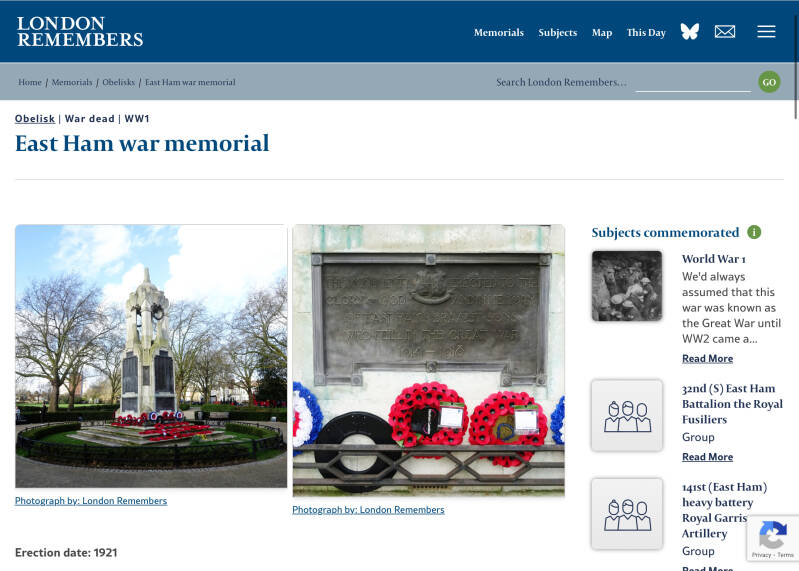
WAR MEMORIAL
Site of RANCLIFFE HOUSE
East Ham Hall was the manor house which stood near the parish church; but whose manor stretched to this area. In 1369 Walter Hewet, then the current owner, was given permission to crenellate the hall.
Later it appears to have been called Rancliffe House. In 1898 the owner, Col. Burges, donated a portion of his land to be turned into the present Central Park. This border stone of the manor is inscribed on one face with the words: MANOR of EAST HAM HALL. There was another inscription on another face of the stone which is now illegible.
Co-op Society Urns
four urns now set up in the northern part of the park. These came from the roof of the East Ham Co-operative building, when it was demolished in 1989. They date from 1929
The LCS had a famous, large store on East Ham High Street, described as a local "Hamleys" or "Harrods,". It was more than just a shop; it was a landmark and symbol of community spirit, with its own political representatives and services.
East Ham High St. South
Site of THE WHITE HORSE HOTEL and P.H.

DIVERSION to Barking

Barking Road
Nos.441-445 Barking Road. WHITE HORSE
About 1900, the building was occupied by a vet, and that this probably accounts for the presence of the horse. It was a common practice for a vet to advertise his practice with a horse, just as a barber had a pole and pawnbroker had three balls.
Welcome to East Ham!
The old Civic Centre, one of the best sets of Edwardian buildings in London. A time of civic pride
NEWHAM COLLEGE
1962 mural, artist unknown
Site of FIRE STATION?
Former LIBRARY
In 1903 the East Ham Improvement Act empowered the Council to spend a 1 1/2d rate on its libraries and with assistance from Andrew Carnegie two further libraries were opened, at Manor Park in 1905, and in 1908, adjoining the Town Hall in High Street South.
CARNEGIE, EDWARDS?. PHILANTROPISTS
Andrew Carnegie's philanthropy, outlined in The Gospel of Wealth (1889), saw him give away nearly all his fortune ($350M) to advance knowledge, education, and peace, notably funding over 2,500 libraries, universities, scientific research (Carnegie Institution), and cultural institutions, establishing permanent trusts like the Carnegie Corporation of New York to manage giving and promote self-improvement through accessible knowledge, a model influencing modern philanthropy.
Carnegie believed, that was the core philosophy, that the wealthy were obligated to use their fortunes for public good, acting as "trustees" rather than owners.
The Gospel of Wealth is the work where he articulated his view that the rich should live modestly and reinvest riches to benefit society, promoting education and culture.
He considered free public libraries the most important gift, provided communities maintained them as public property.
The key Philanthropic Areas where he was involved and the institution he created:
- Public Libraries: Funded over 2,500 libraries worldwide, emphasizing community support for upkeep.
- Education & Knowledge: Supported universities (like the Carnegie Trust for Scottish Universities) and established the Carnegie Institution for Science (1902).
- International Peace: Endowed the Carnegie Endowment for International Peace (1910) and built the Carnegie Endowment for International Peace Peace Palace in The Hague.
- Cultural & Civic Bodies: Founded the Carnegie Institute of Pittsburgh (education/culture) and the Carnegie United Kingdom Trust (various charities).
As for his Legacy, he established the Carnegie Corporation of New York (1911), largest foundation, to manage the bulk of his remaining fortune for knowledge diffusion.
He created independent, self-governing institutions, allowing future generations to adapt goals while upholding his core mission.
His model of large, endowed foundations continues to shape global philanthropy, funding critical work in education, science, and peace.
Nelson St.
Site of POWER STATION
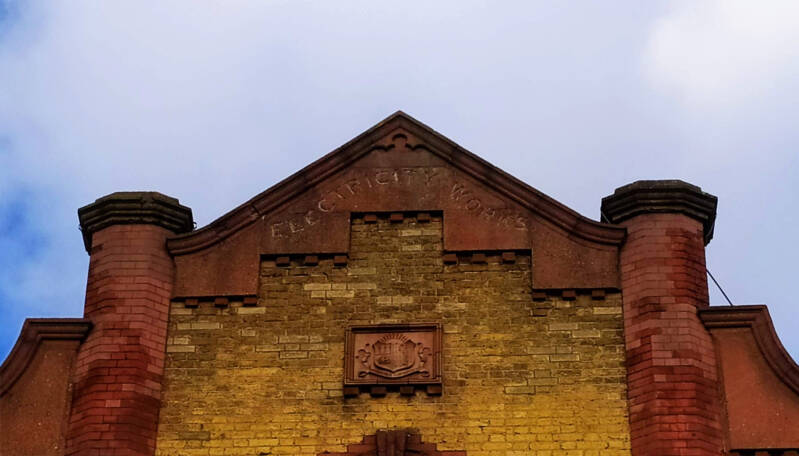
Former TRAM DEPOT
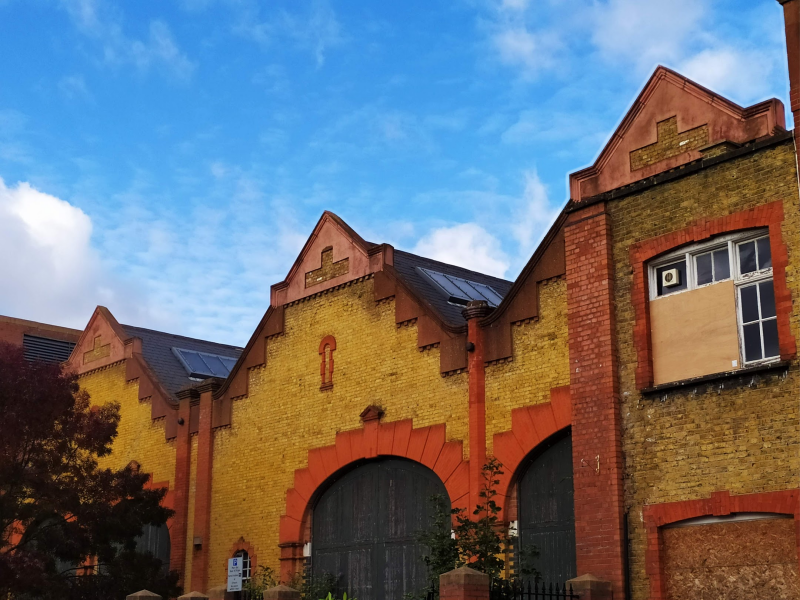

The depot was renovated for reuse in the 1990s and is now used by the East Ham Leisure Centre. The blocky building, bearing the relief, is clearly new, and dates from that time. The building on the right is the, cleaned-up, west-most part of the original Edwardian tram depot, with the 4 large doors. This 1915 map shows a single tram track in Nelson Road splitting into 4 tracks entering this building, through these 4 doors.
The map shows that this block also contained (clockwise, starting from our photo) Public Baths, a few houses, Fire Station, Library, Town Hall, Technical College, Central Hall, Electrical Works, Tramway Depot, of which all remain with the exception of the public baths and the central hall.
EH, from 1901 until 1933 (LPTB, which closed this depot and transferred the operations to BOW and WEST HAM) ran its own tram services. It was the first local authority to have electric trams from the start
NEWHAM TOWN HALL
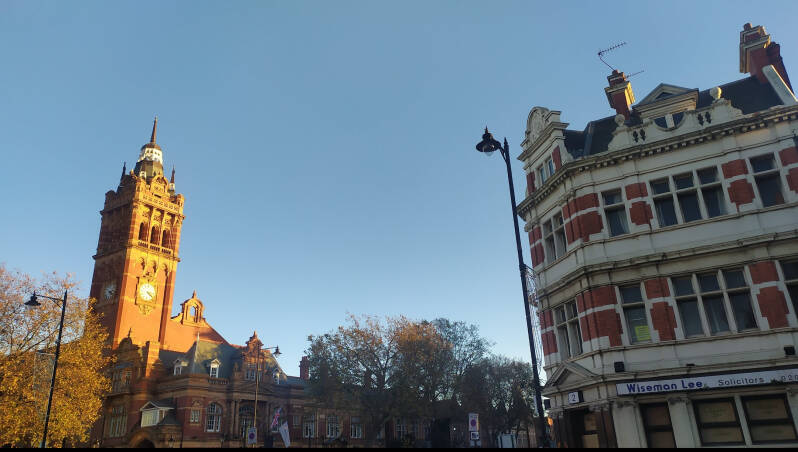
It was designed by Henry Cheers and Joseph Smith in the Renaissance style, built by D.W. Barker and was officially opened by the philanthropist, John Passmore Edwards, on 5 February 1903. The design involved an asymmetrical main frontage with six bays facing onto Barking Road; the right hand section featured a 150 foot (46 m) high tower and a large archway to the extreme right inscribed with the words "Public Hall" above. The tower contained a clock by Smith & Sons of Derby, and an hour bell cast by John Taylor & Co of Loughborough, which weighed almost a ton (19cwt).
A long extension to the south of the main building was completed in 1910 and a three-storey annex was built to the east on Barking Road in 1939. Internally, the principal rooms were the public hall, the council chamber and the mayor's parlour.
It was built to serve as the administrative headquarters of East Ham Urban District Council. The East Ham Urban District was given municipal borough status in 1904, and county borough status in 1915.
The building continues to be the local seat of government after the formation of the London Borough of Newham in 1965, serving as its administrative headquarters and here is where formal Council meetings take place, but most of the council offices have been relocated, since 2009, to 1.000 DOCKSIDE ROAD, beside the ROYAL ALBERT DOCK.
EAST HAM, NEWHAM?
The local authority of this area was the civil parish of East Ham.
In 1878 the 1958 Local Government Act was adopted, and East Ham became a Local Government DISTRICT. The civil parish of LITTLE ILFORD was absorbed.
The 1884 LGA reconstituted the area as a URBAN DISTRICT. The council meetings were still held in the SCHOOL BOARD OFFICES (Wakefield St.)
In 1904 EH was granted a charter of incorporation, and was constituyas a MUNICIPAL BOROUGH. The new TOWN HALL was build to house the Mayor, 6 Aldermen and 18 Councillors.
1915. EH became a COUNTY BOROUGH, within the COUNTY OF ESSEX, burg gaining independence from the County administration. East of GREEN STREET, EH had its own Fire Brigade and until 1933 (LPTB) ran its own tram services.
1965. The County Boroughs of WH and EH became LB NEWHAM.
COAT OF ARMS
The CROSIER represents Stratford Langthorn Abbey.
The 3 burning torches, BECKTON GASWORKS.
The sailing ship, the DOCKS.
The rising sun, the ascending of EH
”Progressio cum Populo”
Barking Road
Former TECHNICAL COLLEGE
Technical College 1903-04: By Cheers and Smith. Red brick with terracotta dressings. Slated roof. Two storeys with basement and dormers. Jacobean motifs. Front almost symmetrical. Central 2-arched heavily rusticated consoled entrance with gabled wings at each side. Bold balustraded staircase approach to entrance. Mullioned and transomed windows rising to Flemish gables. West elevation facing Town Hall grander with three voluted gables. Central porch with segmental pediment on elabo- rate terracotta brackets. Stairs to entrance flanked and screened by four piers the foremost carrying two shield-bearing terracotta gryphons. First floor bay windows to either side, mullioned and transomed, with finely moulded putty in parapets. Pinnacles between and upon gables.
EAST HAM new LIBRARY. Bust of ELIZABETH FRY

In 1903 the great nephew of Elizabeth Fry, Mr Sydney Buxton, MP, unveiled a bust of her at the East Ham Town Hall. The marble bust, sculpted by Henry A Peagram RA was one of the thirty busts and memorial plaques commissioned by Edwards. It is now to be seen at the Newham Library.
Leisure Centre
The original East Ham Public Baths, a traditional Victorian facility with slipper baths and pools, has been replaced by the modern East Ham Leisure Centre at 324 Barking Road, offering a 25m main pool, teaching pool, slides, gym, and fitness classes, operated by Better. While the historic baths are gone, the new centre provides extensive swimming and fitness facilities for the community, continuing the public bath tradition in a contemporary setting.
Crossroads: Barking Road and East Ham High Street South/North

EAST HAM LU Station: DISTRICT and HAMMERSMITH & CITY lines

First, I am offering now to you a route, from Barking Road, alongside the streets to the West of High St. Next, follows a route along High St.
Barking Rd.
ST.BARTHOLOMEW’S Church
Sculture (1983) by JOHN BRIDGEMAN of a family group
No.281. Former EMPIRE CINEMA, GRANADA CINEMA, Bingo
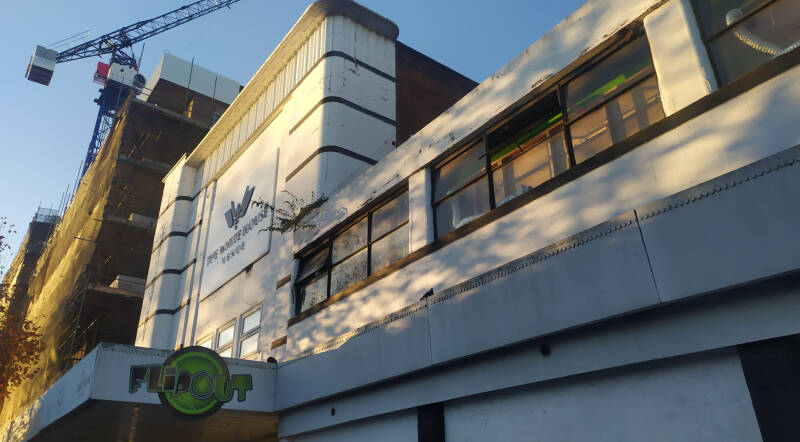
The Empire Kinema opened in July 1914, and was one of the early cinemas to be operated by Alexander Bernstein, who went on to create the Granada Theatres Ltd. chain. It was a large cinema for its time, with all seating arranged on a single floor. Alterations were made in 1920 and again in 1928, when it became part of Denman Theatres Ltd. chain, a subsidiary of Gaumont British Theatres. In July 1929, they employed architect George Coles to carry out more alterations and a Christie 2Manual/5Ranks organ was installed. Although it was owned by Denham/Gaumont, it continued to be operated by the Bernstein/Granada chain. In 1930, architect W. Sydney Trent made alterations for sound films to be screened. The Kinema was closed on 23rd May 1936 and demolished.
A new 2,468 seat Granada Theatre was built on the site (still owned at the time by Gaumont), which opened on 30th November 1936, and closed on 9th November 1974 to become a bingo club, which closed in November 2014 (it has its own page on Cinema Treasures).
Stondon Walk artwork
Steel relief panels, depicting nature, with poems engraved.
Hartley Avenue
Wakefield St.
Site of SCHOOL BOARD OFFICE, then NEWHAM ACADEMY OF MUSIC, now PRIMARY SCHOOL
The East Ham School Board was formed in 1873 for the parish of East Ham, initially to manage elementary education under the Education Act 1870, later expanding in 1900 to include the Little Ilford parish and absorb its school board before East Ham itself became part of the London Borough of Newham in 1965.
Its formation marked a shift towards local governance of schools, with the board overseeing educational provision in the area before the borough's formation.
Until then, churches, GERWY or RAGGED SCHOOLS UNION provided for education
Newham Academy of Music was formed in 1965 when East and West Ham merged to become the London Borough of Newham. Founded in 1948 and originally called East Ham Academy of Music, it ran a pioneering free music service offering instrumental lessons in schools throughout the week. Funded by Newham Council, students learned a wide range of instruments, including strings, piano, brass, woodwind, and harp. The Academy ran after-school sessions including music theory lessons. Every Saturday morning, students came together to rehearse in orchestras and choirs for concerts performed across the UK and Europe.
Karherine Road
Katherine Road in East Ham is named after Katherine Fry, daughter of the famous prison reformer Elizabeth Fry, who lived in nearby Plashet House for 20 years (1809-1829) and was a key figure in improving prison conditions for women, inspiring Florence Nightingale and establishing the British Ladies Society for Promoting the Reformation of Female Prisoners. The street commemorates her family's significant presence in the area, with Plashet House and Plashet Cottage (where Katherine lived) now
Plashet Grove
Welcome to PLASHET
The name Plashet (and variations like Plaskett, Plaskitt) is primarily English, stemming from Old French/English words for a
"damp meadow," "marshy pool," or "swampy area," indicating someone lived or worked by such a place, or from a lost place name like "Plaskets" in Northumberland.
He lived in Plashet

Shrewsbury Road
Former PLASHET PUBLIC LIBRARY
When the East Ham Urban District Council was formed in 1894 J H Bethell, later Lord Bethell, proposed introducing the Free Libraries Act. The population was at that time more than 50,000 and the product of a penny rate, at £670, was enough to support more than one library. Initially making use of a converted house, the first library was opened in North Woolwich and Bethell then turned to Passmore Edwards for help in establishing a library at Plashet.
Edwards chose Herbert Gladstone, the youngest son of the Prime Minister William Gladstone to open the Plashet Free Library. Designed by Silvanus Trevail in the Tudor Renaissance style, with the use of Ruabon red facing bricksthe library opened in October 1899. It had cost Edwards £4,000 plus the 1,000 books he added towards the 8,000 on the shelves when the library opened. Bethell also provided 1,000 scientific and technical books and in the first year over 3,000 residents registered as members.When the East Ham Urban District Council was formed in 1894 J H Bethell, later Lord Bethell, proposed introducing the Free Libraries Act. The population was at that time more than 50,000 and the product of a penny rate, at £670, was enough to support more than one library. Initially making use of a converted house, the first library was opened in North Woolwich and Bethell then turned to Passmore Edwards for help in establishing a library at Plashet.
Edwards chose Herbert Gladstone, the youngest son of the Prime Minister William Gladstone to open the Plashet Free Library. Designed by Silvanus Trevail in the Tudor Renaissance style, with the use of Ruabon red facing bricksthe library opened in October 1899. It had cost Edwards £4,000 plus the 1,000 books he added towards the 8,000 on the shelves when the library opened. Bethell also provided 1,000 scientific and technical books and in the first year over 3,000 residents registered as members.
PASSMORE EDWARDS, again
Passmore Edwards Public Libraries are historic buildings funded by Victorian philanthropist John Passmore Edwards (journalist, newspaper owner), who financed dozens of libraries, hospitals, and other public buildings across Britain, with many notable examples still found in London
EAST END, now WHITECHAPEL ART GALLERY: https://spitalfieldslife.com/2016/04/04/passmore-edwards-libraries-in-the-east-end/
Former EAST HAM MEMORIAL HOSPITAL, now HEALTH CENTRE
Originally it was founded in 1902 as the East Ham Hospital, a voluntary cottage hospital with 20 beds. The Cornish philanthropist, John Passmore Edwards, gave £5000 towards its cost. In 1904 the Out-Patients department opened.
The Hospital was extended in 1915 and then had 25 beds; it was renamed the Passmore Edwards East Ham Hospital. During WW1 it became an army hospital.
Following the War an appeal was launched in 1919 to raise funds to build a general hospital as a memorial to those local servicemen who had died during WW1.
A new 2-storey Hospital building, consisting of three blocks, was erected on an adjoining site and officially opened by Queen Mary in 1929. Renamed the East Ham Memorial Hospital, it had 100 beds - 80 in the new building and 20 in the former hospital, which was converted into children's wards.
Lead singer of the Small Faces was born at East Ham Memorial Hospital
PLASHET PARK
A heritage, community park, first opened in 1891 from land that was taken from the former grounds of late 18th Century manor, Wood House. Its layout has largely remained how it was during the Victorian era, although some features, including its bandstand and drinking fountains, have now gone. The Passmore Edwards Library is a Grade II listed building and has a recently opened cafe
Shrewsbury Road
Lincoln Road and Shelley Road, to East Ham High
See the walls of…
PLASHET JEWISH CEMETERY: the tradeunionists one
The former entrance lodge is now concealed behind a 6 foot concrete fence and is no longer in cemetery use. The only greenery is an avenue of small, pollarded chestnut trees, some now dead, which line the main path through the graveyard. The cemetery suffered serious vandalism in May 2003 when 386 tombstones were vandalised.
Plashet Jewish Cemetery was opened by the United Synagogue Company in 1896 on a rectangular site, simply laid out on a grid pattern. Originally there was a central prayer hall, which was demolished following bomb damage, but a small brick building is sited just inside the main entrance. The tombstones are generally in straight rows and surrounded by gravel, and while most are simple, among them are monuments topped with columns and urns, and a few family plots set with balustrades. The cemetery was known as the Trade Unionists Cemetery and past secretaries of the Cigars Union and Costermongers Union are buried here.
WOOGRANGE PARK CEMETERY
Establishment (1889): Opened on former agricultural land by the Tottenham Park Cemetery Company, it quickly became a resting place for important citizens, featuring ornate Victorian monuments.
As a private cemetery, it faced long periods of mismanagement, with overgrown grounds and significant dereliction. Precisely, its dense vegetation made it a surprisingly important site for birds and other wildlife, designated a Local Nature Reserve.
In the early 1990s, owners Badgehurst Ltd sold part of the cemetery for housing development, requiring the Woodgrange Park Cemetery Act 1993 (legislation.gov.uk) to exhume thousands of bodies.
A controversial clause allowed for the reuse of graves if not maintained, leading to the removal of many headstones and unmarked burials, including those of war dead.
It serves as a final resting place for nearly 300 Commonwealth service personnel from both World Wars, with those lacking marked graves commemorated on Screen Wall memorials.
The Friends of Woodgrange Park Cemetery was formed to protect the site, advocating against development and marking mass graves.
Romford Road
WOODGRANGE PARK - LONDON OVERGROUND Station
MANOR PARK ELIZABETH LINE Station
A ROMAN road?
Yes, the route of today's Romford Road (part of the A118) follows the path of an important Roman road from London to Colchester, though the modern road isn't perfectly identical, with parts being newer or rerouted. This ancient highway, used by Boudicca and Roman legions, crossed the River Lea at Old Ford and was a key artery, with Romford's High Street sitting directly on its course towards Chelmsford and Colchester.
Woodgrange Park Station: now, the London Overground
LO SUFFRAGETTE LINE?
The London Overground Suffragette line (Gospel Oak to Barking Riverside) is named to honor the working-class suffragette movement in East London, recognizing their fight for women's votes and rights, with the line's green color also linking to the suffrage colors. It celebrates figures like Sylvia Pankhurst and the ordinary women in the East End who campaigned for equality, a significant shift from traditional transport naming to reflect diverse London history
MANOR PARK CEMETERY
WOODGRANGE ESTATE
Claremont Road
A substantial middle class estate, begun in the 1870s. According to the 1881 CENSUS, while still unfinished, it contained 66 houses, 60 of them occupied. They were relatively large, and rather young families with children lived in them. And 83% had domestic servants (single females, young girls from Essex, who were accommodated in the annex, a distinct feature of the houses; the “maid of all works “ was paid on average £16 per annum, plus uniform, food and board. She had to rise with the lark and worked 6 days a week.
Some hous3holds had a nurse or live-in nanny, chargewith washing, dressing and feeding the young children.
Normally the male was the breadwinner and only 1 I 10 had a woman as a head of the household, normally a pensioner or a widow. Mrs. LOLLARD was an exception. She ran an ACADEMY FOR GIRLS with her daughter. They were headmistresses, according to FOREST GATE NEWS.
Wine merchant, commercial traveler, clerk, stockbroker, business owner, schoolmaster, shipping agent…
No.18 was occupionly by servants, as conceivably owners were living abroad (army?).
People from around Middlesex, London, Essex… Irish, Scots, French, Germans.
Nos.2-22 destroyed during WW2.

For the final part of this route, up to Forest Gate, see the next variant, along East Ham High St.

Here you have Cycle/walk alongside EAST HAM HIGH ST.
Multicultural
- Cultural Hub: East Ham High Street and the surrounding areas are bustling with South Indian and Tamil-focused businesses, including grocery stores, spice shops, sari shops, and numerous popular vegetarian and non-vegetarian restaurants like Saravanaa Bhavan, Anjappar, and Murugan Idli.
- London Sri Murugan Temple: Located between East Ham and Ilford, this temple is a central religious and cultural landmark for the community. It was established by a group from the Tamil community in 1975 and built in a traditional South Indian style, with authentic rituals and pujas held throughout the year.
- Community Organisations: The area is home to resources and support networks for the Tamil diaspora. The London Tamil Sangam, for example, is a multi-purpose community centre that offers a Tamil language school for children (at Plashet School in East Ham, among other locations), as well as social and cultural activities and welfare support. The Tamil Welfare Association (TWAN) also has an office nearby, assisting Tamil-speaking clients.
Former THE DENMARK ARMS HOTEL
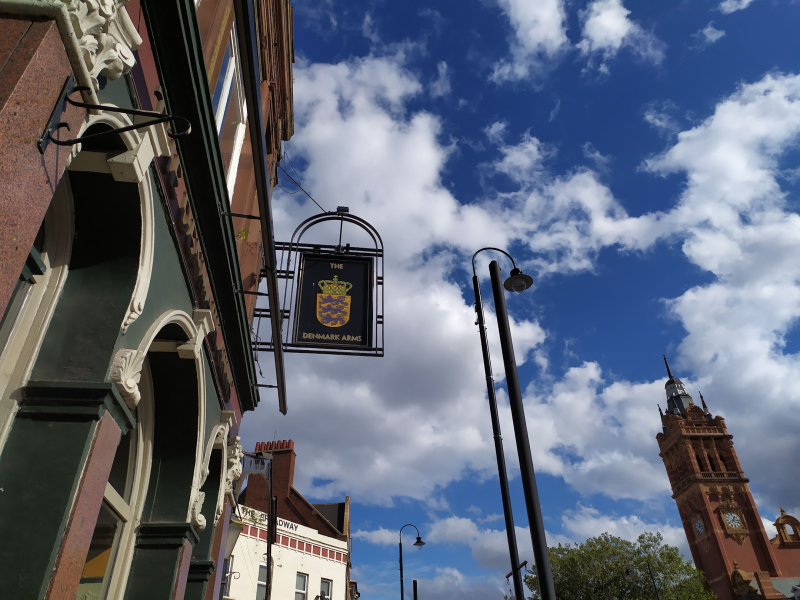
This Grade II listed public house built in about 1890, and extended about 1900. It was formerly named the Denmark Inn.
In the 1890s, local football club Old Castle Swifts would use the Denmark Inn to change for matches at Temple Meadows in Wakefield Street. Much later, West Ham United fans would use the pub for pre-match drinks before attending games at the nearby Boleyn Ground.
The Denmark Arms closed on 30 July 2018. In September 2018, the building was purchased by the Antic Collective company, and the Denmark Arms reopened on 15 November 2018, with plans announced to hold a pantomime and future theatre events in the pub's function room.
Former WOOLWORTH, now POUNDLAND
Site of original WOOLWORTH, now SPORTS DIRECT
Site of Premier Electrical Theatre, then GAUMONT. Now, Primark
1921. New auditorium erected. The foyer and café area occupied the site of the Electric.
1929. GAUMONT took over from PROVINCIAL CINEMATOGRAPH THEATRES.
1952. Renamed GAUMONT, but closed the following year.
BINGO until 2005.
An example of an early “super” cinema, demolished
Site of the 1906 PALACE THEATRE OF VARIETIES, the 1933 NEW REGAL CINEMA PALACE. Now, Lidl
In 1935 it had reverted to theatre use
LU STATION
LONDON TO TILBURY AND SOUTHEND RWY. See “LTSR”
1859. A more direct line was created through Bromley and Plaistow.
2000. Restored. Victorian arch retained
1902. The DISTRICT RAILWAY started serving the station. More tracts added, and rebuild (1908). Became LU DISTRICT LINE
1936. METROPOLITAN LINE. Now LU HAMMERSMITH & CITY LINE
Until 1962, FENCHURCH ST.STA to SOUTHEND line, as well
STATION PARADE
Above the shops in High Street North facing the entrance to East Ham Underground Station. The pair of wings has at the centre the staff of Mercury, the messenger of the gods. This is not only the sign of medicine but also the sign of commerce.
SRI MAHALAKSHMI TEMPLE
This temple is dedicated to goddess Mahalakshmi. The temple was constructed (close by to the old one) in the year 1989 and the consecration was performed in the year 1990. The temple was built by the Lakshmi Narayana trust in East Ham.
Under the supervision of Padmashri Silpakalamani Muthiah Sthapathi, this temple's Royal tower and the other structures were built.
Padmashri Silpakalamani Sthapathi is a renowned Indian sculptor, architect, and expert in traditional Hindu temple architecture (Shilpa Shastras). He has designed and overseen the construction of numerous temples and large-scale sculptures worldwide.
Best times to be seen, Sunday noon. Most PUJARIS are Tamil. Some, as well, speak, TELUGU (Andhra Pradesh). All types of POUJAS
PUJARÍA is priest who performs daily rituals, worship (puja), and conducting daily worship ceremonies, which can involve elaborate offerings, chanting, and specific hand gestures. He ensures the purity and sanctity of the temple and its shrines. Possessing deep knowledge of Sanskrit, Hindu texts, mantras, and rituals, officiating special ceremonies like weddings, blessings, and festivals at temples or homes
Often from the Brahmin varna (community).
The Brahmin are the highest-ranking varna (social class) within traditional Hindu society, primarily associated with priesthood, teaching, and scholarship. The term originates from the Sanskrit word Brahman, which can mean "supreme self" or the ultimate reality.
Royal Tower
A Rajagopuram, or simply Gopuram, is typically the most prominent and highest element of a South Indian Hindu temple complex, serving as a gateway into the walled enclosure. These towers are usually tapering, multi-story structures covered in intricate sculptures and carvings depicting various deities and themes from Hindu mythology. They are built according to the principles of ancient architectural texts (Vaastu Shastra).
Hinduism

Diversion alongside Sibley Ave. or East Ave. and Shakespeare Crescent or Church Road to LITTLE ILFORD and (GREAT) ILFORD See next chapter
Originally, CORONATION ELECTRIC THEATRE
Former THE EARL OF ESSEX P.H.
HENRY POSTON, together with William Edward Trent, who was his apprentice, and then his assistant, was the architect for the Earl of Essex, built in 1902. Poston was also the architect for the Pigeons Hotel, Romford Road, Stratford, built in 1898, and now converted to residential accommodation.
Who was the Earl of Essex?
The "Earl of Essex" most famously refers to Robert Devereux, 2nd Earl of Essex (1565-1601), a charismatic soldier, courtier, and ambitious favorite of Queen Elizabeth I, known for his military exploits (like the sack of Cádiz) but ultimately executed for treason after a failed rebellion against the Queen's ministers. There were earlier holders, such as his father, Walter Devereux, 1st Earl, and his son, Robert Devereux, 3rd Earl, but the 2nd Earl's dramatic life and death define the title's historical
A Shakespeare link!
The Earl’s supporters paid Shakespeare's acting troupe, The Lord Chamberlain's Men, to perform Shakespeare's treasonous-sounding play Richard II the night before the uprising, potentially to incite the public. Although the rebellion was crushed and Essex executed for treason, no charges were brought against Shakespeare's company, though Queen Elizabeth reportedly reacted strongly to the play's themes of deposing a monarch.
Welcome to MANOR PARK
Romford Road

Manor Park is not formally defined, but is more or less coterminous with the Ancient Parishof Little Ilford. Romford Road, the Roman Road from Aldgate to Colchester, is the main east–west route through the area. This well-established coaching route linking the city with the towns of Essex was maintained by the Middlesex and Essex turnpike trust from 1721. The principal local road ran south from the Romford Road and the northern end was known in the 18th century and later as White Post Lane (now known as High Street North), from a post standing at its junction with Romford Road. The 'White Post' appears to have stood on the site of the Earl of Essex public house. A hamlet known as North End was located amongst fields that dominated this area.
By the middle of the next century, the rural scene had begun to change as the railways started to spread outwards from London, followed by the development of estates of suburban houses. There were three railway stations close by
Romford Road, a Roman Road?. Yes, ITER IX
In Roman Britain, "Iter IX" refers to a specific route detailed in ancient itineraries (like the Tabula Peutingeriana), running from London (Londinium) via Caistor St. Edmund (Venta Icenorum) and Colchester (Camulodunum) to places like Ixworth(Sitomagus) and Coddenham (Combretovium) in East Anglia
MANOR PARK LIBRARY
See the Rabbits Road wall of the Carnegie Library Romford Road, Manor Park.
Andrew Carnegie (1835 – 1919) was born of humble parents in Scotland and while he was still a youth his family emigrated to America. After several other jobs he made a fortune in the Pennsylvania Railroad and then as head of a large Iron and Steel corporation.
He later donated millions of pounds to charitable causes. He was particularly interested in education and helped to found several libraries in East London. Others were at Walthamstow, East Ham, Leyton and Custom House.
This library stands on the site, which from 1826-1880 had been occupied by a gaol and a law court.
A gaol in LITTLE ILFORD?
Rabbit warrens?
Rabbits Road gets its name from the pub that stood on the site of the chemists shop, opposite. It was called the Three Rabbits, and this in turn was so named because the area was known for it's rabbit warrens.
Thomas Hood, who lived not far away at Lake House, Wanstead, in about 1833 described the pub in his book Tylney Hall, as having a sign of three Chinese pigs with long ears which would have puzzled a zoologist but for the superscription – "The Rabbits"; while a writing underneath…(stated) that this establishment was kept by - for it does not keep him - one Jonas Hanway.
EPPING FOREST: WANSTEAD FLATS
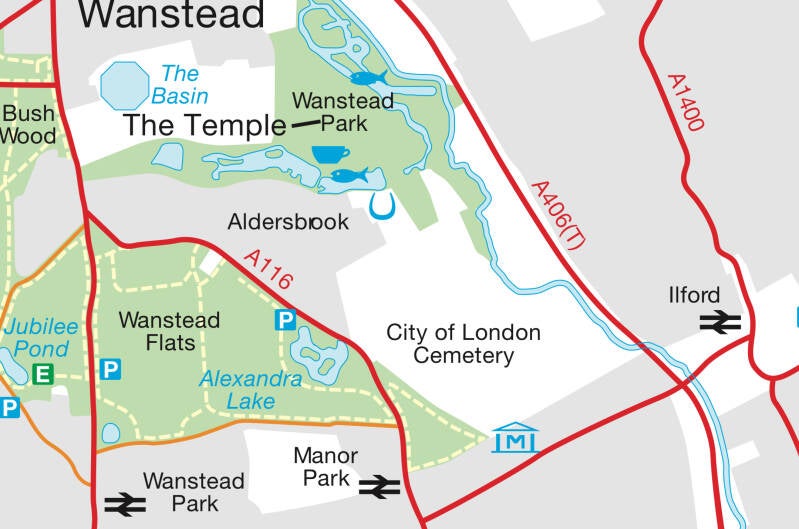
Epping Forest is an ancient woodland stretching 13 miles in length, from Manor Park in east London to Epping in Essex. Here you'll find majestic old pollarded trees, iron age mounds, wooded glades, reed-fringed ponds and glorious meadows.
Epping Forest holds secrets like its Iron Age history (Boudica), Roman remains, Royal Hunting Ground status (Henry VIII), famous residents (Rod Stewart), hidden ponds (some WWII bomb craters), ancient pollarded trees (50,000+!), Hangman Hill's illusion, rare wildlife, underground tunnels, and hidden trails, offering mysteries from lost ponds to celebrity homes and ancient legends within London's largest green space.
Owned and managed by the Corporation of London, the Forest has been maintained as a public open space since the passing of the Epping Forest Act 1878.
Wanstead Flats is the southernmost portion of Epping Forest, in Leytonstoneand Wanstead, London. The flats and by extension the forest ends at Forest Gatedirectly to the south. It now falls wholly within the boundaries of the London Boroughs of Redbridge and Waltham Forest, though until 1994 two parts of it were in the London Borough of Newham
CITY OF LONDON CEMETERY
- Bobby Moore: England's 1966 World Cup-winning football captain (cremated, ashes interred).
Arts & Entertainment
- Dame Anna Neagle: Famous stage and screen actress.
- Clive Burr: Drummer for Iron Maiden (cremated).
- Paul Di'Anno: Original singer for Iron Maiden (cremated).
- Alfred Horsley Hinton: Pictorialist photographer.
Crime & History
- Catherine Eddowes & Mary Ann Nichols: Two of the victims of Jack the Ripper.
- Joseph Merrick: The "Elephant Man" (soft tissue only).
- Robert Bentley & Charles Tucker: City of London policemen, victims of the Battle of Stepney.
Politics & Law
- Elwyn Jones, Baron Elwyn-Jones: Barrister and Labour politician, led prosecution in war crimes trials.
- Tony Banks, Baron Stratford: Labour politician (cremated).
And Londoners buried in London’s medieval churchyards
Between Glading Rd and Whitta Road
The surnameWhitta is English, a variant of "White," often preserving a Middle English suffix, and is linked to descriptions of fair hair, pale complexion, or occupations like whitewashing buildings (from Old English hwitian, "to whiten"). It's also related to names like Whittaker, meaning "white field" (from Old English hwīt + æcer) or "wheat field," often a topographical name for someone living near such a place.
The surname
Whitta is English, a variant of "White," often preserving a Middle English suffix, and is linked to descriptions of fair hair, pale complexion, or occupations like whitewashing buildings (from Old English hwitian, "to whiten"). It's also related to names like Whittaker, meaning "white field" (from Old English hwīt + æcer) or "wheat field," often a topographical name for someone living near such a place.
Former ST.NICHOLAS INDUSTRIAL SCHOOLS
St Nicholas' Industrial School for Roman Catholic Boys was originally established by Cardinal Wiseman in the 1850s in premises at the corner of Church Lane and Shernhall Street in Walthamstow. It was supported by voluntary contributions and primarily catered for the destitute Irish Catholic children. On December 31, 1861, the premises was officially certified under the Industrial School Acts to receive boys placed by magistrates for reasons such as vagrancy or parental neglect.
MANOR PARK CEMETERY
Manor Park Cemetery and Crematorium was founded in 1874 and has proudly served all sections of the local community since that date. Extending its historical heritage the company is still run by the scions of the same family who originally dedicated the land to the service of the local area and all its requirements.
- John Travers Cornwell VC: Known as "Jack," he was the youngest recipient of the Victoria Cross, awarded posthumously for staying at his post during the Battle of Jutland in World War I.
- Annie Chapman: The second victim of the infamous Jack the Ripper, she was buried here in 1888.
- John Clinton: A 10-year-old who drowned saving a friend in the River Thames in 1894, he is buried in the cemetery.
- Sarah Dearman (née Chapman): A leader in the 1888 Matchgirls' Strike, she was buried in 1945.
- Mary Orchard: A beloved nanny to the children of Princess Alice, her large memorial honors her service.
- William Chandler: Founder of the bookmakers Chandler's (later BetVictor) and the Walthamstow Greyhound Stadium.
- William Tom Ecclestone: Known as "the king's second heaviest subject" in his time.
- Joyce & Ronald McQueen: Parents of fashion designer Alexander McQueen.
Other Notable Burials & Memorials:
- World War I & II Casualties: The cemetery contains many war graves, including a mass grave for WWII civilians and memorials to fallen soldiers.
- Bethnal Green Tube Disaster: A memorial to victims of this tragic World War II event.
Capel Road
THE GOLDEN FLEECE P.H.
Built in 1871 by the brewery Watney, Combe, Reid & Co., coinciding with the growth of Manor Park as a suburban area following the arrival of the railways.
large, traditional pub with high ceilings and distinct sections, including a main bar and a smaller snug with a fives board
Godwin Road
THE FOREST GATE HOTEL and P.H.
Avenue Road
Sebert Road
Former CONGREGATIONAL. Now ARC GLOBAL Church
ARC (Association of Related Churches): The broader organization, founded in the U.S., supports church planting globally.
ARC Global (UK): A specific branch originating in East London in 1997, which includes various local churches like ARC Forest Gate, ARC Dagenham, and ARC South, united by shared vision and values.
FOREST GATE
Last chapter contains more info about this district…
