
DUE NORTH 4 B: EAST HAM (LU Sta.) LITTLE ILFORD ILFORD VALENTINES PARK

Hindu Temple St.Mary’s Medieval Church River Roding First ILFORD photographic factory, 18th Century VALENTINES MANSION


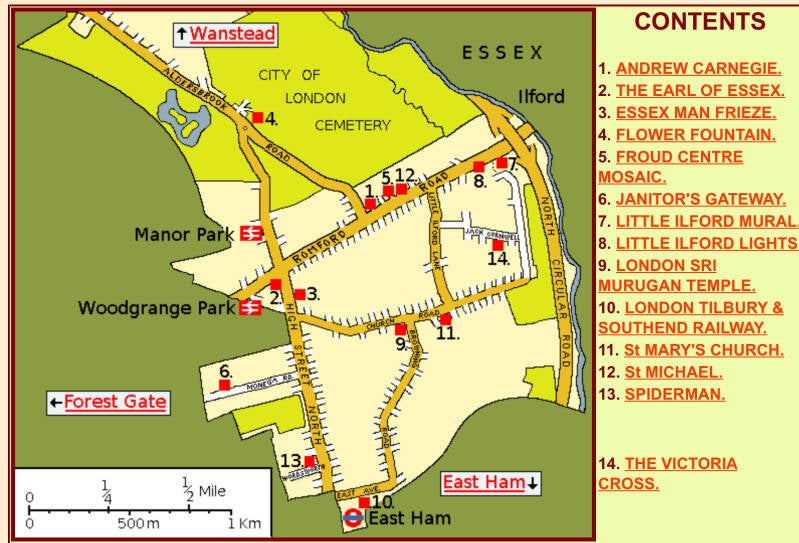
An alternative route
Sibley Grove or East Avenue, then Shakespeare Crescent
JEWS FARM LANE?
By the mid-19th century East Ham was well-established in vegetable production, growing peas, cucumbers and above all onions for the London market. One of the biggest producers by the 1840s was Thomas Circuit, an incomer to the area from Bedfordshire, who arrived in East Ham about 1840. Circuit rented a holding called Wilson’s Farm in Plashet Lane (today’s Plashet Grove, opposite Plashet Park) and farmland east of what is now High Street North, including the site of Jews Farm.
Circuit and his family lived in the Plashet Lane farmhouse but about 1845 he had already fitted out a building for drying and storing large quantities of onions. This was probably on the Jews Farm site where present day East Avenue meets Sibley Grove. Circuit may have moved to East Ham because he saw the potential for vegetable production to feed the metropolitan market and he contracted to supply Crosse and Blackwell’s Soho factories with onions for pickling.
East Avenue
Former PRESBYTERIAN TRINITY Church, now TRINITY CENTRE
Originated in the 1890s, when Alexander Thompson, a Scotsman who had previously worshipped at Plashet Park Congregational church, began to hold Presbyterian meetings at his house in Victoria Avenue. With help from the Presbytery of London North a site was bought in East Avenue, and in 1900 an iron church, given by Dr. J. A. Voelker, was erected there. There were early disagreements between the local congregation, which favoured a conventional organization, and the Presbytery, which advocated mission work of the 'central hall' type. These were settled by a compromise; in 1902 Thomas G. Murray became the first minister, in 1903 a permanent church was built, and in 1905 halls were added. By 1909 the membership was 424, and during the brilliant ministry of I. Gwessin Jenkins (1910-1928) it rose to 600.
WAR MEMORIAL: https://www.iwm.org.uk/memorials/item/memorial/56314
EAST HAM?… MANOR PARK?… LITTLE ILFORD!
Manor Park got it's name from a 19th century railway station. Before that and well into the 20th century it was known as Little Ilford
The parish of Little Ilford lies in the extreme southwest of Essex, not too far from its border with neighbouring Middlesex. Little ilford is located roughly 7 miles east of the city of London and just south of the A118 road which connects London with Romford. Once Little Ilford was a discrete urban-edge village, early gazetteers describe it as largely arable in its land-use, today this is rather difficult to believe as Greater London expanded with the railway development eastwards engulfing smaller Essex communities like Little Ilford along the way. Much of the development came towards the end of the 19th century and into the 20th and continues to this day with modern apartment blocks replacing elderly Victorian terraces. Only the medieval church in its ancient churchyard survives of the former village centre and modern developments abound, the railway lines to both Colchester & Southend run through to the north and south respectively, whilst the busy dual-carriageway of the North Circular Road runs immediately east. Little Ilford is drained southwards by Barking Creek which soon meets the outer Thames Estuary. Little Ilford is sited at around 5 metres above the sea in fairly gentle terrain where local heights rise to little more than 15 metres for some distance. Little Ilford was a small parish, squeezed between larger ones, covering just over 750 acres it was small even by Essex standards, within that area a population of just under 200 parishioners would have resides, a paltry total compared to today's burgeoning population. Little Ilford is not mentioned in Domesday Book.
Church Rd.
SRI MURUGAN, Hindu Temple
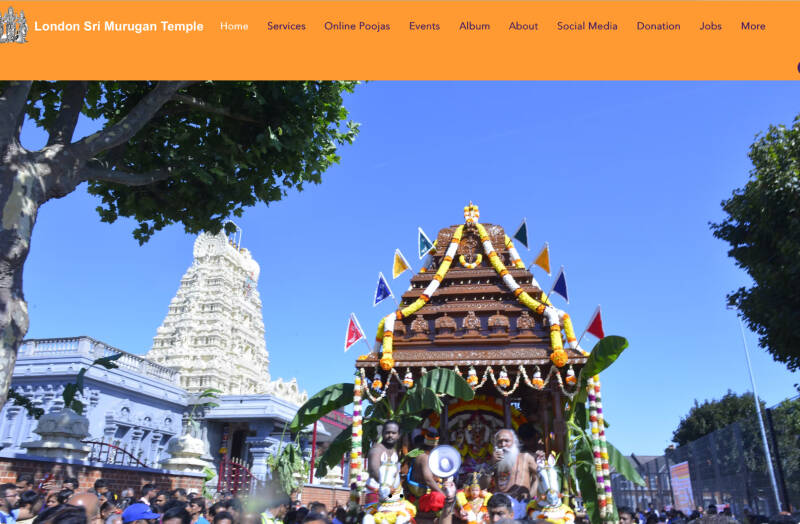
Established as a charity in the year 1975 and constructed as a small temple and consecrated in February 1984 and renovated with a 50-feet Royal temple tower with the present building structure in May 2005.
The presiding deity in this temple is Murugan. He appears here with His consorts Valli and Devasena. This temple is constructed with marbles in Dravidian structure
Hinduism
The core clue for understanding Hinduism lies in Dharma, the concept of the inherent moral order, duty, and righteous conduct that sustains the universe and the individual's life.
Referred to by adherents as Sanātana Dharma (the "eternal way" or "eternal law"), Hinduism is a complex and diverse tradition, often considered a "way of life" rather than a single, organized religion with one founder or a single authoritative book. Its non-dogmatic and pluralistic nature allows for a wide array of beliefs and practices.
Key concepts that help unlock an understanding of Hinduism include:
- Brahman: The one, supreme, formless, and all-inclusive Supreme Being or Absolute Reality. The many gods and goddesses worshipped are considered personifications or manifestations of different aspects of this single divine reality.
- Atman: The individual soul or inner self, which is considered eternal and ultimately one with Brahman.
- Samsara: The continuous cycle of birth, death, and rebirth (reincarnation) that the soul undergoes.
- Karma: The universal law of cause and effect, where an individual's actions and intentions in one life determine their future lives and experiences within the cycle of samsara.
- Moksha: The ultimate goal of life, which is liberation from the cycle of samsara and the realization of one's true nature as one with Brahman.
- Four Aims of Human Life (Purusharthas): Beyond spiritual liberation, life's four proper goals include Dharma (righteous living), Artha (material prosperity), Kama (pleasure and enjoyment), and Moksha (spiritual liberation).
- Multiple Paths (Yogas): Hinduism acknowledges that there are many valid paths to the same truth or goal of liberation. The four primary paths (Yogas) are Bhakti Yoga (path of devotion), Jnana Yoga (path of knowledge), Karma Yoga (path of selfless action), and Raja Yoga (path of meditation).
- Scriptures: There is no single holy book. Instead, there is a vast body of sacred texts, including the Vedas, the Upanishads, the Puranas, and the epic poems the Mahabharata (which includes the Bhagavad Gita) and the Ramayana, which contain spiritual truths and guidance.
”Sri”
In Hinduism, "Sri" (also spelled "Shri" or "Sree", Sanskrit: श्री) is a highly significant Sanskrit term used as an honorific title and a sacred symbol that denotes resplendence, wealth, prosperity, grace, and auspiciousness.
The term has multiple applications:
It is widely used as a title or polite form of address for individuals, similar to the English "Mr." or "Ms.". For married women, the title "Shrimati" (abbreviated Smt) is used, and "Shriman" for men. It is often repeated (e.g., "Sri Sri") for highly revered spiritual leaders to indicate a higher level of respect and importance.
It is frequently used as an epithet for Hindu gods and goddesses, in which case it is often translated as "Holy" or "Revered". It is especially an important name and epithet for the goddess Lakshmi, the consort of Vishnu and the goddess of wealth and good fortune.
- Symbolism: When used alone and not followed by a name, "Shri" can refer to the supreme consciousness or God. The symbol itself is considered sacred and is often written at the beginning of documents, letters, and wedding invitations to invoke blessings of prosperity and good luck.
- Place and Object Names: The honorific is also incorporated into many place names (e.g., Sri Lanka, Srinagar, Srisailam) and applied to respected objects and concepts, such as the Sikh religious text, the Shri Guru Granth Sahib.
The word derives from the Sanskrit root meaning "to shine, to burn, diffuse light" and as a feminine abstract noun, it carries general meanings of grace, splendor, beauty, affluence, and prosperity.
Royal Tower
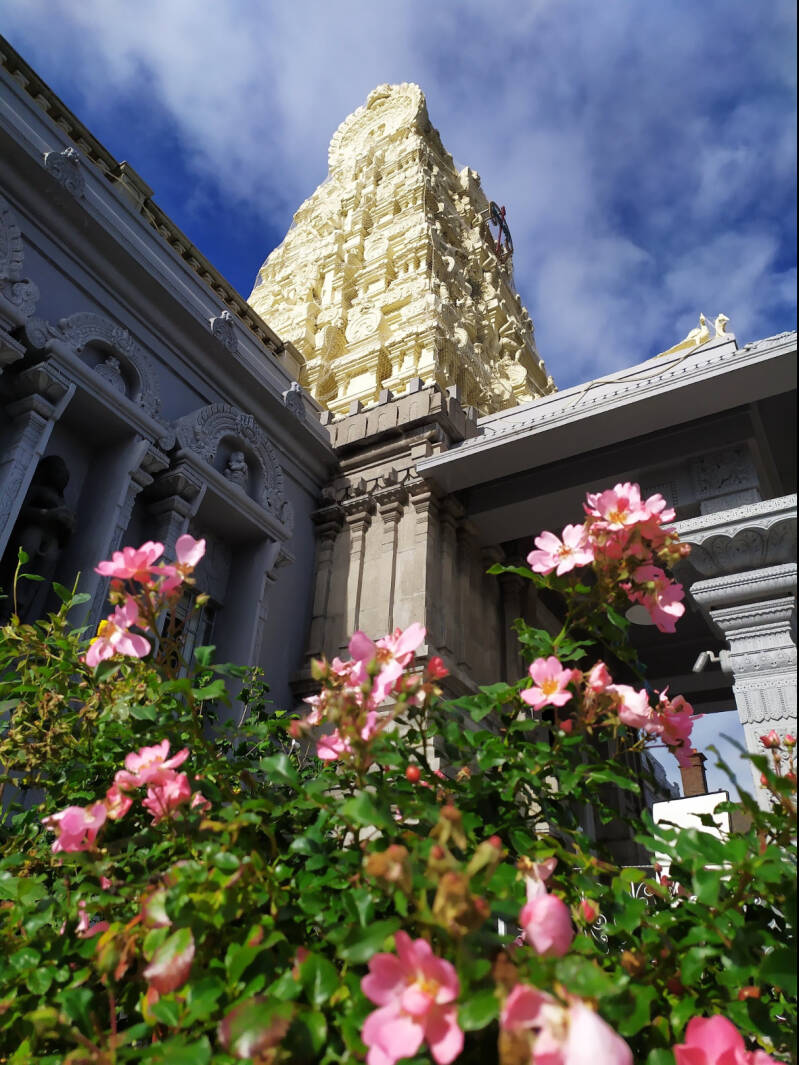
"Royal tower" is a common English translation for the or Gopuram, a monumental, ornate entrance tower found in Hindu temples, particularly in South Indian architecture.
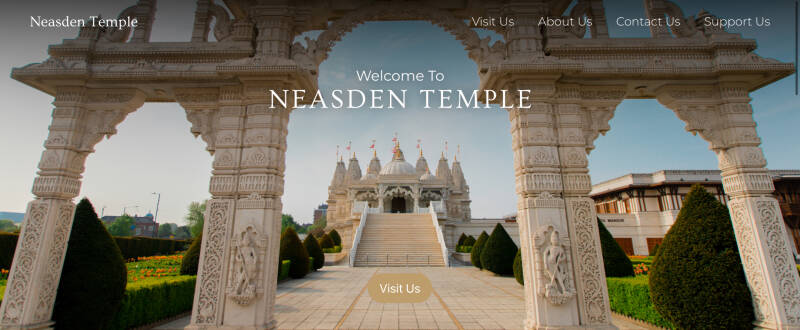
Neasden (near Wembley)London’s most important Hindu Temple
ST.MARY THE VIRGIN Church & churchyard
This little church with a small wooden bell tower is about 600 years older than any other building in E 12. It is a tiny mediaeval village church hidden away amongst 20th century urban housing.
Mainly 12th century, it had its chancel rebuilt and a south porch and family chapel to the Lethieullier family added in 1724. It remained a parish church until 1938, at which point it became a chapel of ease to St Michael's Church,
Monsieur LETHIEULLIER (the name may come from "telier," meaning linen weaver)
Sir John Lethieullier (1632 or 1633 – 4 January 1719) was a British merchant and businessman descended from French Huguenots. His parents were Jan le Thieullier and Jane Delafort. He was the eldest of their three sons. His father had moved to England in 1605, settling initially in Ilford and then in Lewisham.
Lethieullier began by buying English textiles from East Anglia and the west of England with his business partner Charles Marescoe (husband to John's sister Leonora), superintending their dyeing and finishing and then exporting them to the Levant and southern Europe. He soon diversified and by 1669 was exporting tin and lead to Rotterdam and Venice as well as importing Portuguese sugar and Dutch iron. He became Sheriff of London in 1674 and was knighted around this time. Lethieullier died on 4 January 1719 and is buried in the churchyard of St Alfege Church in Greenwich.
French Huguenot weavers

WELCOME to LITTLE ILFORD
The name "Ilford" is first recorded in the Domesday Book as Ilefort, meaning "ford over the Hyle" (the ancient name for the River Roding). While Great Ilford grew into a major town, Little Ilford remained a small rural parish for centuries.
the area was rapidly developed into suburban housing following the opening of Manor Park railway station.
John Cornwall St.
THE VICTORIA CROSS P.H….demolished
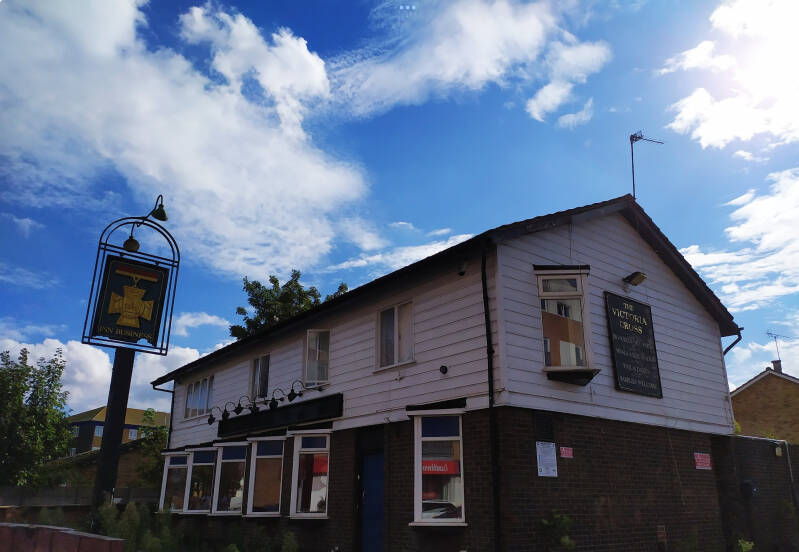
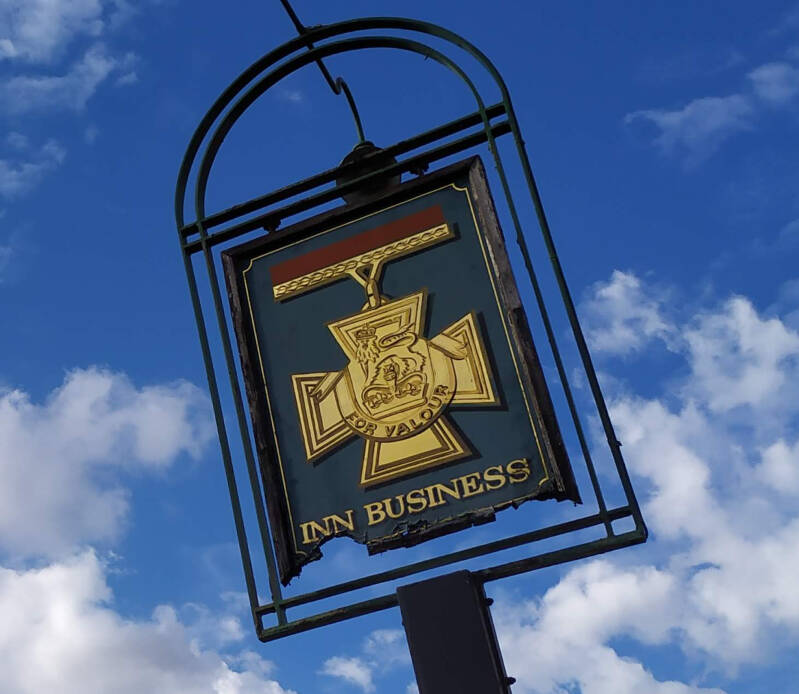
Jack Trevers Cornwell was the youngest person to be awarded the Victoria Cross. He was awarded it for bravery at the battle of Jutland in 1916. Aged 16, he was a gunner on HMS Chester. Early in the battle he was mortally wounded and the rest of the gun crew were killed; but he stayed at his post until the end of the battle awaiting orders to leave. He was the subject of the poem "The boy stood on the burning deck." His grave is in Manor Park Cemetery
Romford Road
Former PUBLIC LIBRARY (and site of the HOUSE OF CORRECTION)
In the 19th century, Little Ilford hosted a significant county jail, the Little Ilford Gaol (closed in 1878)
ST.MICHAEL and ALL SAINTS Church
CELESTIAL Church
Murals
RIVER RODING
It rises at Molehill Green, Essex, then flows south through Essex and London and forms Barking Creek as it reaches the River Thames.
It passes through or near a group of eight or nine villages in Essex known collectively as the Rodings, as their names are 'Roding' prefixed with various different specific names
The river then runs between Loughton and Chigwell, where the Roding Valley Meadows make up the largest surviving area of traditionally managed river-valley habitat in Essex
The tidal section is known as Barking Creek, which flows into the Thames at Creekmouth, where the Barking Barrier acts as a flood defence.
NORTH CIRCULAR: around the edge of Victorian London
Officially the A406 and sometimes known as simply the North Circular, this is a 25.7-mile-long (41.4 km) ring road around the northern half of inner London. It runs from Chiswick in the west to North Woolwich (WOOLWICH FREE FERRY. You will find this road again in the web!) in the east via suburban north London, connecting various suburbs and other trunk roads in the region.
The road was constructed in the Interwar period to connect local industrial communities and by pass London. It was upgraded after World War II, and was at one point planned to become a motorway as part of the controversial and ultimately cancelled London Ringways scheme. I
Welcome to ILFORD
Ilford Hill
ILFORD HOSPITAL & CHAPEL.Almshouses
THE GREAT SPOON OF ILFORD, the local JD WETHERSPOON pub
Named after a large measure of ale, a GREAT SPOON (around two pints) which was served Elizabethan actor Will Kemp, who famously danced from Norwich to London in 1600 and stopped in Ilford for refreshments. Kemp successfully completed the 80-mile route in nine days.
Will Kemp and Will Shakespeare

Cranbrook Road on the corner with Park Avenue
The origins of ILFORD Ltd.

Alfred Hugh Harman (1841 – 23 May 1913) was a pioneer of photography and founder of Ilford Limited.
He established a photography business in Peckham in 1862 using William Fox Talbot’s Calotype negative/positive printing process. In 1864 he was advertising enlargements using solar cameras and artificial light.
In 1879 Harman abandoned his photographic studio and moved to Ilford village where he began manufacturing dry gelatine plates in the basement of his new home.
As business grew, he expanded his workplace into the ground floor and employed two men and three boys. His early processes were rudimentary—he applied his emulsion formula with a teapot—but the huge growth in the photography market gave him the revenue he needed to build purpose-built premises in 1883. These 'Britannia Works' went public in 1891, were relaunched as The Britannia Works (1898) Limited in 1898. In 1900 they were renamed Ilford Limited
VALENTINES PARK and MANSION
MANSION & GARDENS virtual tour https://valentinesmansion.com/tour/
Exiting VALENTINES PARK:

BUSES from GANTS HILL: https://content.tfl.gov.uk/bus-route-maps/gants-hill-a4-020324.pdf
GANTS HILL LU Station: https://content.tfl.gov.uk/london-rail-and-tube-services-map.pdf