
Due North: ROYAL DOCKS CANNING TOWN CODY DOCK RIVER LEA riverside THREE MILLS QUEEN ELIZABETH II-OLYMPIC PARK

Bus routes from CANNING TOWN Station


CITY HALL
SILVERTOWN FLYOVER/SILVERTOWN WAY
To your left SITE of the THAMES IRONWORKS (on the old maos the road is called VICTORIA DOCK ROAD)
CANNING TOWN STATION
Cross Barking Road and Newham Way under the flyover
Alongside industrial and business parks
Star Lane DLR Station

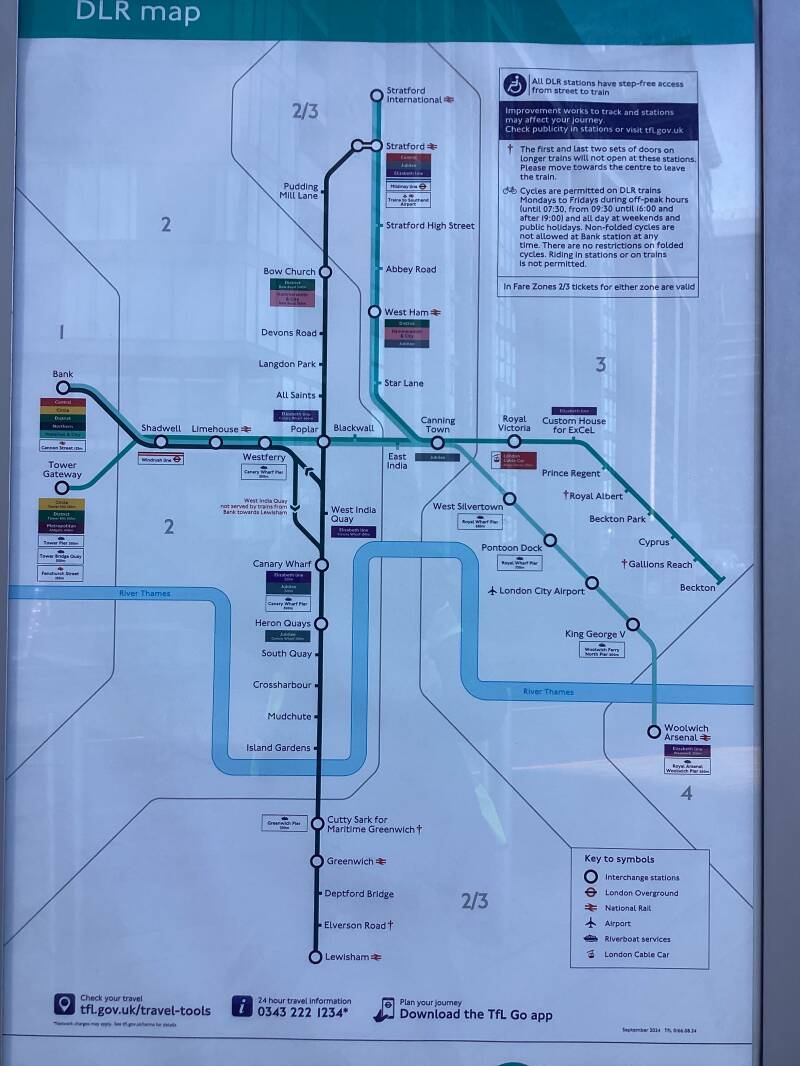
Stephenson St.
Cody Road
South Crescent
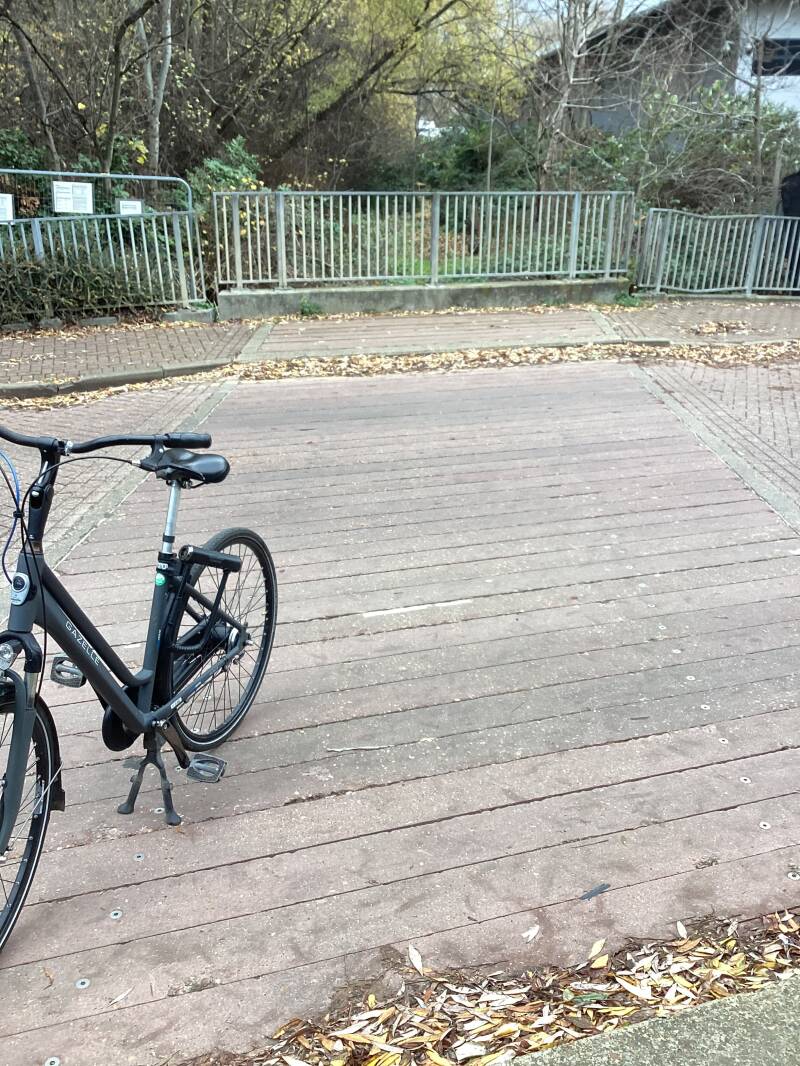
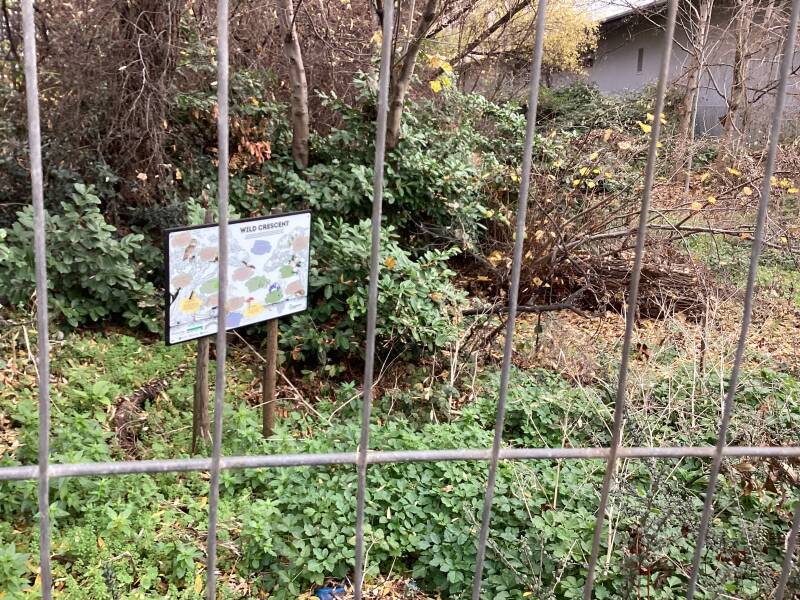
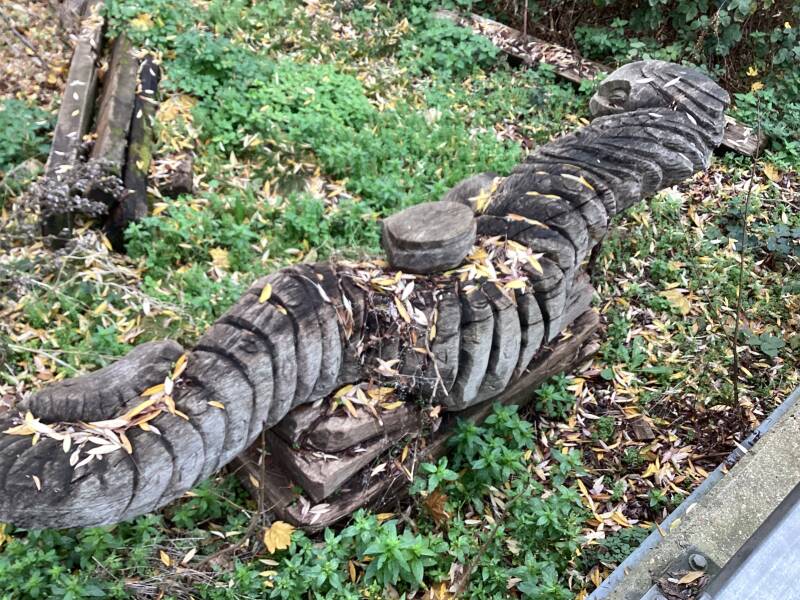

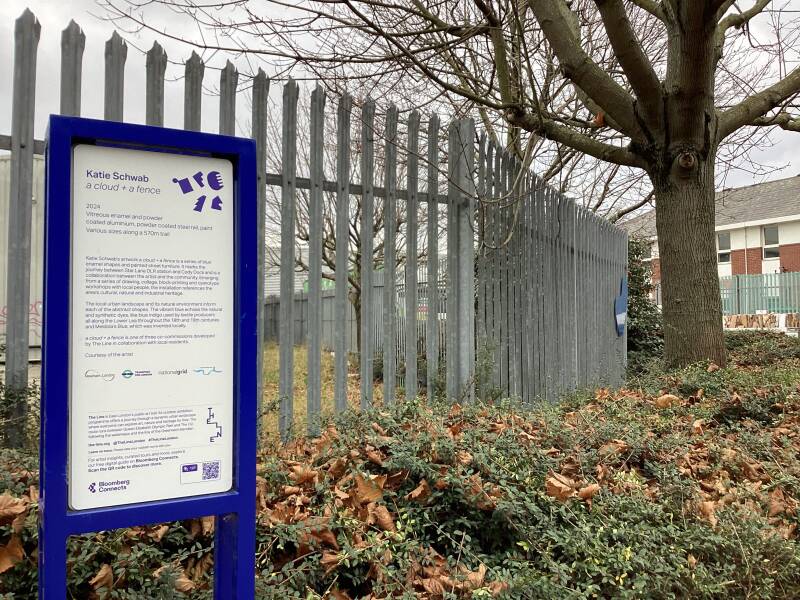
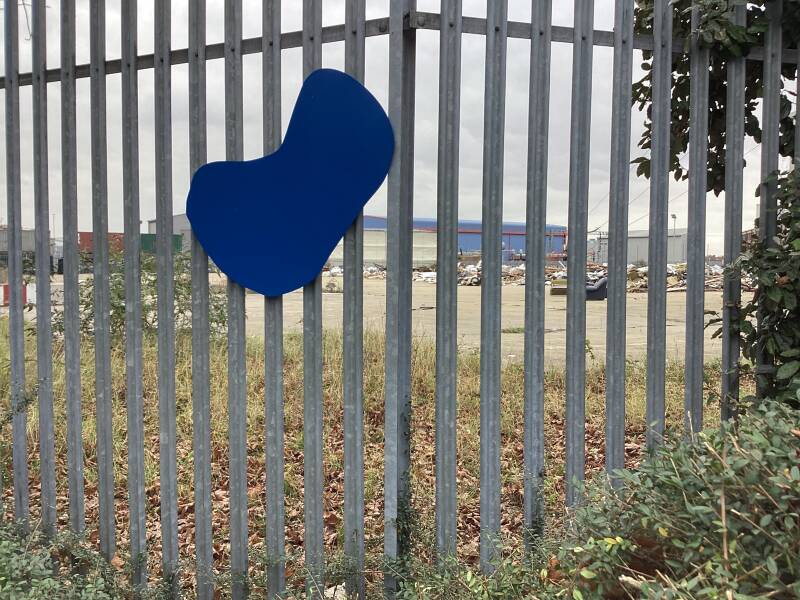
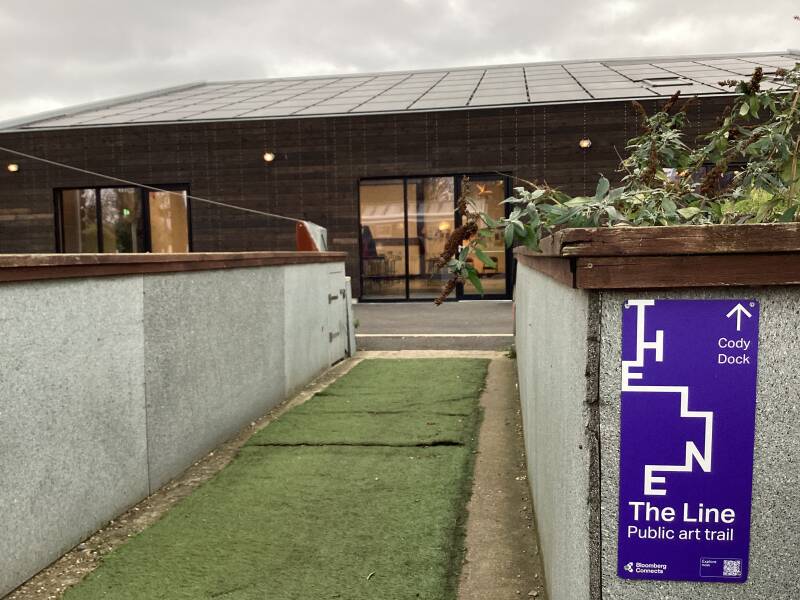
CODY DOCK

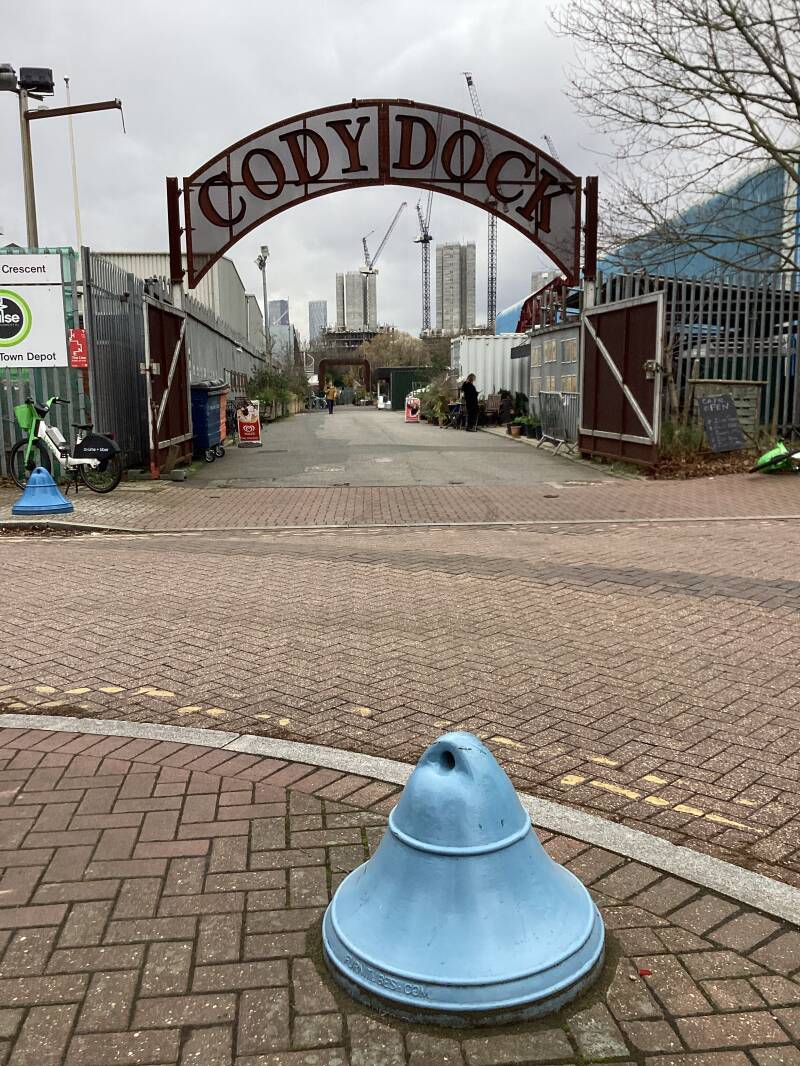
Timeline: Marshland and farms Congreve artillery works Coal gas and soap production End of production and dereliction and regeneration
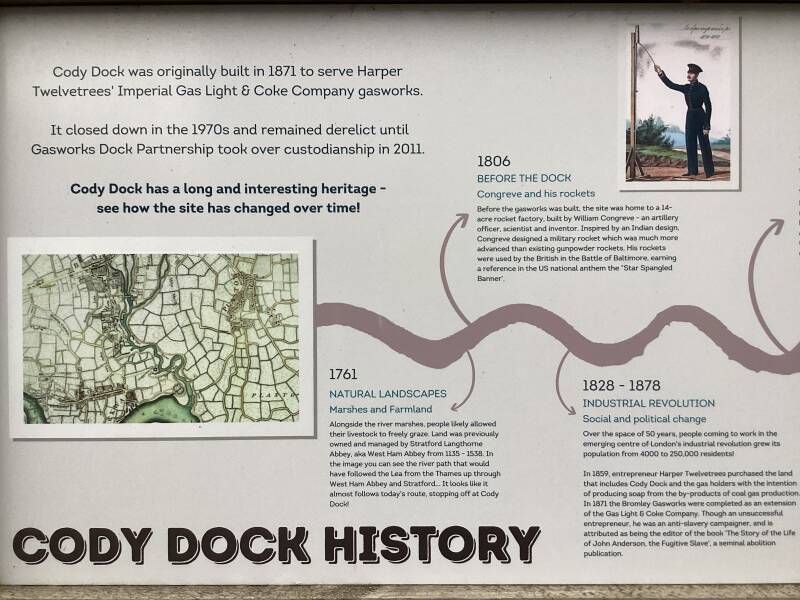
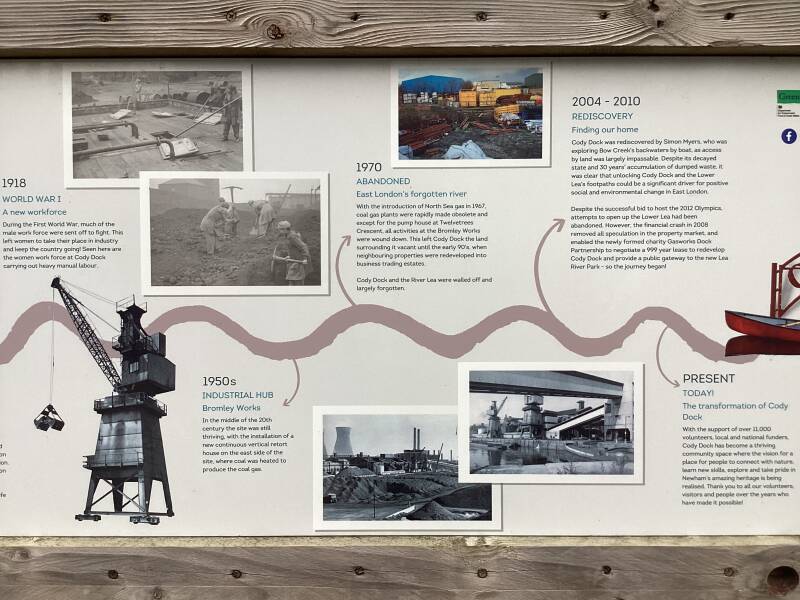

Beside the café, close to the entrance
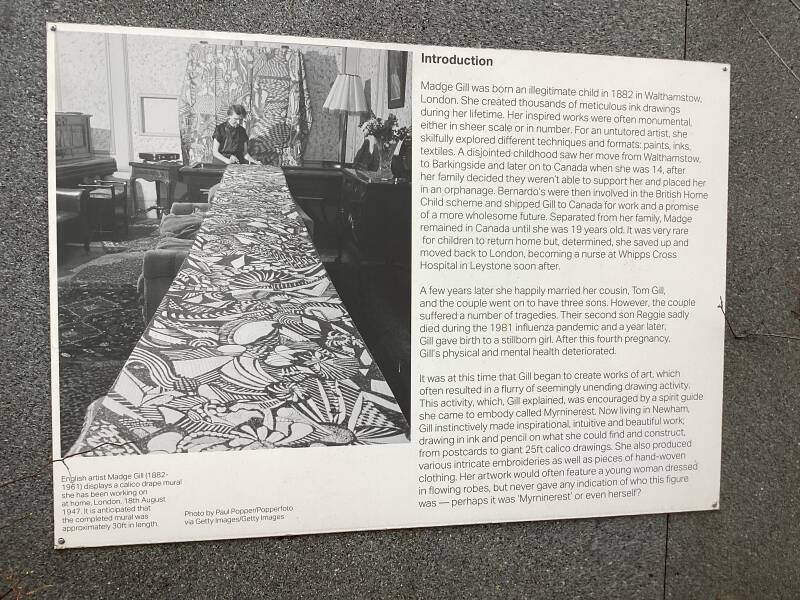
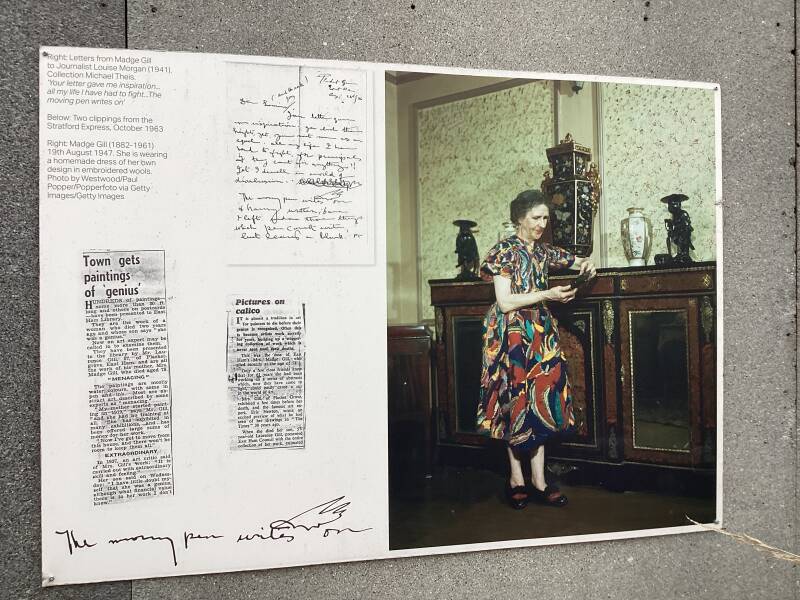
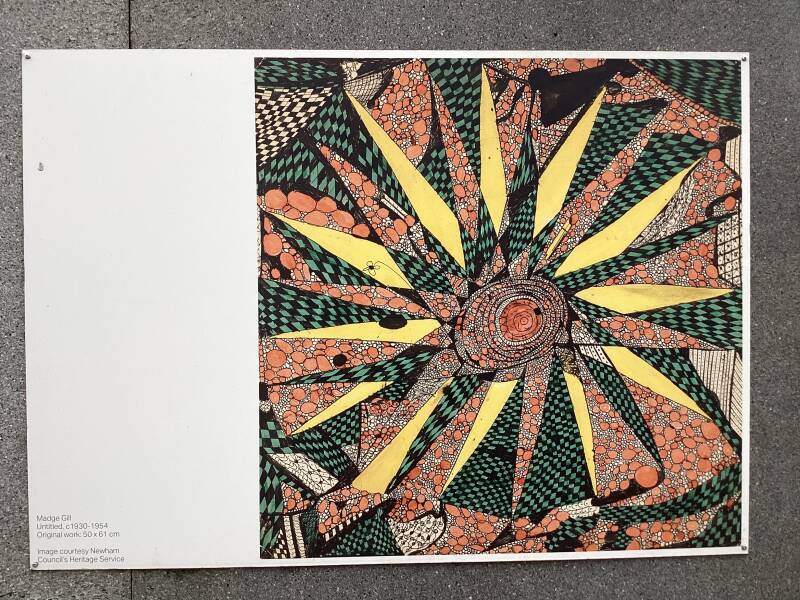
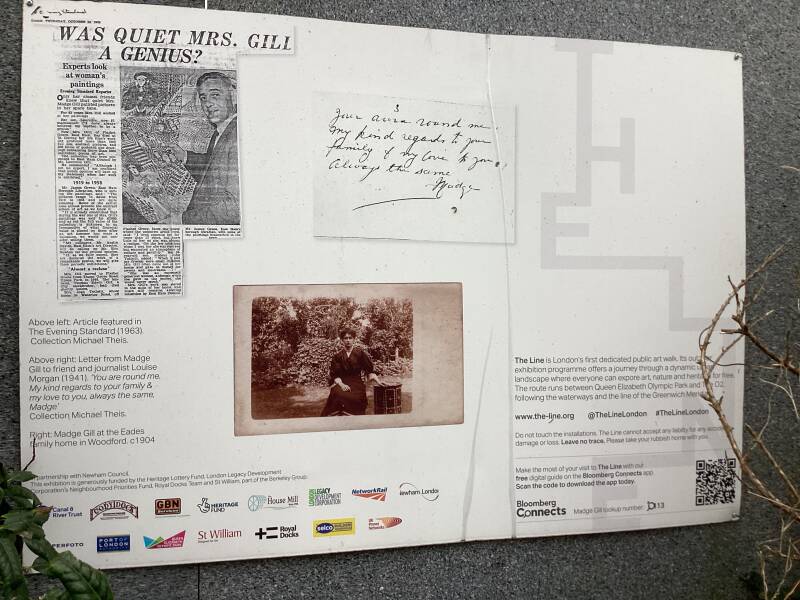
Madge Gill exhibition


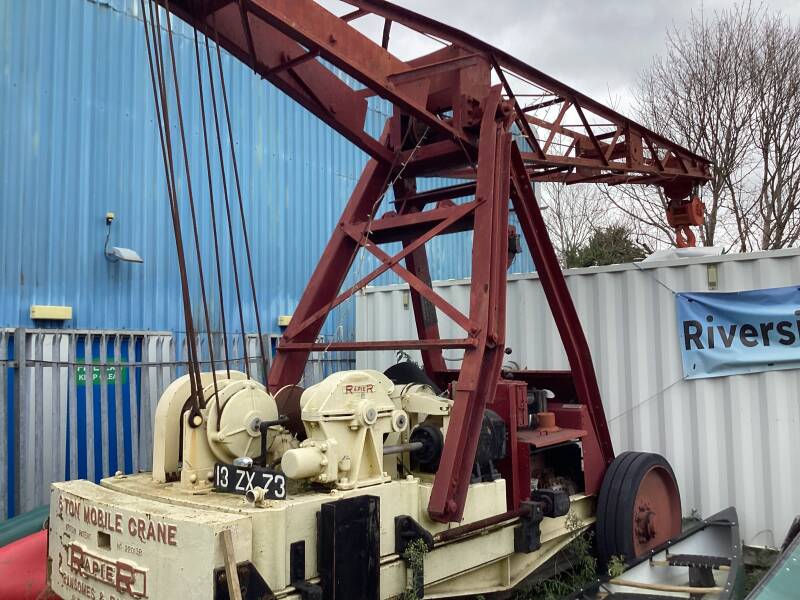
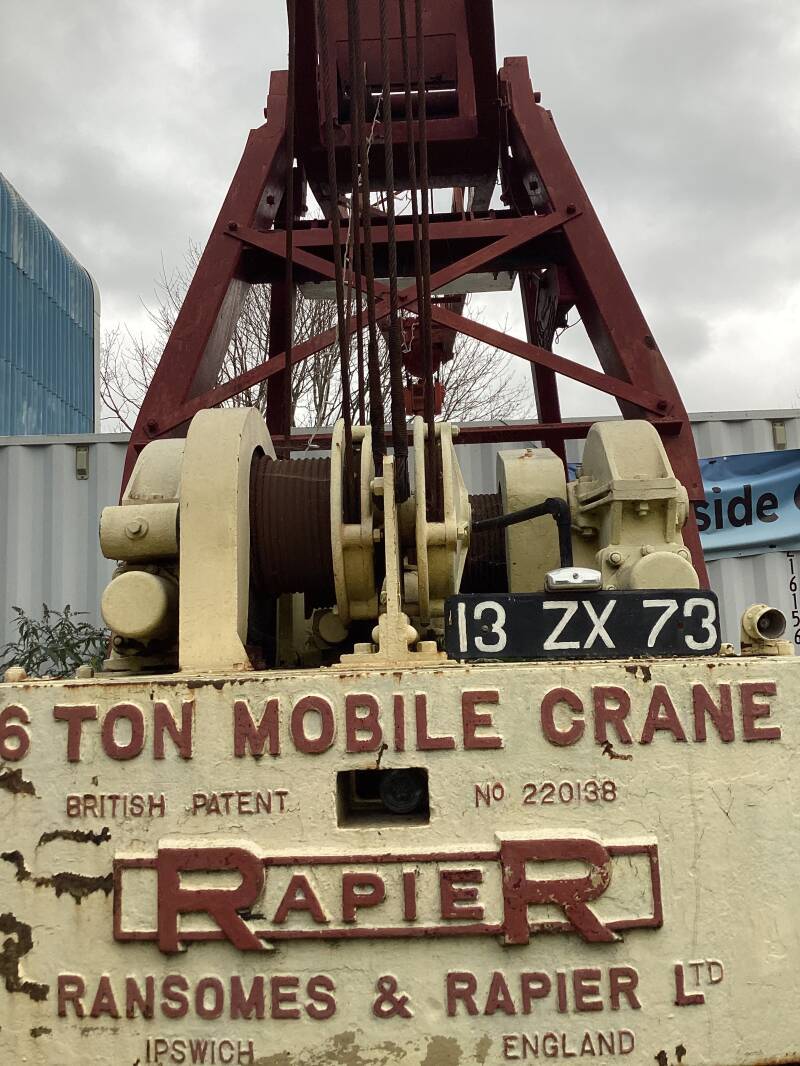
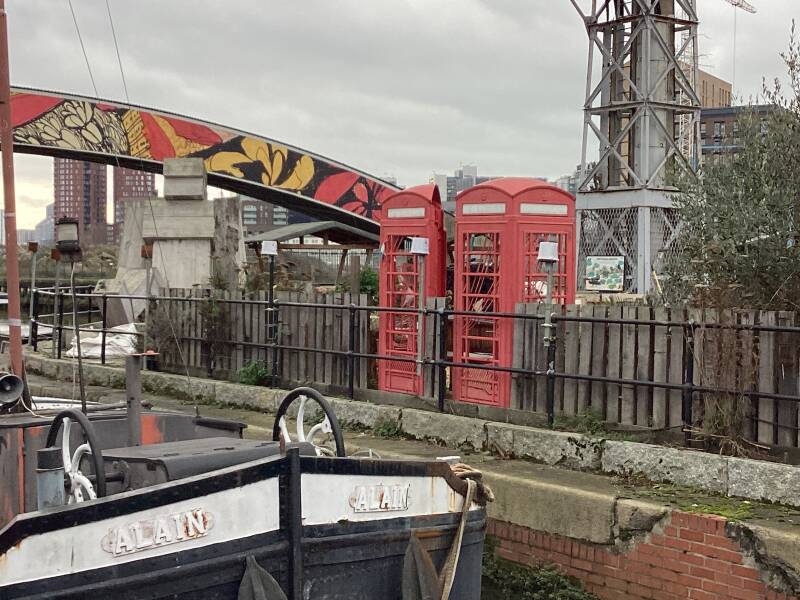
The Dock itself
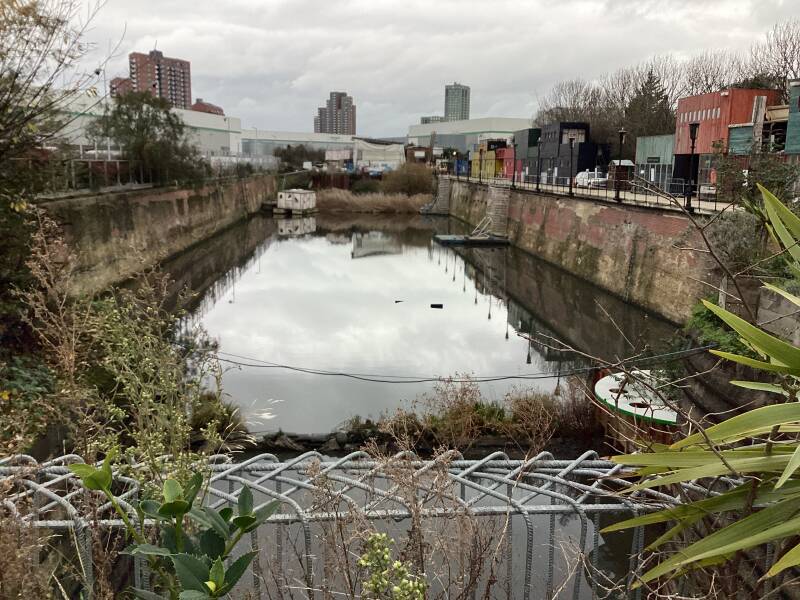
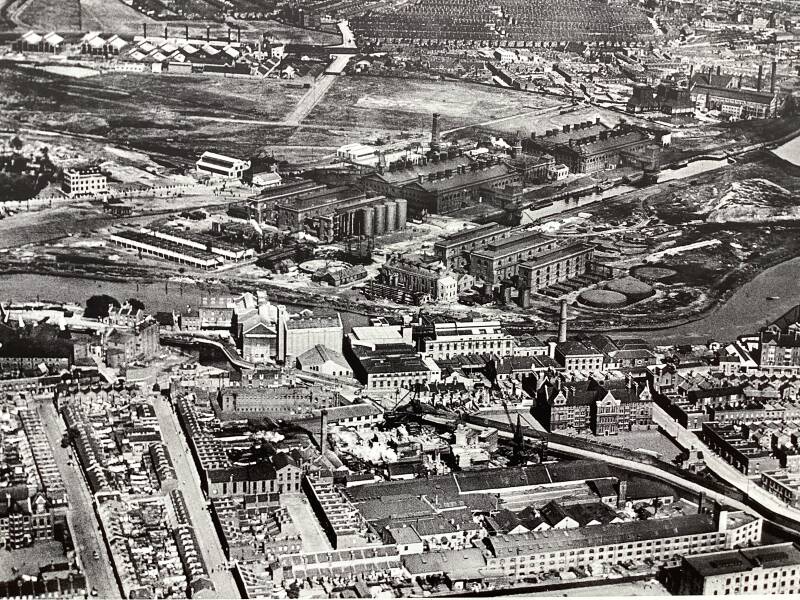
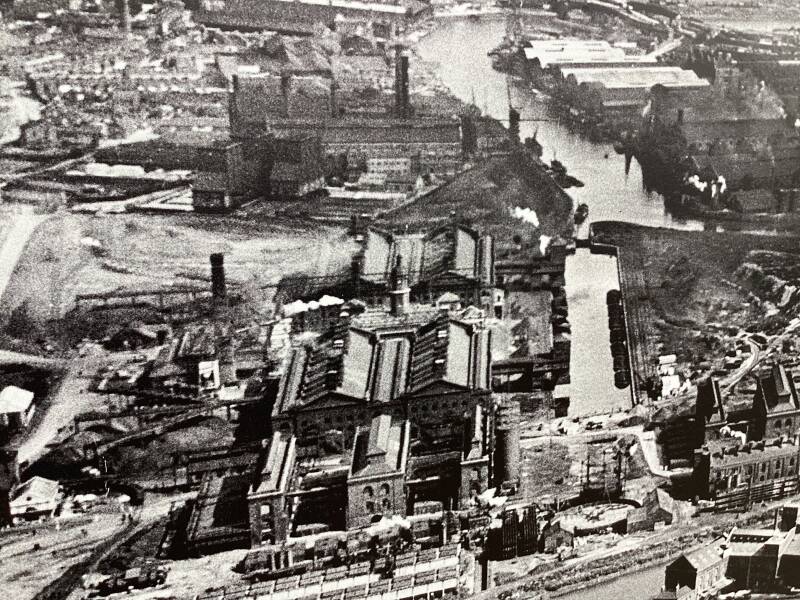
This Dock and area used to be part of the GAS WORKS (see later)
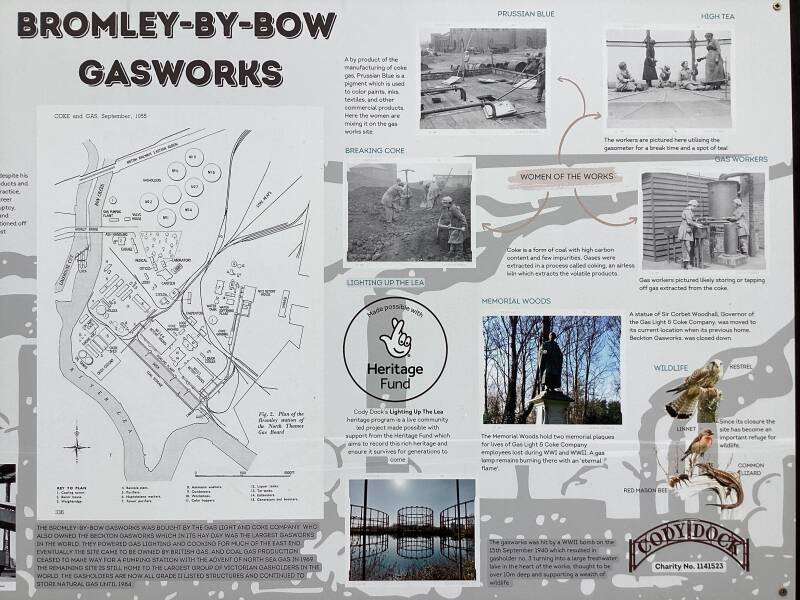
Cody Dock was a coal unloading point for the Bromley-by-Bow gasworks, receiving coal via smaller barges from larger ships, but is now a community arts and regeneration hub led by the Gasworks Dock Partnership (GDP). While its industrial past involved massive coal handling for gas production (using cranes and conveyor systems for large quantities), it's now focused on arts, ecology, and river access, transforming its heritage into a vibrant public space
HARPER TWELVETREES

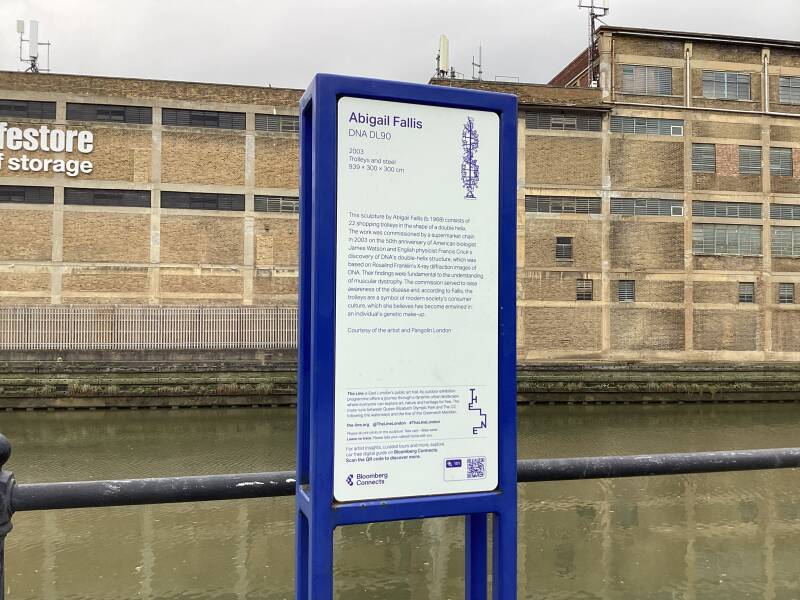
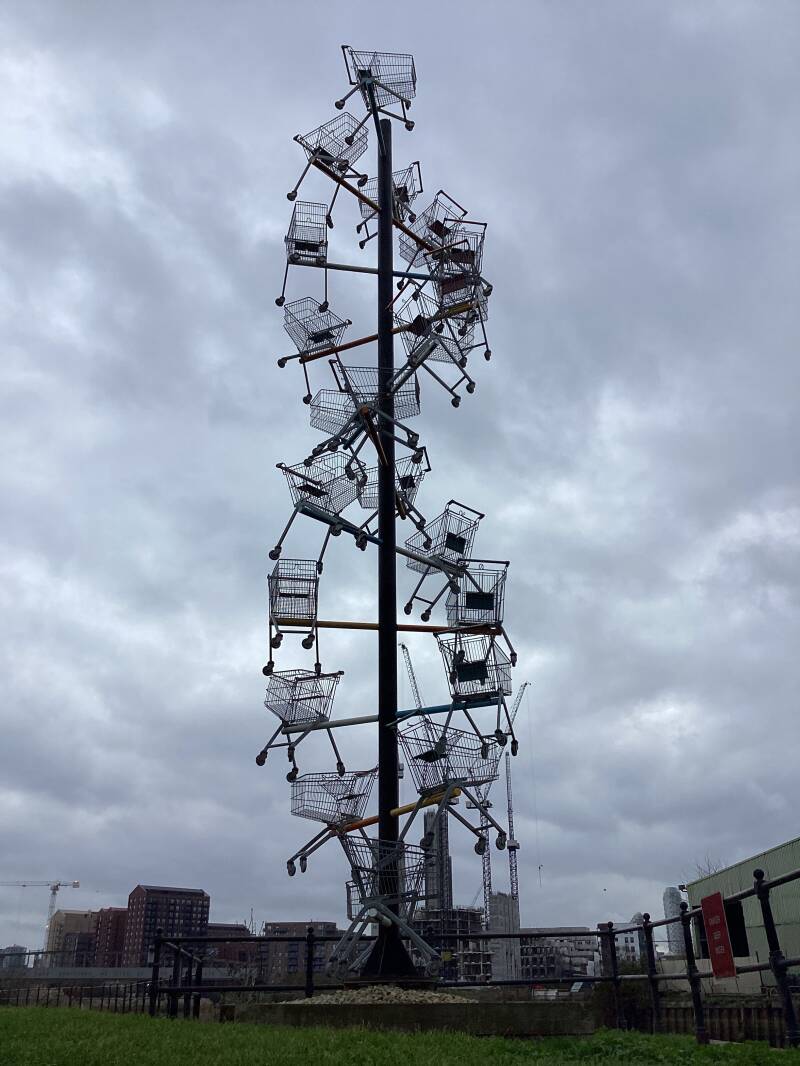
THE LINE Artworks Trail NORTHWARDS
Artworks
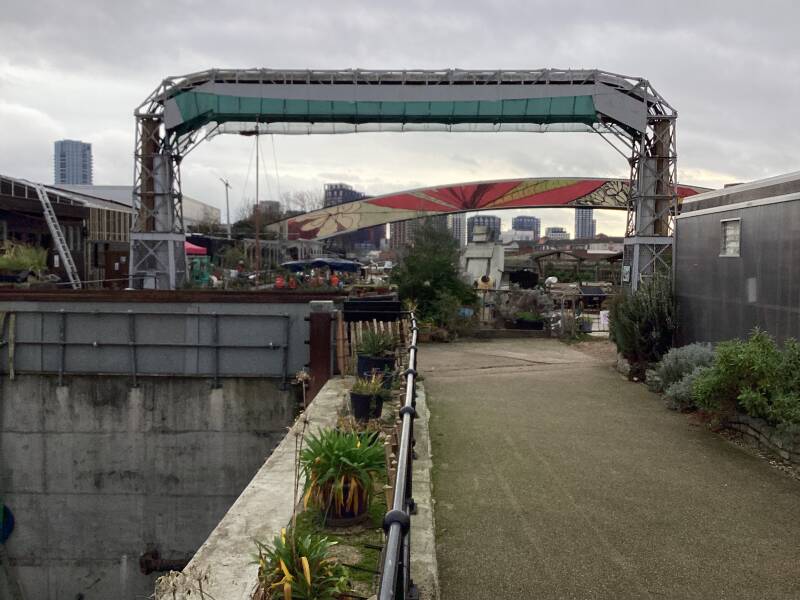
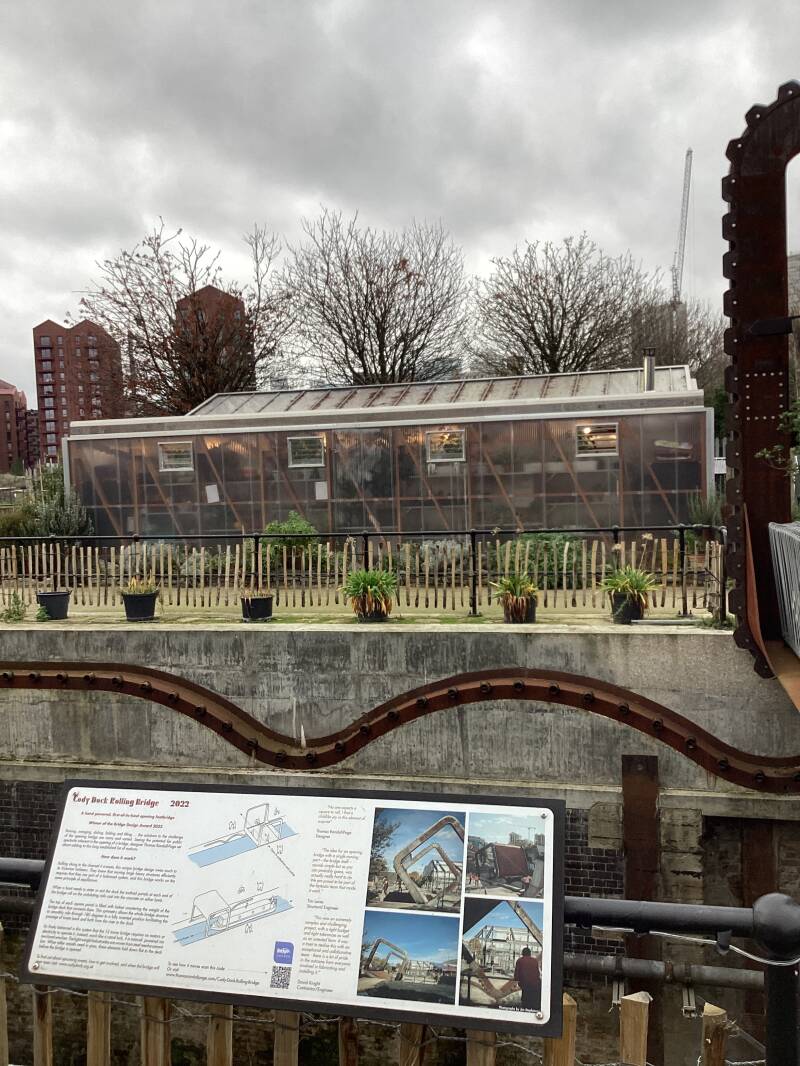
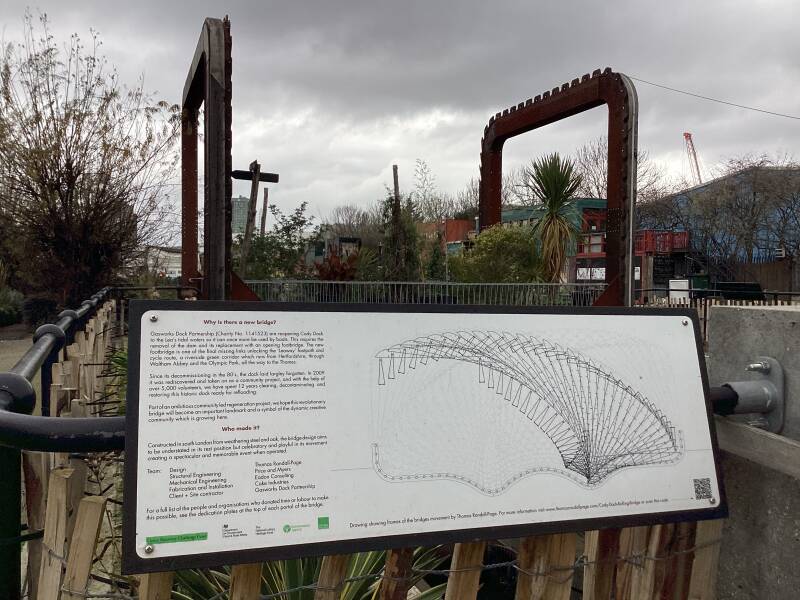
ROLLING BRIDGE. By THOMAS RANDALL-PAGE
The dam will be removed

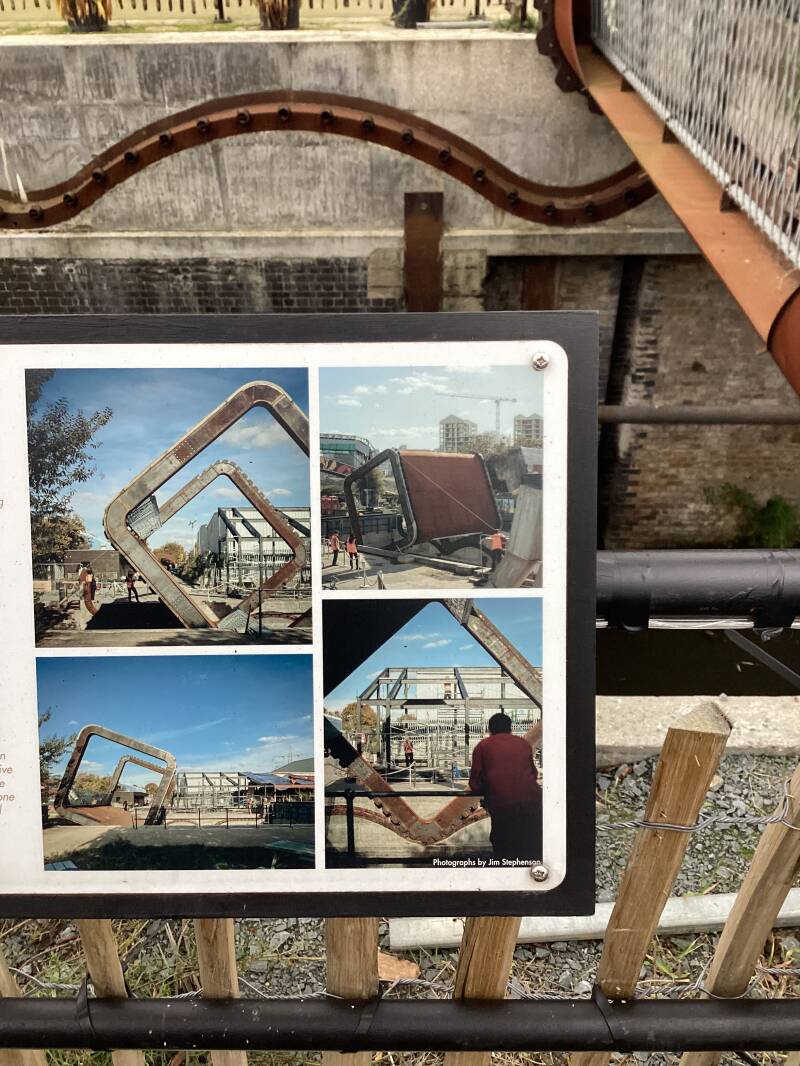
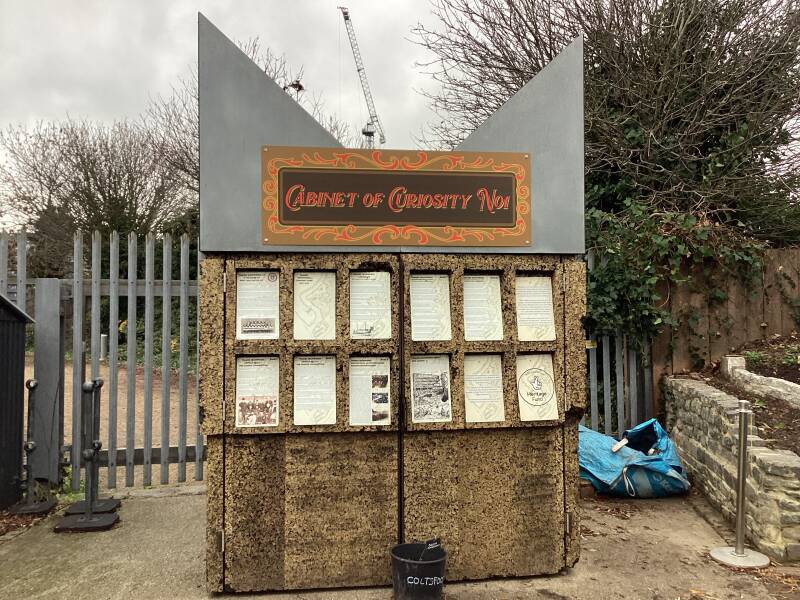
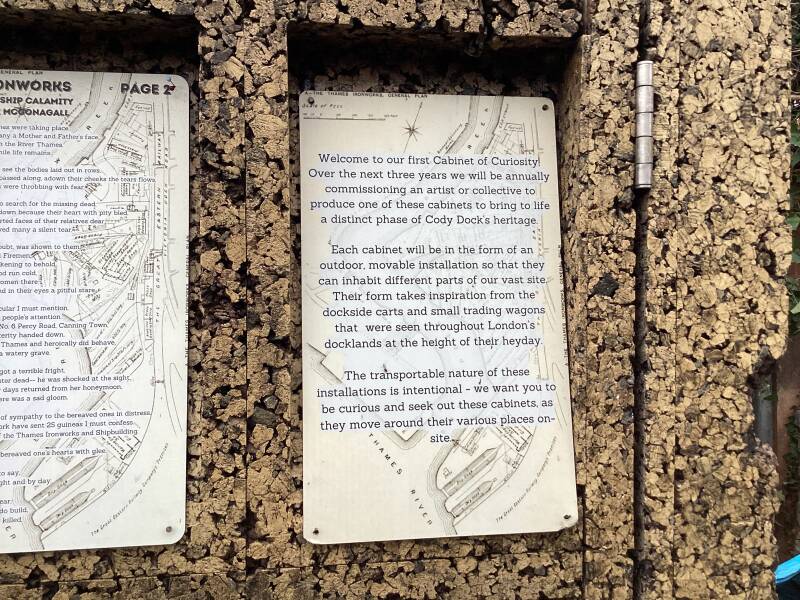
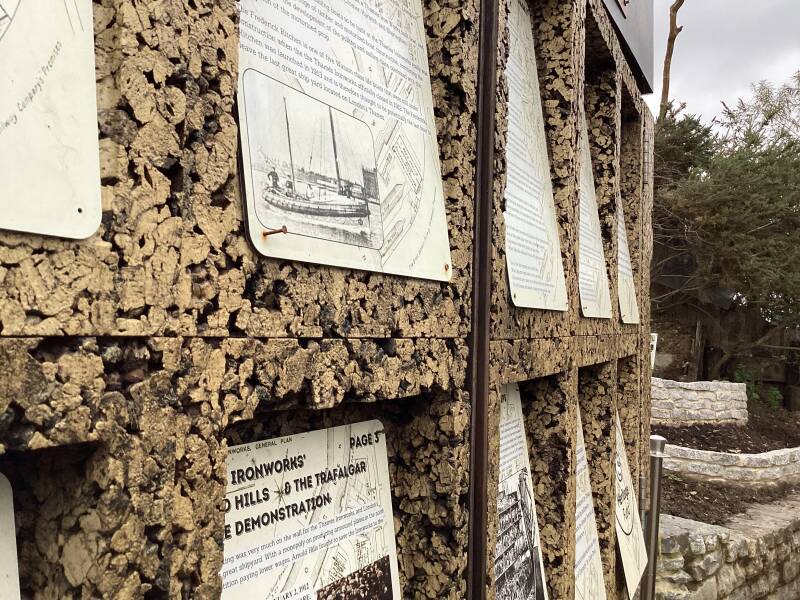
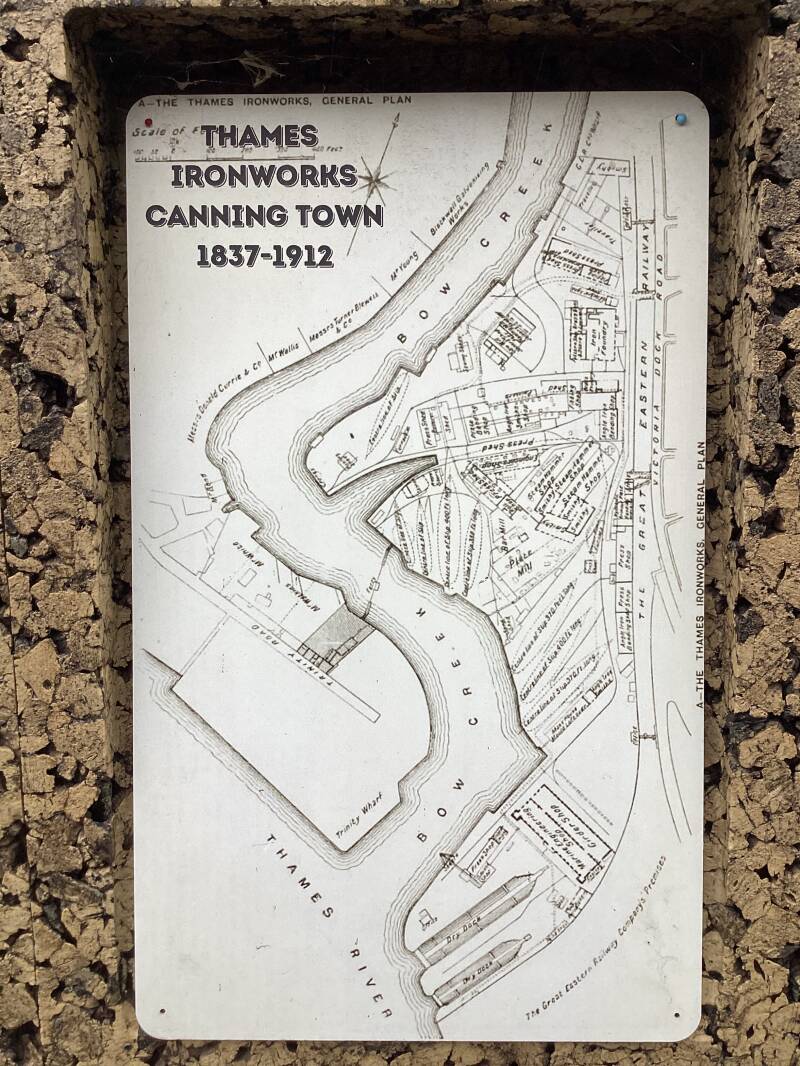
CABINET OF CURIOSITIES number 1 is about the THAMES IRONWORKS company
RIVER LEA
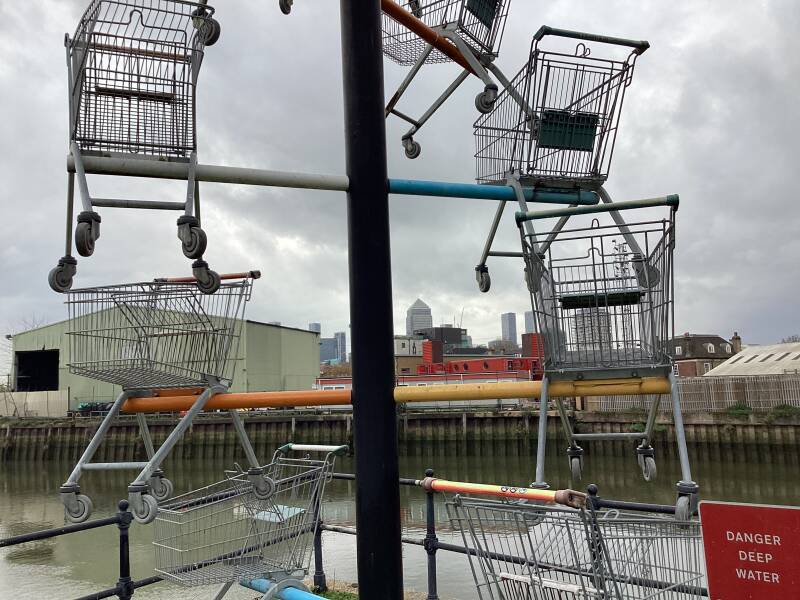


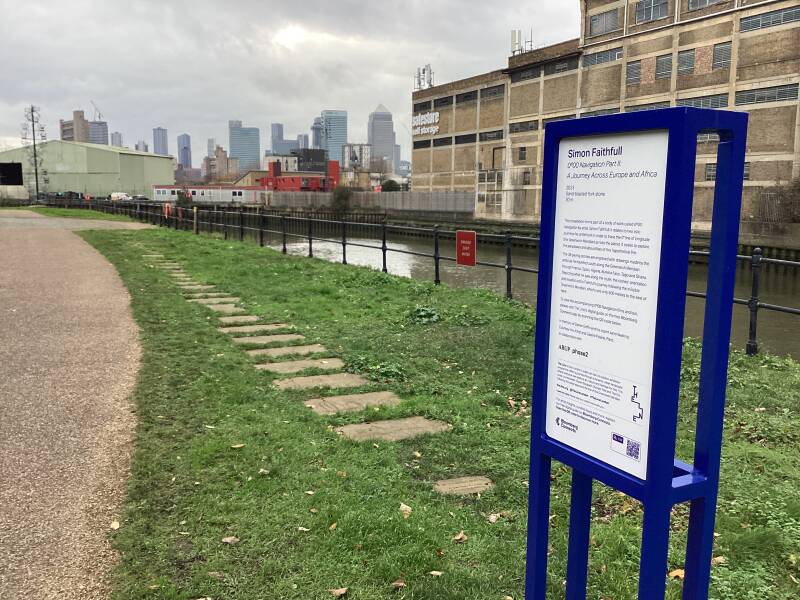
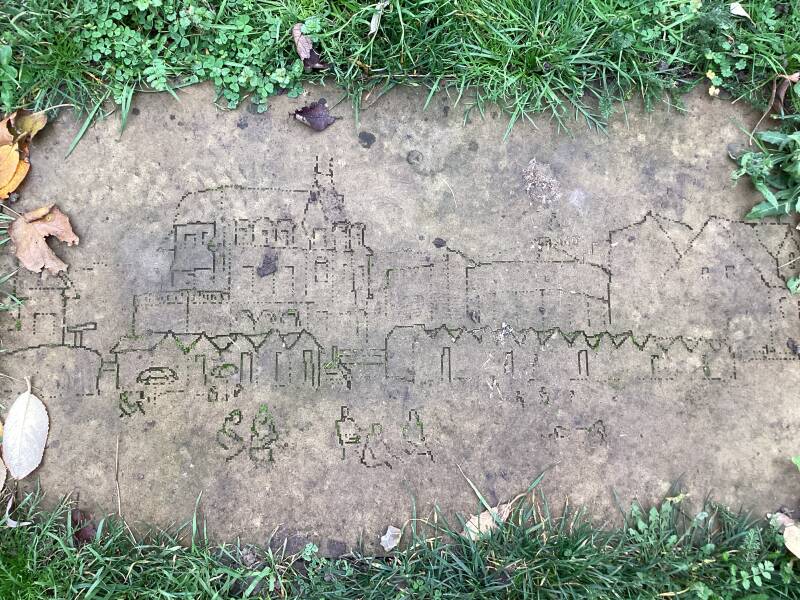

Lock into LEE NAVIGATION (canal) and horsebridge over the lock
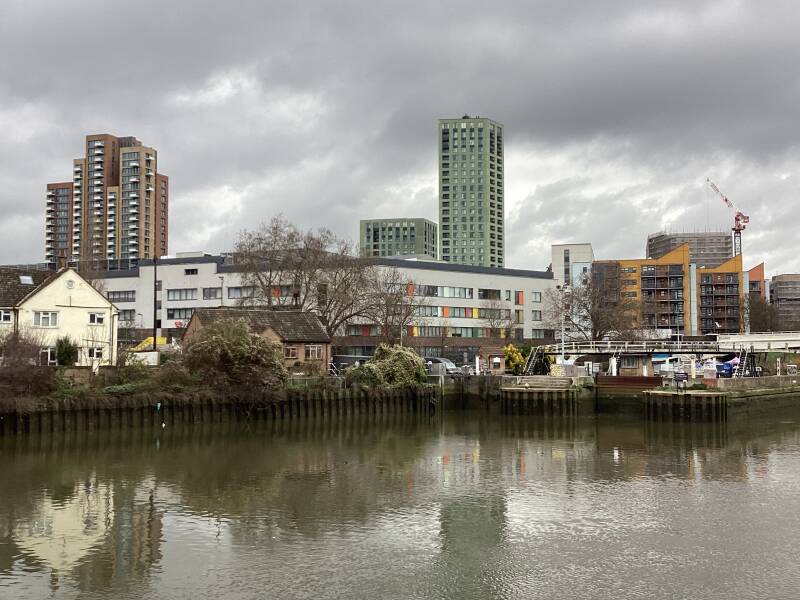
THAMES 21 HQ
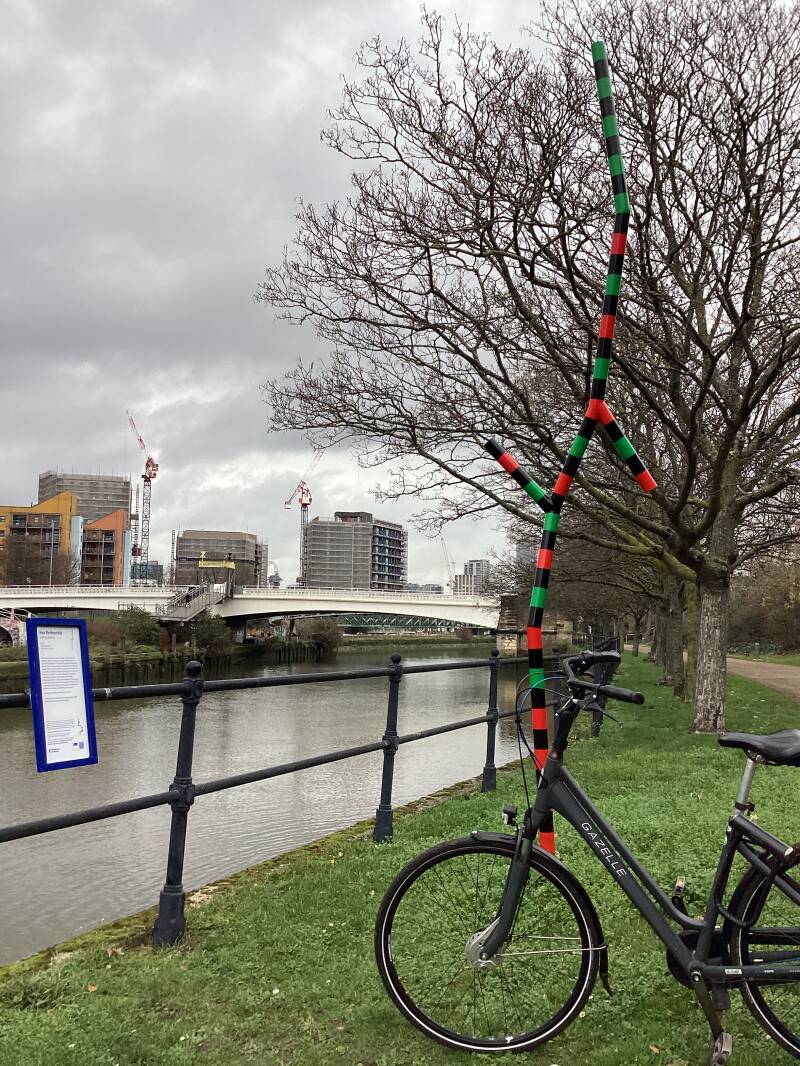
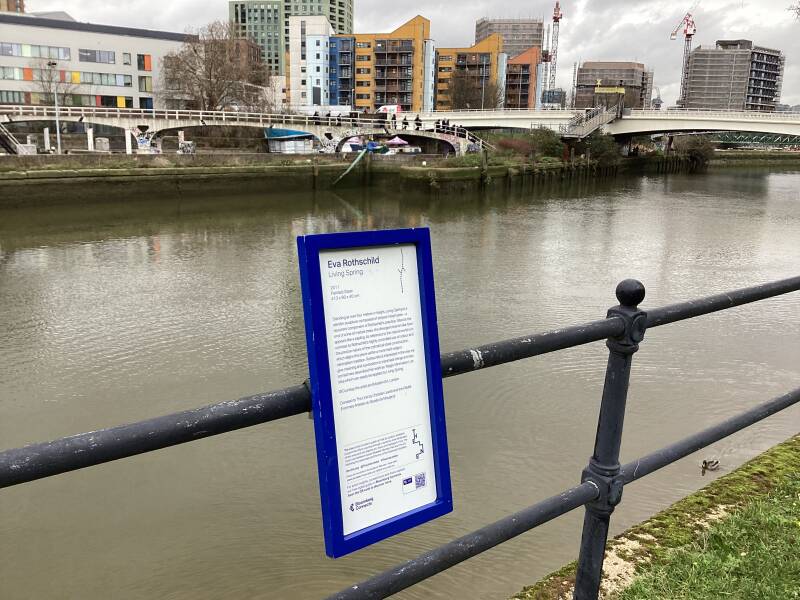
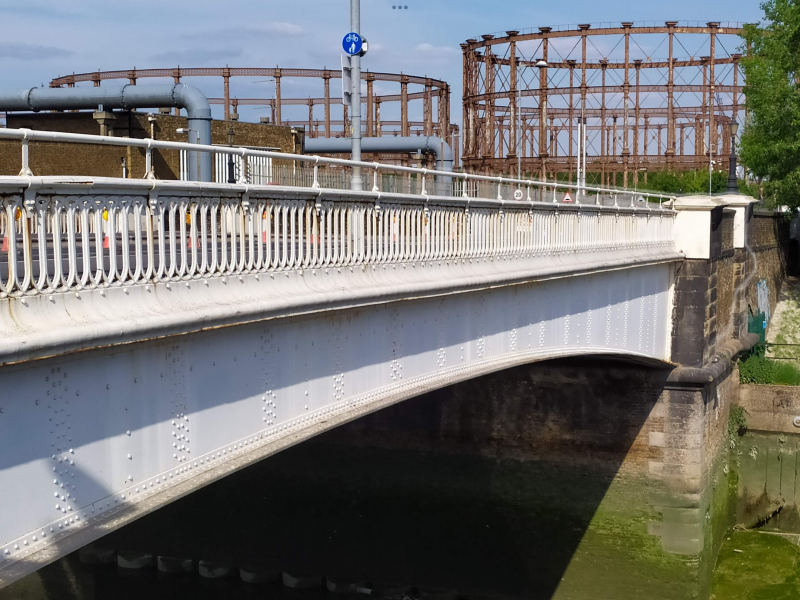
TWELVETREES CRESCENT BRIDGE
IMPERIAL GAS & COKE COMPANY. Later on, GAS, LIGHT & COKE FACTORY. The largest group of gasholders in the world

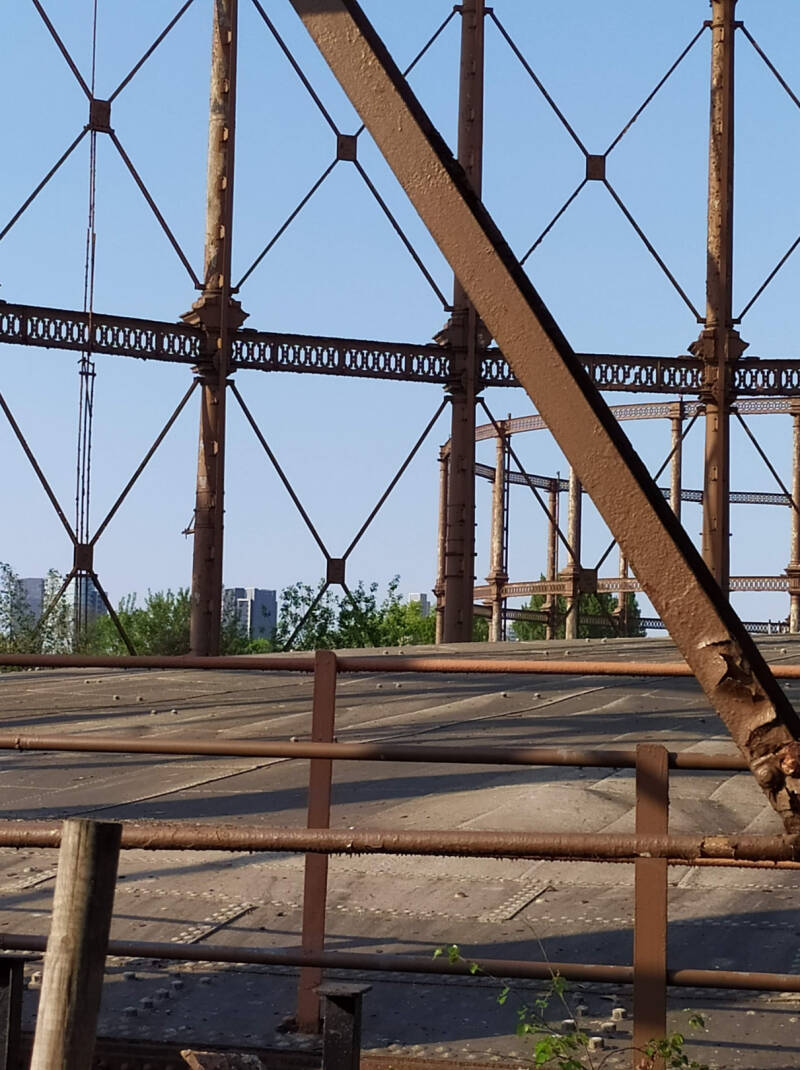
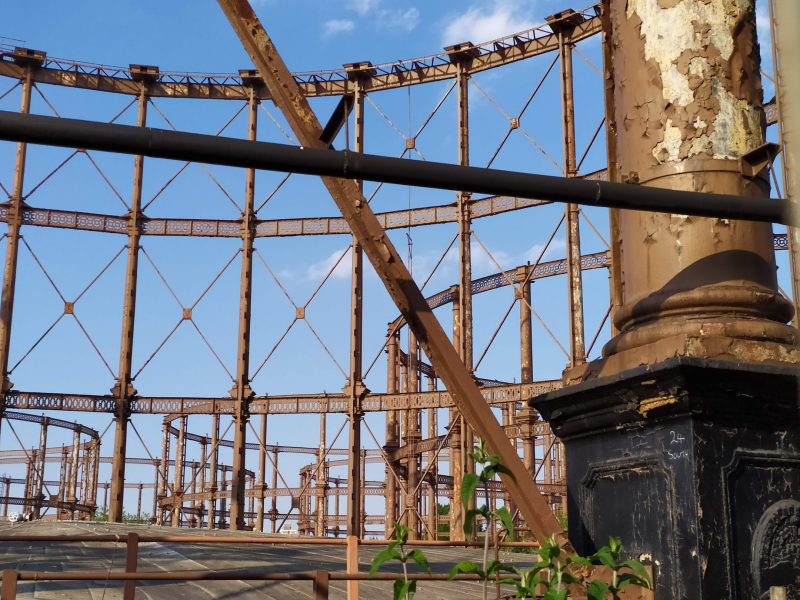
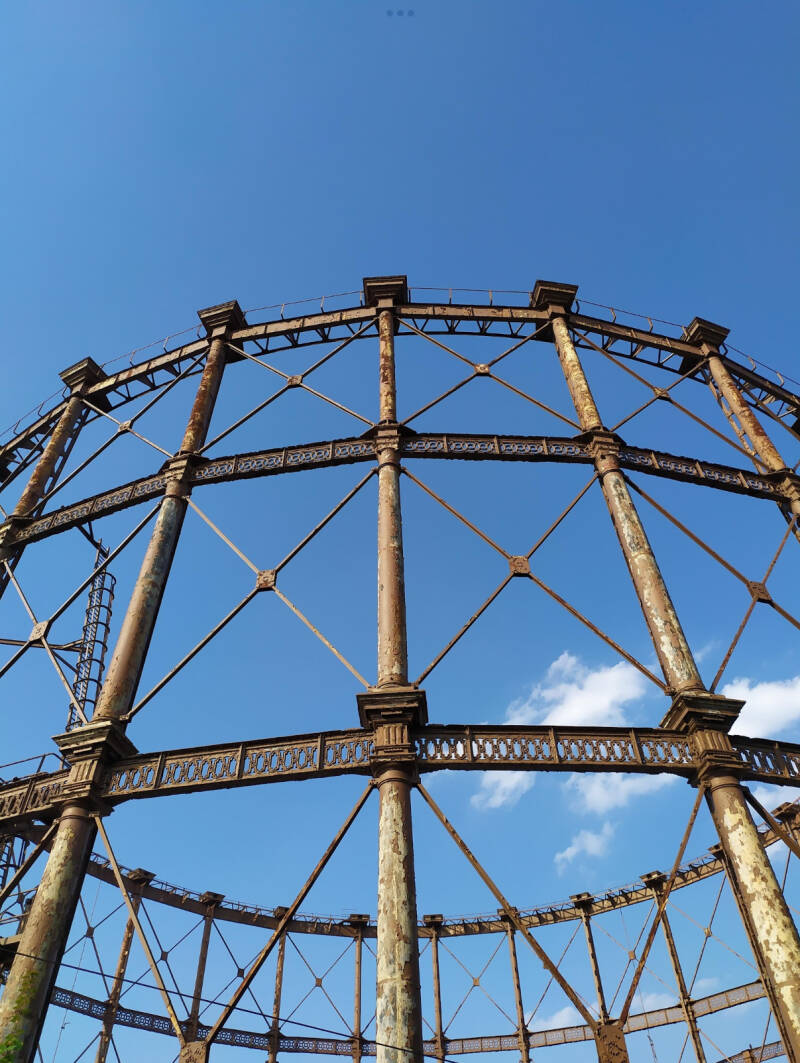
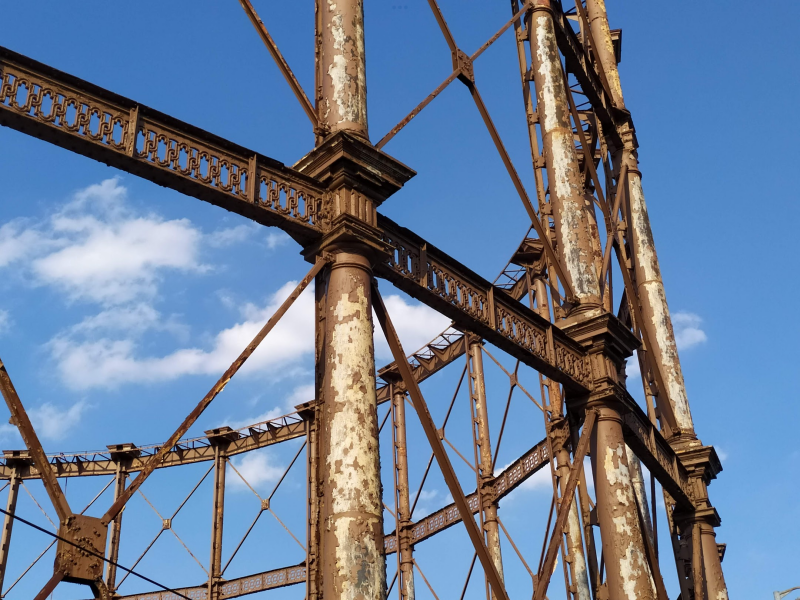
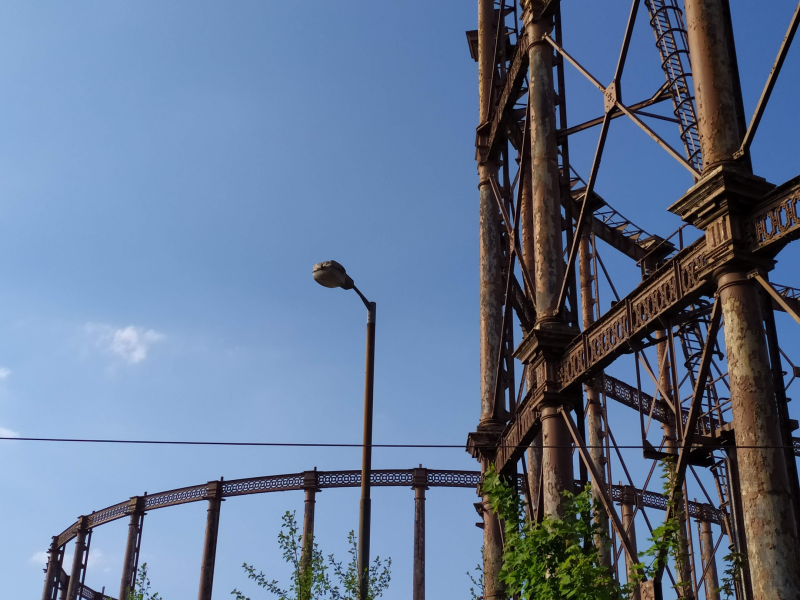
Built between 1872 and 1878 to store gas, the Imperial Gas Light and Coke Company spent £300,000 on BROMLEY GASWORKS, which was "obsolescent in design and not yet in sight of completion" in 1875. The company was amalgamated with the GLCC in 1876 but the Bromley works was still considered to be a "vast white elephant" because the coaling arrangements on Bow Creek were unsatisfactory. The plant was reconstructed in the 1890s. Productive capacity was 30,650,000 cubic feet (868,000 m3) per day in 1948. The site making gas subsequently closed in 1976 and the site stopped storing gas in 2010, and is currently a brownfield site. They are thought to be the largest group of Victorian gasholders in Britain, with the Victorian Society calling them "a true symbol of the Industrial Revolution".
They expanded by concentric cylinders rising up to hold increased volumes of gas.
MEMORIAL GARDENS
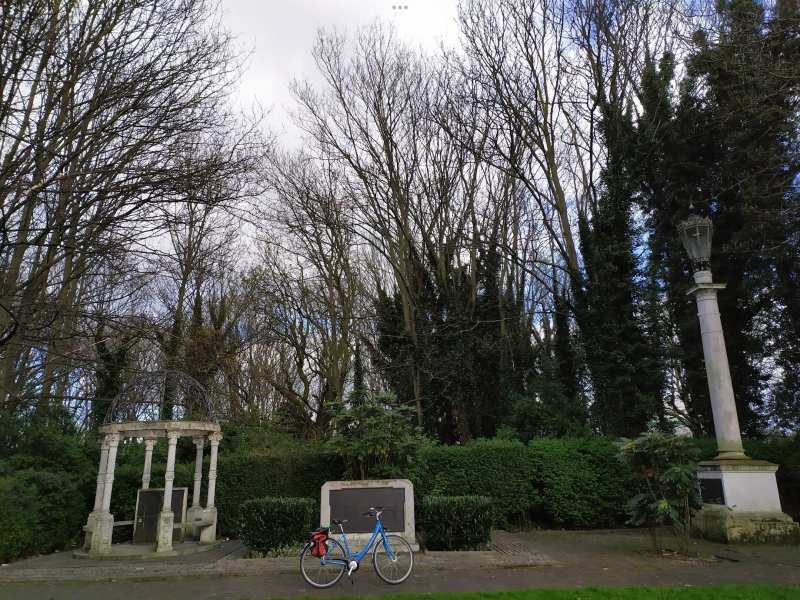
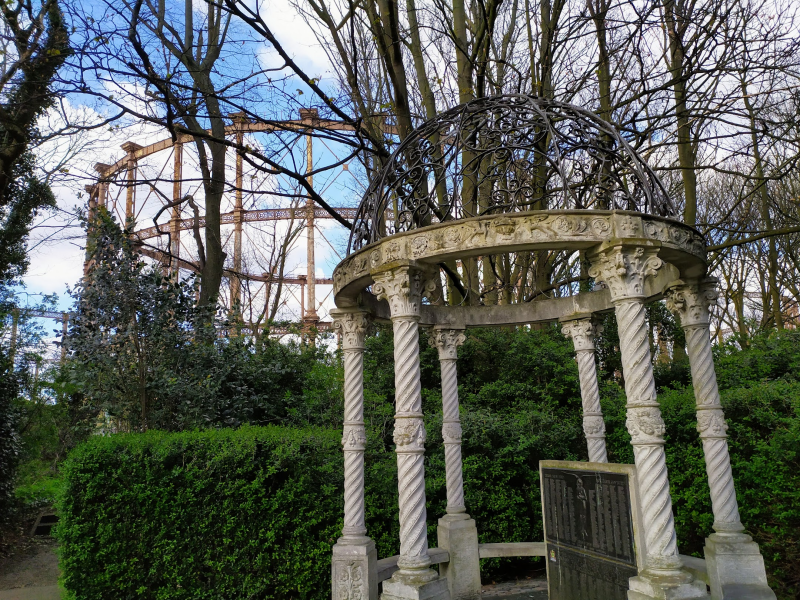
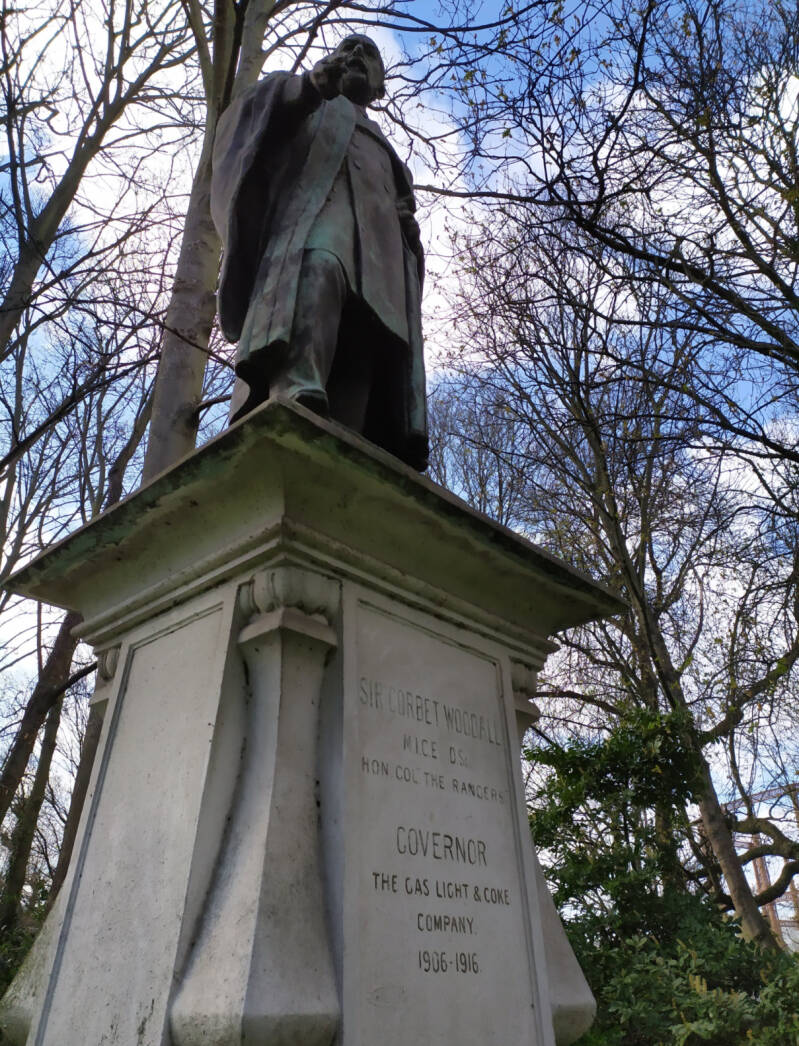
Sir Corbet Woodall (1841 – 1916) was a structural engineer who built the nearby grade II listed gas holders and later became chairman of the Gas, Light and Coke Co, one of the largest suppliers of gas before nationalisation. He also built the gas holders OVAL gasworks.
He was an enlightened employer who was one of the first to introduce a partnership scheme for his workers. Woodall is shown holding his glasses and facing the WAR MEMORIAL to members of the company staff who died in the two world wars. The sculptor's usual signature on his works (such as that on Florence Nightingale statue in Waterloo Place, SW1) is G A Walker, but if you look just below the subject's right foot you will see that in this case he has added an S, to read GAS Walker.
Former GLCC company offices, later Gas Museum. Now, offices
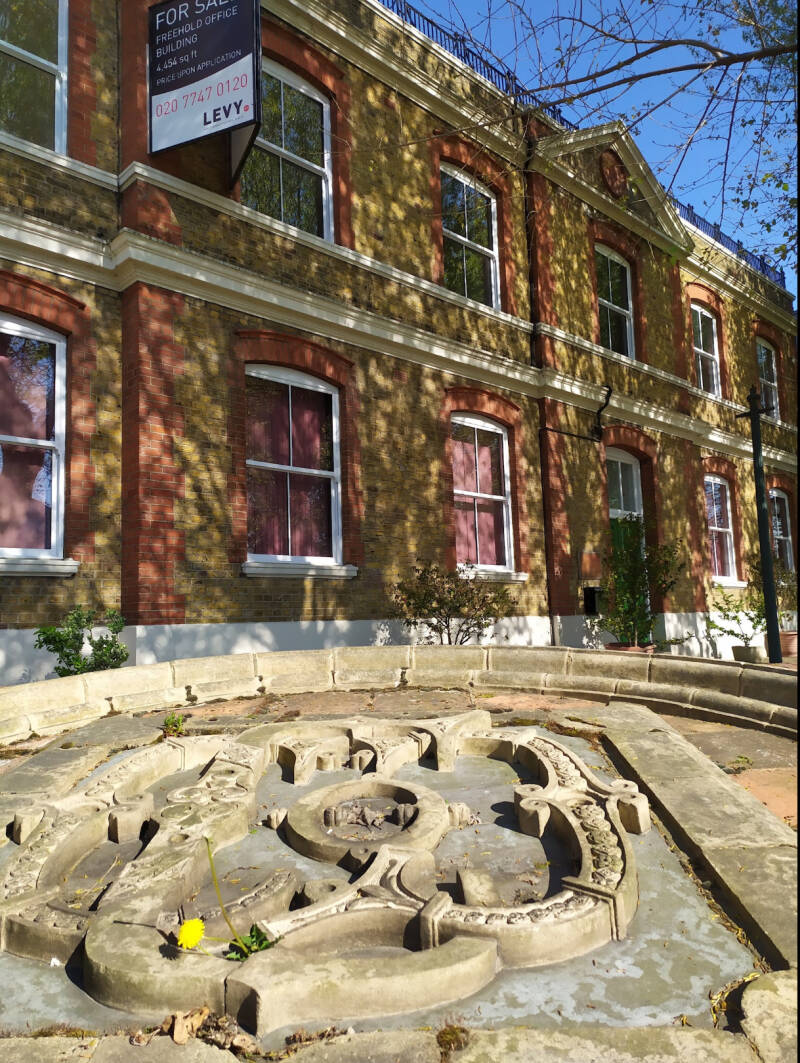
Monogram
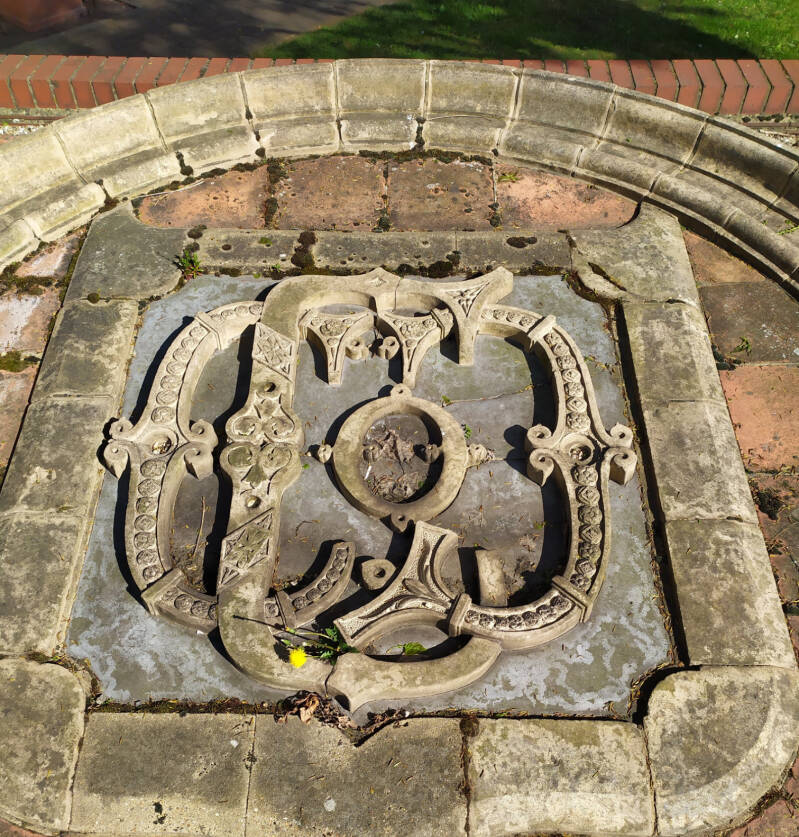
IMPERIAL (until amalgamation or absorption): https://www.gracesguide.co.uk/Imperial_Gas_Light_and_Coke_Co
Frederick Winsor’s GLCC:https://www.gracesguide.co.uk/Gas_Light_and_Coke_Co
Re-development
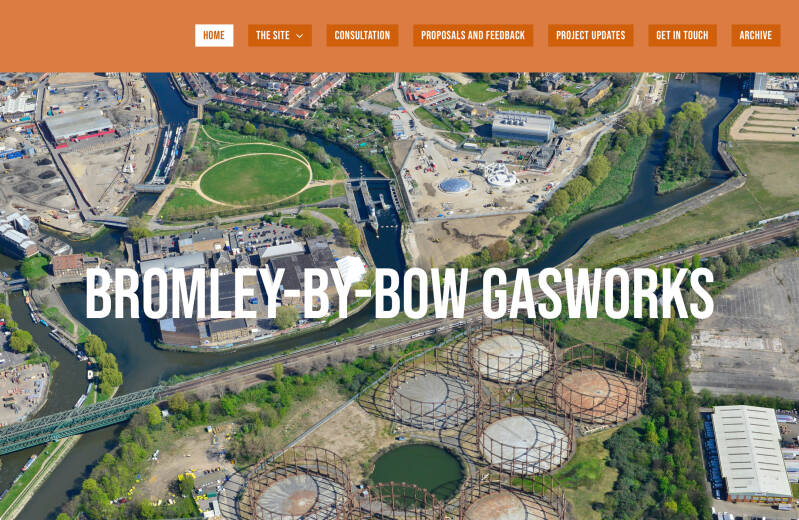

Attention: you are in West Ham, not in Bromley…
Over the Twelvetrees Bridge, and alongside the island area between river (right) and canal (left)
LEA RIVER
LEE NAVIGATION
The River Lea is the natural river, while the Lee Navigation is the man-made canal system built along and alongside it for easier boat passage, creating straighter, deeper routes with locks, with "Lea" generally referring to the natural river upstream and "Lee" to the canalized sections and associated features.
Essentially, the Navigation is a heavily modified, engineered version of the natural River Lea, running from Hertfordshire to the Thames in East London

Completely over the bridge: Possible diversion to Bromley-by-Bow and Central London
Bow Lock 20 and horse bridge
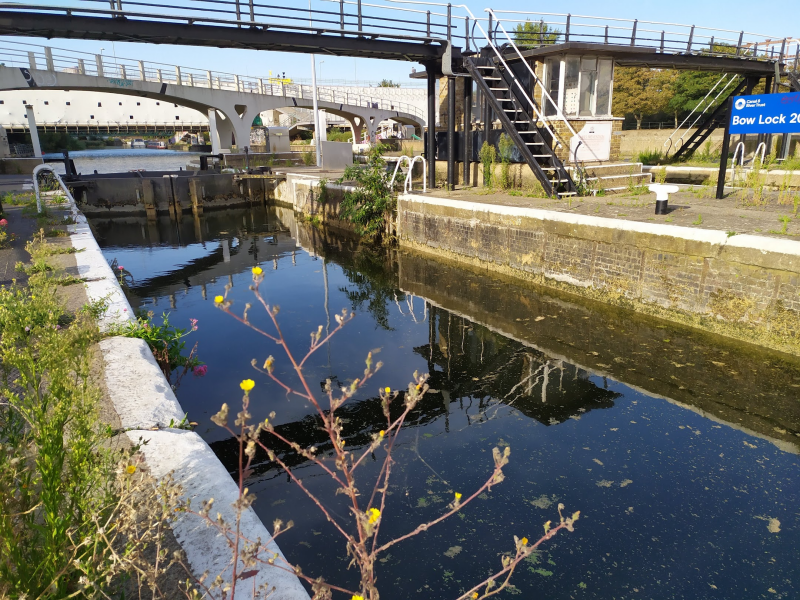
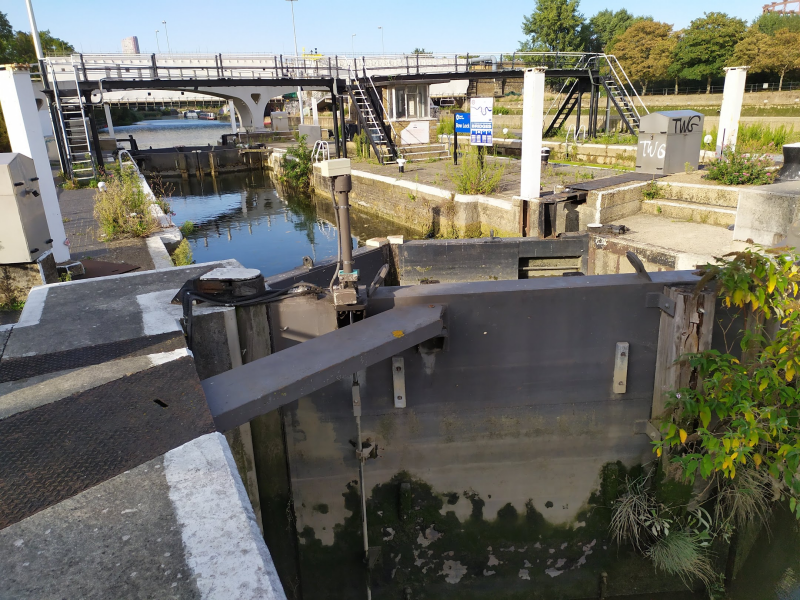
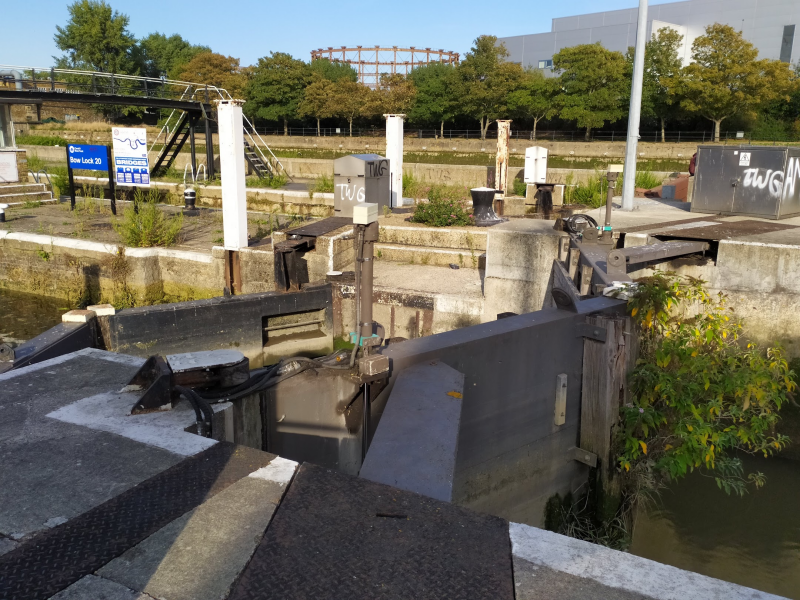
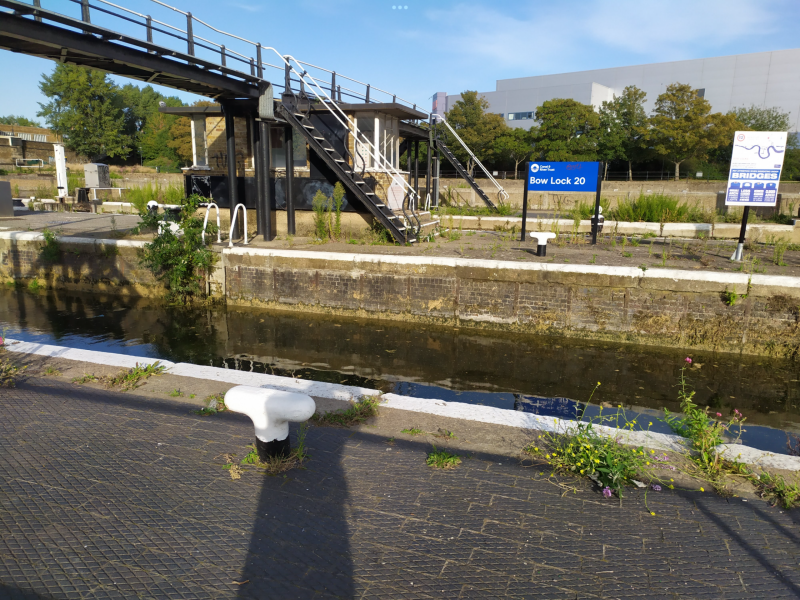

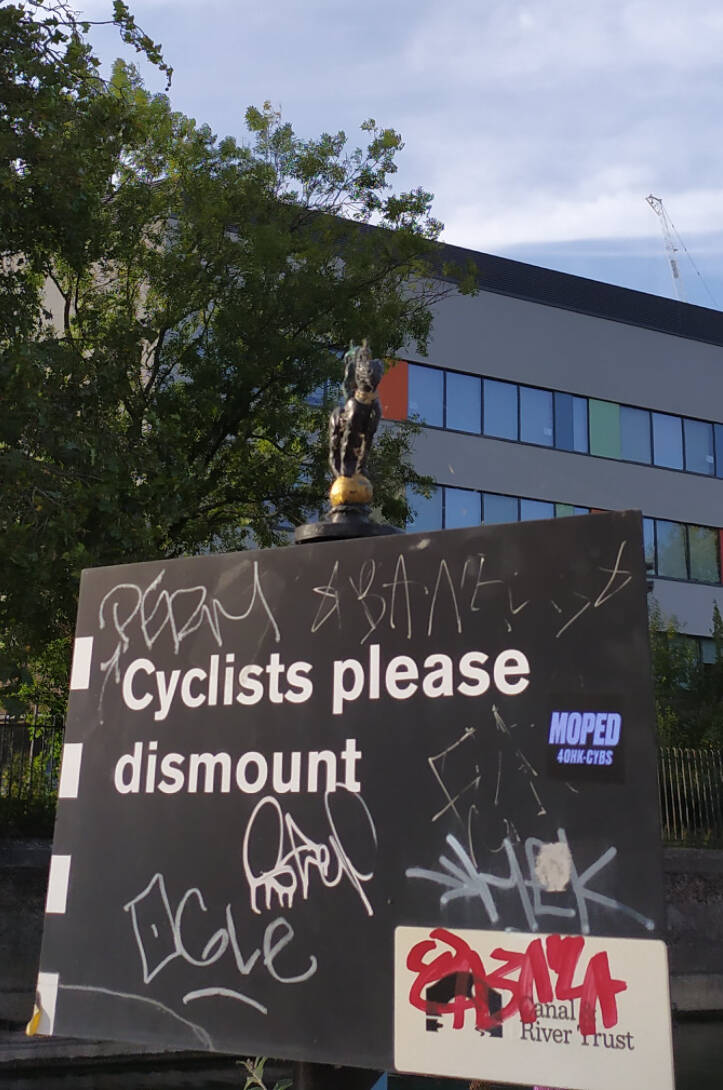

Possible diversion alongside the LIMEHOUSE CUT
Railway bridge: LU

West: Tower Hamlets side
Site of HARPER TWELVETREES, IMPERIAL CHEMICAL WORKS. Now, TESCO supermarket

WASHING MACHINES: https://www.gracesguide.co.uk/Harper_Twelvetrees

BROMLEY-BY-BOW LU Station

Possible diversion: along the course of the original river, under the Bow flyover and on to FISH ISLAND, HACKNEY WICK or OLYMPIC PARK
THE THREE MILLS
Former working mills and an island of the same name on the River Lea. It is one of London’s oldest surviving industrial centres. The River Lea Tidal Mill Trust Ltd owns the House Mill and the Miller's House buildings, which are used for educational projects and as conference spaces. The Lower Lea Project is also based here.
It is thought that there were eight or possibly nine mills on the River Lea in Stratford at the time of the Domesday Book, though this number may refer to the number of pairs of millstones rather than buildings. These are the earliest recorded examples of a tidal mill system. In the clock mill there were 16 workers.
Stratford Langthorne Abbey, founded in 1135, acquired Three Mills some time in the 12th or 13th centuries, and the local area became known by the name. By the time Henry VIII dissolved the abbey in the 1530s, the mills were grinding flour for the bakers of Stratford-atte-Bow, who were celebrated for the quality of their bread and who supplied the huge City of London market.
In 1588, one of the mills was described as a "gunpowder mill".During the 16th century the three mills were reduced to two (which today are the House Mill and the Clock Mill). In the 17th century, the mills were used to grind grain, which was then used to distill alcohol; the mills became a major supplier to the alcohol trade and gin palaces of London. PETER LEFEVRE began distilling gin at Three Mills in about 1730.
The House Mill was built in 1776 (and after a fire destroyed it, quickly rebuilt) by DANIEL BISSON. It is a grade I listed building.The Clock Mill was rebuilt by Philip METCALFE between 1815 and 1817 incorporating the old clock, and an older bell.
There was also a windmill which survived until about 1840. The House Mill continued to operate until 1940 and the Clock Mill until 1952.
Ownership changed relatively frequently during the 17th to the late 19th centuries, until 1872 when it was purchased by gin distillers J&W Nicholson & Co of Clerkenwell. Initially producing Lamplighter Gin on site, the company eventually moved production of all of their brands to the site. Distilling ceased in 1941 during the rationing shortages of World War II. The Nicholson family, headed by Sir Richard Nicholson, sold the business to the Distillers Company, a Scotch whisky company based in Edinburgh. It was taken over in 1986 by Guinness & Co. and is now part of Diageo.
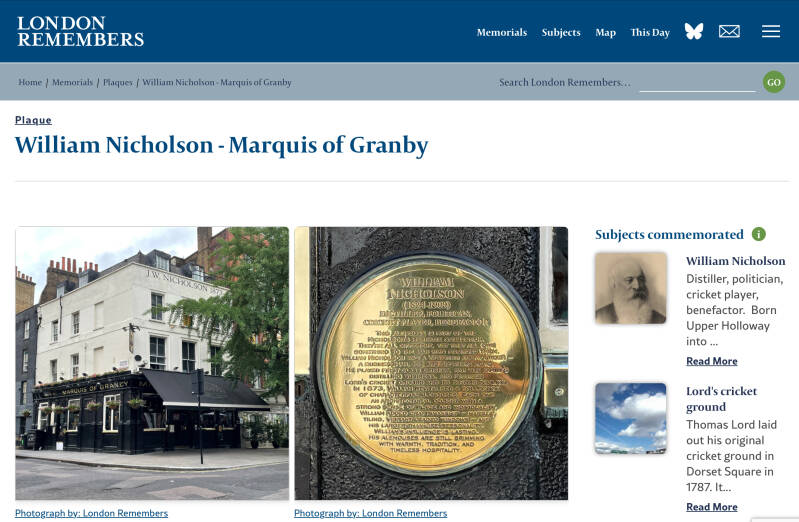
Nicholson's pubs must have ordered a job lot of these plaques
HOUSE MILL
CLOCK MILL
THREE MILLS STUDIOS
MEMORIAL
commemorates a specific industrial accident that occurred at the nearby Nicholson's Gin Distillery, not a gasworks.
- Description: This sculpture by Alec Peever depicts clasped hands, symbolising a rescue attempt. It was unveiled in 2001 to mark the centenary of a tragedy in 1901.
- The Tragedy: Four men—Thomas Pickett, Godfrey Maule Nicholson (the managing director), Frederick Elliott, and Robert Underhill—died from asphyxiation by foul air (carbon dioxide) in a well on the site. Three of the men died in successive heroic attempts to rescue their comrades.
- Other Commemorations: The valour of these men is also recorded on a memorial plaque in Postman's Park in the City of London, which honors everyday heroes who died attempting to save others.
The exact site of the well where the men died is marked by a separate stone disc with the inscription "in memoriam" and the initials of the four men.
GREEN
View: ABBEY MILLS PUMPING STATIONS
New developments: SUGAR HOUSE ISLAND
The Island is named after a 19th century five-storey brick warehouse which still stands on site. The original sugar refinery once stood at the top of Sugar House Lane where it meets the High Street.
Dane’s Yard is the creative quarter and first chapter of Sugar House Island.
The Sugar House Lane Conservation Area was identified as the natural home of a creative cluster of businesses. The project preserves and enhances the industrial character of notable existing buildings with complementary new buildings grouped around heritage yards to provide 12,200 sq m of accommodation in total.
This former industrial corner has been reimagined into a stirring hub just a stone’s throw from Stratford. Dane’s Yard is a home for creative organisations, an eclectic canal-side quarter with a mix of bright, characterful workspaces and outdoor spots. Every corner reveals a hive of activity; tight alleyways, terraces and carefully crafted courtyards let conversation.
Danes Yard Tower is a hyperboloidal structure constructed of sustainably sourced modular timber elements. At night, an interactive animation of low-energy coloured lights transforms the tower into a key landmark in East London.
The immediate purpose of the tower at the time of its planning consent was to act as a temporary symbol, heralding the regeneration of the Sugar House Island site. Well received by the Borough of Newham and its Planning Department, the investor was asked and agreed to accept a permanent approval for the structure. Now it stands as a familiar element within the complete design of Danes Yard.
Danish Vickings, here?. No, JAMES DANE a printer
The DANE COLOUR was a UK-based group involved in printing inks (like Day-Glo), pigments, and equipment
Eateries
Stratford High St.
Pudding Mill Ln.

Marshgate Ln.
ABBA VOYAGE
The concerts feature virtual avatars (dubbed "ABBAtars"), depicting the group as they appeared in 1979 and use the original vocals recorded by the group, accompanied by a 10 piece live instrumental band on stage
ABBA had unofficially split up in December 1982, and despite renewed interest in the band from the 1990s onwards, following the worldwide success of their greatest hits album ABBA Gold, the musical Mamma Mia! and its film adaptation, the members had repeatedly refused to re-form.In 2016 American media reported that British entrepreneur Simon Fuller had approached ABBA with his idea to create a virtual reality ABBA using new technology.[8][9] In November that year Fuller was photographed in London meeting with ABBA.[10] In September 2017, Benny Andersson told Swedish newspaper Expressen that there were plans for ABBA to tour "virtually", using digital avatars of the group.[2] In April 2018, the four members issued a statement saying that during preparations for the tour, they had regrouped in the studio and had recorded two new songs, titled "I Still Have Faith in You" and "Don't Shut Me Down".
THE GREENWAY, A raised path along the Northern Outfall Sewer
The Capital RingWalk (section 14) follows the Greenway for most of its distance, and forms part 4[10] of the 2012 Jubilee Greenway

Along the GREENWAY Westwards :You can make a detour or a diversion towards FISH ISLAND and HACKNEY WICK, VICTORIA PARK or BOW
BOW GOODS YARD
Site of the 2012 Olympics Athletics warming track
A full 400m track, identical to the competition one, provided a consistent feel for athletes.An 80m sprint track was located beneath the stadium's main stand for quick startsThe tracks used the advanced Mondo rubber surface, known for excellent shock absorption, energy return, and comfort. After the Games, this warm-up track was transformed into the London Marathon Community Track, a public facility in the Queen Elizabeth Olympic Park.
However, I found a different version: “The London Marathon Community Track (LMCT) was built in 2017 as the warm up track for the 2017 IAAF World Athletics and IPC World Para Athletics Championships thanks to the generous donation of £3.45 million by London Marathon Foundation – this remains the Foundations single biggest ever grant”.

VIEW TUBE
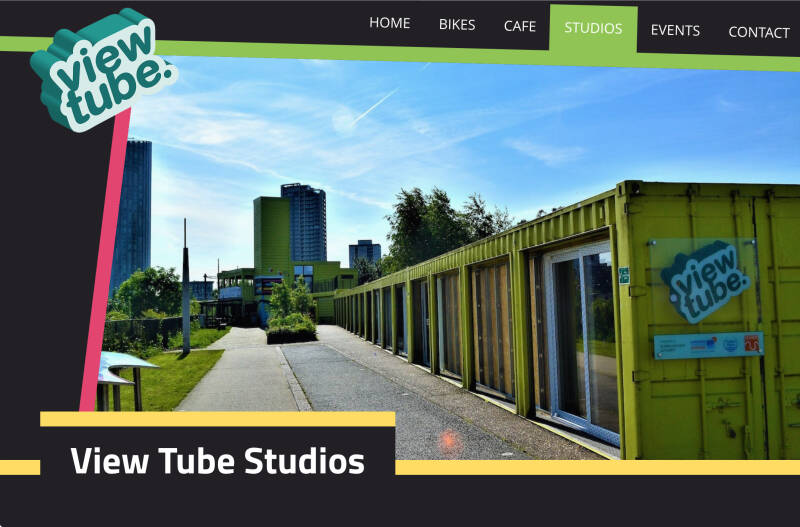
Sidings St
Welcome to London’s Olympic Park
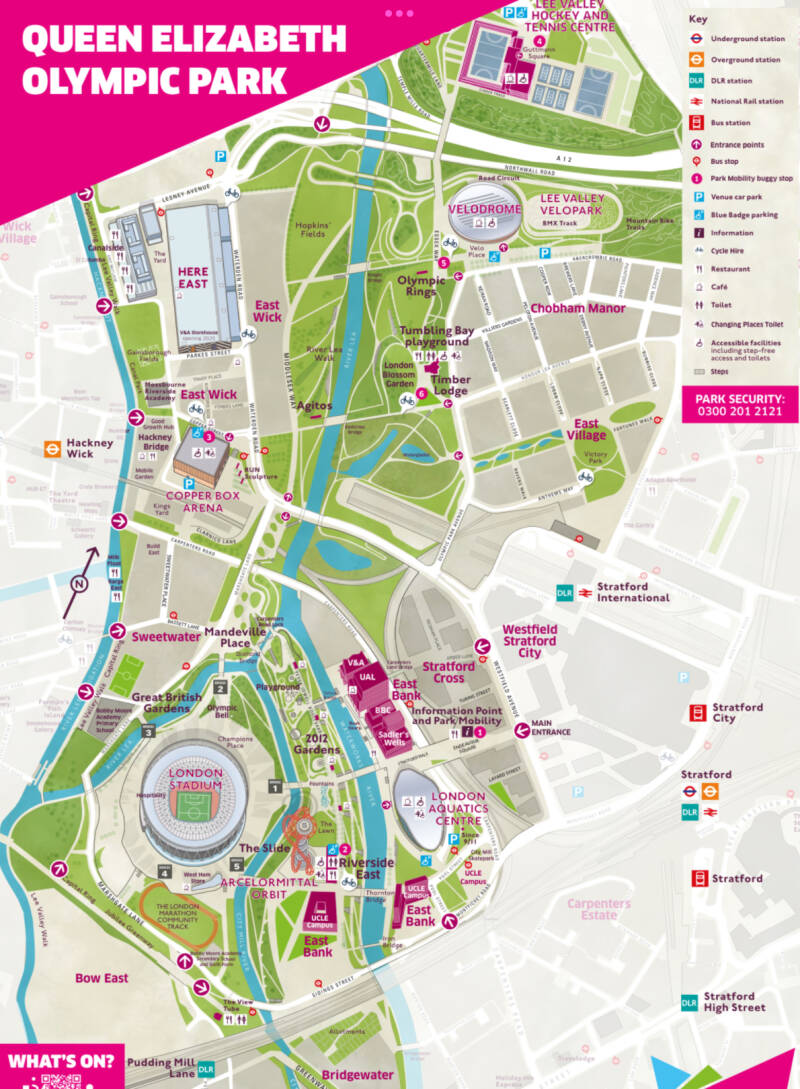
The LLDC was created in 2012 to oversee the post-Olympics development of the area. In 2024 planning applications in the Olympics Park and surrounding area have been handed back to the relevant local planning authorities in Newham, Hackney, Tower Hamlets and Waltham Forest.
The LLDC will retain control over a smaller patch, mainly within the Olympic Park, and will still function as an organisation running the QEOP.
LONDON STADIUM
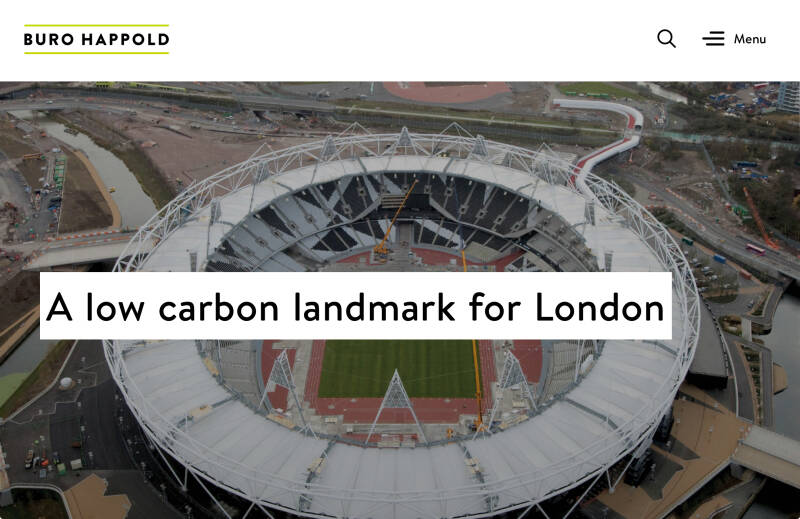
LONDON MARATHON COMMUNITY TRACK
Following the 2017 championships the track was turned into a community facility and plays a key role within the East London community, as a multi-use sport, education and event space. Since 2018, the LMCT has welcomed an attendance of over 300,000 spread across several commercial, filming charity events, community sport, and school’s activity.
This is the home of Newham and Essex Beagles - a leading athletics club in Great Britain, having developed more than 25 Olympians over the past few decades and who include Olympic Gold medal winning athletes such as Daley Thompson, Mo Farah and Christine Ohuruogu among their past members. Each year they host the Stratford Speed GP with the Beagles - a series of athletics open meets.
They provide the sports facilities to Bobby Moore Academy, a secondary school who celebrate the diversity of East London’s community through their aspirational learning culture so that each individual can fulfil their potential.
And their home football club are Stonewall FC – the world's most successful LGBT+ football club, aiming to make football a more inclusive space for all. And we host a weekly Try Tag Rugby session
BOBBY MOORE ACADEMY
Bobby Moore Academy was founded in 2017.
The academy is an "all-through" school (serving both primary and secondary students) located in the Queen Elizabeth Olympic Park, London. Its development occurred in stages:
- September 2017: The academy officially opened to its first cohort of Year 7 students.
- September 2018: The primary phase opened for its first Reception pupils.
- 2018: Construction of the secondary school building was completed.
The school is part of the David Ross Education Trust and was named after West Ham United and England football legend Bobby Moore.
UCL EAST
UCL has confronted humanity’s biggest issues since 1826
At that time, attending university was a rare privilege.
If you weren’t a man from a wealthy background and a member of the established church, higher education was off limits.
Our founders tore up that rule book. We were the first university in England to welcome students of any religion or social background. We were also the first in England to welcome women to university education.
ARCELOR-MITTAL ORBIT
Art in the Park
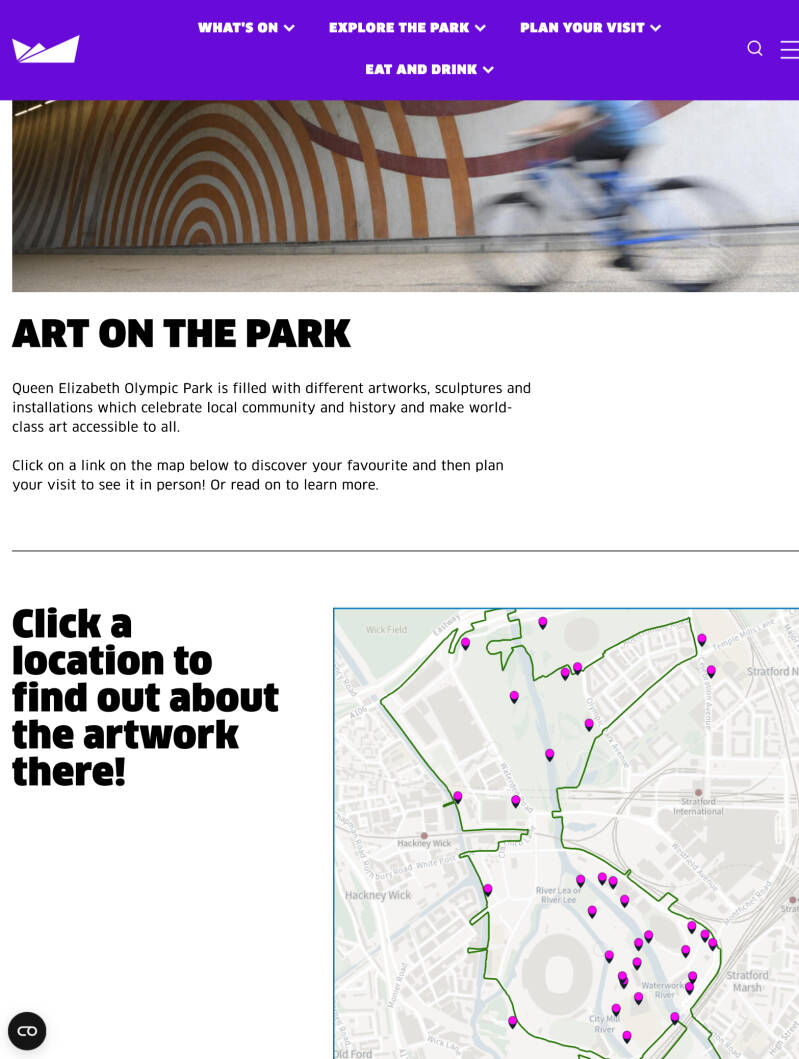
EATERIES alongside Boulevard
Bridge over Waterworks River
AQUATICS CENTRE by architect ZAHA HADID (d.2017)
“SINCE 9/11” MEMORIAL
EAST BANK, CULTURAL QUARTER
UK’s newest cultural quarter at the heart of Queen Elizabeth Olympic Park. East Bank is a unique collaboration between cultural institutions, world leading universities and the people of the Olympic boroughs.
Comprising of BBC Music Studios; London College of Fashion, UAL; Sadler’s Wells East; UCL (University College London) and V&A East, East Bank is the place where everything happens – entertainment, inspiration and discovery – and is open to everyone.
VICTORIA & ALBERT EAST MUSEUM
It will open on 18 April 2026
SADLER’s WELLS
For a range of dance performances and learning opportunities
The Dance Floor is a light-filled foyer for a range of free activities and events for people of all ages and backgrounds, local community groups and guest artists. Home to dance classes & workshops, community and artist takeovers, family activities, open dance sessions, talks, DJ nights and more.
Open for everyone to come together and watch, participate and move
COLLEGE OF FASHION. UNIVERSITY OF THE ARTS
Open to the public for a variety of exhibitions and events
BBC MUSIC STUDIOS
will open on 18 April 2027
A core purpose of BBC Music Studios is to perform, record and broadcast live music across a full range of genres to the widest possible audience. The relocation to East Bank at Queen Elizabeth Olympic Park is driven by this purpose and builds on the BBC’s role as Olympic Broadcaster.
The new site will feature modern recording facilities, as well as embracing the history of Maida Vale. It will also be the home of the world-renowned BBC Symphony Orchestra & Chorus and BBC Singers, with an occasional presence from the BBC Concert Orchestra. It will host recording sessions and live performances across all genres from global stars to emerging talent. These facilities, alongside an extensive programme of learning and outreach projects and collaborations with partners in the cultural district, will contribute to establishing East London as a world destination for music.
TIMBER PAVILION. Eateries and Visitor information
A multi-story structure in Endeavour Square (part of STRATFORD CROSS) built from Cross-Laminated Timber (CLT) and Glulam, housing the Visitor Centre, café, and restaurants, with an accessible roof terrace.
According to ACME “the Pavilion is conceived as a folded public space, a ‘vertical piazza’. Stairs, balconies and amphitheatres invite exploration; a place to gather, relax and enjoy views of the East Bank and the Olympic Park from the rooftop. The three story structure is in lightweight timber, made from cross-laminated and glued laminated timber panels and beams. Timber was the best building material, to save carbon, to save weight above the DLR tunnels, and to provide warmth and tactility to the interior. The exterior cladding reflects the timber nature of the building through parametrically designed timber fins, creating a continuous soffit that invites and guides visitors to the roof.“
MORE LONDON PROJECTS: https://acme.ac
STRATFORD CROSS (district)
Eateries
mixed-use neighbourhood currently under construction in the London Borough of Newham.
It is a business development project built by Lendleaseand commercial developer London and Continental Railways
Construction began in 2014In late 2023, the area was renamed from International Quarter
occupied by the Financial Conduct Authority (FCA) and Transport for London (TfL)
HMRC expected